
How Basic No-Fault Coverage Helps After a Crash

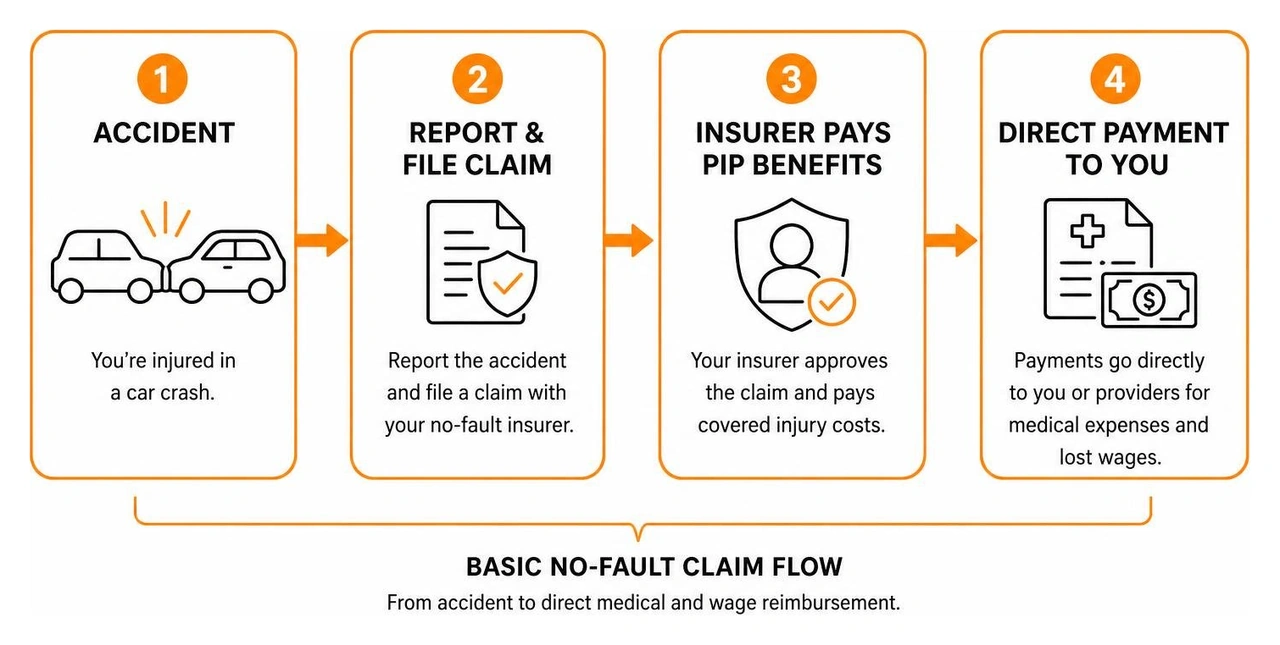
Basic no-fault coverage, also called personal injury protection (PIP), helps pay your injury-related costs after a car crash, no matter who caused it. It can cover medical care, lost income, and help with daily tasks, subject to state rules and your policy limits. You generally claim these benefits through the insurer responsible for your PIP coverage, rather than waiting to prove the other driver was at fault.
In Michigan, the amount of medical coverage available depends in part on the PIP option chosen for the policy. PIP does not pay to repair your car or automatically cover every bill. I’m George Hamo, and this guide will help you see what to check before you file a claim.
What Is Basic No Fault Coverage and How Does It Work?
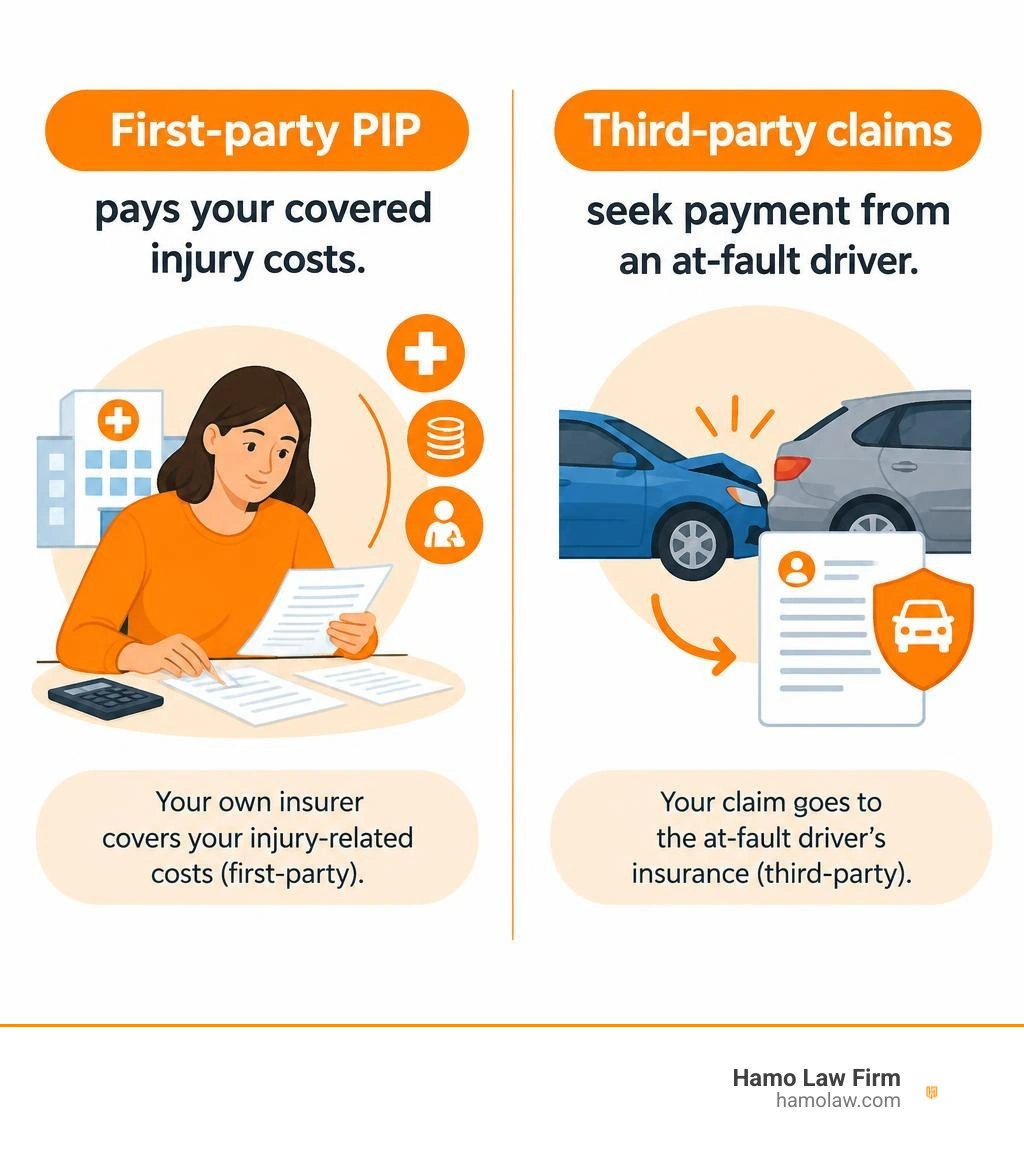
No-fault insurance was created to solve a major headache: after an accident, injured drivers used to wait months—or even years—in court just to get basic emergency room bills paid. Under a no-fault system, your own insurance carrier pays your direct medical expenses and economic losses regardless of who was at fault for the collision. This is known as a first-party claim.
Instead of having to hire an investigator to prove the other driver ran a red light before your doctor gets paid, your insurer steps in immediately. This provides prompt financial relief and keeps local courthouses from grinding to a halt over straightforward medical payments.
Understanding Personal Injury Protection (PIP) Benefits
At the center of any no-fault system is Personal Injury Protection (PIP). When we look at how Michigan no-fault PIP benefits operate, they divide into several essential categories:
- Reasonably Necessary Medical Expenses: Emergency room treatment, surgeries, hospital stays, doctor visits, physical therapy, prescription medication, and medical supplies.
- Lost Wages: If your crash-related injuries leave you unable to work, PIP reimburses a percentage of your gross income. In Michigan, wage loss benefits are payable for up to three years from the date of the collision.
- Replacement Services (Household Chore Help): When you cannot perform daily household duties—such as cooking, cleaning, yard maintenance, or grocery shopping—PIP can pay up to a statutory daily limit (typically $20 per day in Michigan) for up to three years so you can hire help.
- Attendant Care: Nursing or personal assistance services if you need help with basic daily living activities like dressing, bathing, or mobility.
- Funeral and Burial Benefits / Survivor's Loss: If a collision results in a fatality, basic PIP pays a statutory funeral and burial benefit along with economic support for dependent survivors.
Other jurisdictions structure their benefits with unique caps. For instance, according to the Kentucky Department of Insurance no-fault overview, basic PIP in Kentucky covers up to $10,000 for medical expenses and wage loss capped at $200 per week.
No-Fault Insurance vs. Bodily Injury Liability
Drivers often confuse first-party PIP with third-party liability. Here is how they differ:
| Feature | Personal Injury Protection (PIP / No-Fault) | Bodily Injury Liability (Third-Party) |
|---|---|---|
| Whom It Protects | You, your resident relatives, and eligible passengers | Other drivers, passengers, or pedestrians you injure |
| Fault Requirement | Payable regardless of fault | Requires proving the other driver was at fault |
| Damages Covered | Direct economic losses (medical care, wage loss, replacement services) | Excess economic losses and non-economic damages (pain and suffering) |
| Policy Payout | Paid by your own auto insurer | Paid by the at-fault party's auto insurance company |
Because no-fault coverage only takes care of your direct out-of-pocket losses up to policy limits, carrying sufficient recommended bodily injury liability coverage protects your personal savings and assets if another person sues you for severe injuries in a serious crash.
Core Benefits and Exclusions in Basic No-Fault Policies
While no-fault insurance provides vital support, it does not write a blank check for every problem arising from a crash. Knowing what is included—and what is strictly excluded—keeps you from getting surprised by unexpected bills.

Key Expenses Paid Under Basic No Fault Coverage
When an injury occurs, basic no fault coverage handles allowable expenses necessary for your care, recovery, and rehabilitation. These include:
- Hospital and Rehabilitation Services: Intensive care, specialty rehabilitation facilities, and home nursing care.
- Medical Mileage: Travel costs to and from doctor appointments, physical therapy clinics, and pharmacy visits.
- Home and Vehicle Modifications: Wheelchair ramps, specialized bathroom equipment, or adapted vehicle controls if a crash causes a permanent disability.
- Survivor's Loss Benefits: Financial contributions and replacement services that dependents would have received from the deceased family member.
Common Exclusions and Non-Covered Damages
PIP policies carry specific exclusions that every driver should recognize:
- Damage to Your Own Vehicle: PIP does not fix your dented bumper, broken axle, or crushed frame. Vehicle repairs fall under optional Collision or Comprehensive coverage.
- Non-Economic Damages: You cannot claim pain, suffering, emotional distress, or loss of enjoyment of life through a basic PIP claim. Those damages must be pursued through a separate third-party lawsuit against the at-fault driver.
- Intentional Self-Harm: Injuries sustained while intentionally trying to harm oneself are excluded.
- Uninsured Vehicle Owners: If you own an uninsured vehicle involved in an accident, Michigan law bars you from receiving PIP benefits entirely.
- Policy Deductibles: Most policies include car insurance policy deductibles that must be satisfied out-of-pocket before insurance disbursements kick in.
State Requirements, Monetary Thresholds, and the Right to Sue
Auto insurance rules across the United States fall into different systems: mandatory no-fault, choice no-fault, and traditional tort systems. Understanding where your coverage stands determines how and when you can take legal action after an accident.
State-by-State PIP Limits and Reparations Rules
Approximately a dozen states enforce no-fault insurance structures requiring drivers to maintain PIP benefits, but the statutory limits vary significantly:
| State | Minimum / Standard PIP Medical Limit | Wage Loss Benefit Limit |
|---|---|---|
| Florida | $10,000 per person | 60% of lost income (within $10k limit) |
| New York | $50,000 basic benefit | 80% of lost earnings (up to $2,000/month) |
| New Jersey | $15,000 (Basic Policy) up to $250,000 (Standard Policy) | Up to $100/week on standard plans |
| Kentucky | $10,000 basic reparations | Up to $200 per week |
| Michigan | Choice of tiers: $50k (Medicaid), $250k, $500k, or Unlimited lifetime medical | Up to state monthly maximum for 3 years |
As outlined in the state's DIFS auto insurance guide, Michigan drivers select their medical coverage level on their auto insurance policy rather than being locked into a single fixed cap.
Verbal vs. Monetary Lawsuit Thresholds
Because no-fault systems guarantee first-party payments, they restrict when you can sue the at-fault driver for pain and suffering. States use two main types of thresholds:
- Monetary Thresholds: You can file a lawsuit only if your crash-related medical bills exceed a specific dollar amount. For example, Kentucky sets a low monetary threshold of $1,000 in medical expenses.
- Verbal (Qualitative) Thresholds: In states like Michigan, New York, and Florida, you cannot sue for pain and suffering unless your injuries meet a legal definition, such as:
- Death
- Significant permanent disfigurement or scarring
- Serious impairment of body function (an objective injury that affects your general ability to lead your normal life)
Understanding how the threshold rules govern your ability to sue after a crash is essential before negotiating with any auto insurance adjuster.
Managing Claims, Policy Exhaustion, and Coverage Options
When severe injuries occur, medical expenses can add up rapidly. Knowing which policy pays first and what options exist when basic limits run out protects your family from personal debt.

What Happens When Medical Bills Exceed Basic No Fault Coverage?
If you selected a capped PIP limit (such as $250,000 or $500,000) and your hospital stay, surgery, and rehabilitation exceed that cap, your PIP coverage becomes exhausted.
When basic PIP is exhausted, medical bills transition through several safety nets:
- Health Insurance Coordination: Your personal health insurance or qualified health coverage coordination takes over covered medical treatments once PIP limits are spent.
- Third-Party Lawsuits for Excess Economic Loss: You have the legal right to sue the at-fault driver for any medical costs and wage losses that exceed your statutory no-fault limits.
- Disability Programs: State or federal programs (such as Social Security Disability) may offer supplementary income for prolonged disabilities.
Coverage for Pedestrians, Cyclists, and Non-Vehicle Passengers
No-fault protection extends beyond the driver behind the wheel. When a car collides with a pedestrian or bicyclist, the claim is processed through an established order of priority:
- Your Own Policy: If you own a vehicle with no-fault coverage, your own auto insurer pays your PIP benefits, even if you were walking or cycling when hit.
- Resident Relative's Policy: If you do not own a car, the policy of a spouse or resident family member provides coverage.
- Michigan Assigned Claims Plan (MACP): If an injured pedestrian or cyclist has no available auto policy in their household, their claim is submitted to the Michigan Assigned Claims Plan, which assigns the claim to an authorized insurer (capped up to statutory limits, currently $250,000).
Frequently Asked Questions About No-Fault Auto Insurance
What are the strict time limits for filing a no-fault PIP claim?
In Michigan, you must give formal written notice of injury to your auto insurer within one year from the date of the crash. Additionally, under the one-year back rule for PIP benefits, any lawsuit to recover unpaid medical bills or lost wages must be filed within one year of the date that specific expense was incurred. Failing to submit documentation promptly allows insurers to deny valid claims permanently.
Can you opt out of personal injury protection coverage?
Under Michigan law, only specific drivers can opt out of PIP medical benefits entirely:
- Drivers enrolled in Medicare (Parts A and B) whose spouse or resident relatives have their own qualified health coverage or separate auto PIP policy.
- Commercial or qualifying health plans that meet strict statutory criteria.
Opting out lowers your auto insurance premium, but it removes your auto insurer's obligation to pay for crash-related medical bills, specialized attendant care, or residential rehabilitation if you are injured.
Who pays for vehicle property damage in a no-fault state?
No-fault PIP pays for bodily injury—not moving vehicle property damage. Vehicle damage is handled through:
- Collision Insurance: Your own collision policy pays to fix your vehicle, subject to your chosen deductible.
- The Mini-Tort Law: You can sue the at-fault driver in small claims court for up to $3,000 in uncovered out-of-pocket vehicle damage or collision deductibles.
- Property Protection Insurance (PPI): Mandatory Michigan no-fault PPI covers up to $1 million for damage your vehicle inflicts on fixed property (such as fences, buildings, or properly parked cars).
Protect Your Rights After an Accident
No-fault insurance provides vital protection for injured drivers, but filing claims and managing coverage limits can be complicated. Insurance companies frequently dispute reasonable expenses, delay wage-loss checks, or prematurely terminate necessary medical benefits.
For over 40 years, our team at Hamo Law Firm has stood up for injured victims across Flint, Detroit, Genesee County, and Wayne County. We work on a contingency-fee basis—meaning you pay no legal fees unless we win your case.
If you or a family member are dealing with unpaid medical bills or an insurance denial, contact Hamo Law Firm's experienced no-fault insurance attorneys today for a free case evaluation.