
What Is Boat Liability Insurance and How Does It Protect You?
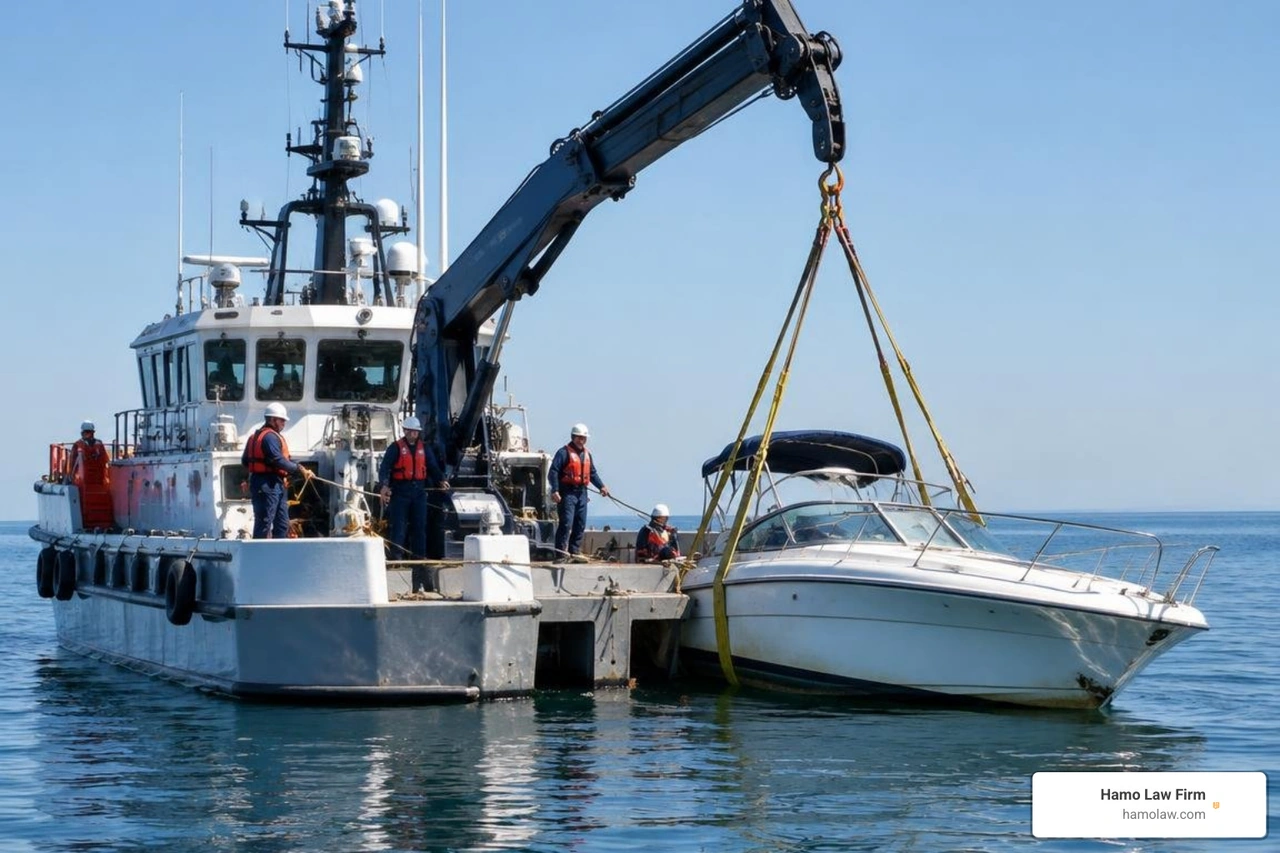
When you take the helm, you assume legal responsibility for the safety of your passengers, other vessels, swimmers, and the marine structures around you. Boat liability coverage—traditionally known in maritime law as Protection and Indemnity (P&I)—is the bedrock of any marine policy. If you accidentally crash into another vessel, strike a swimmer, or collide with a private dock, your liability insurance steps in to cover the financial fallout up to your policy limits.
Watercraft liability policies specifically shield you against two primary categories of loss:
- Third-Party Bodily Injury: Pays for medical bills, emergency transport, ongoing rehabilitation, lost income, and pain and suffering incurred by individuals outside or inside your vessel if you are found legally liable.
- Third-Party Property Damage: Covers the repair or replacement costs for damaged hulls, motors, personal property, docks, piers, navigational markers, and marina facilities.
- Legal Defense Costs: Pays for maritime litigation attorneys, court fees, and investigation costs to defend you in court, even if an unfounded lawsuit is brought against you.
Recreational watercraft incidents happen in seconds. The U.S. Coast Guard counted 4,463 accidents in a single year resulting in 701 deaths, 2,903 injuries, and approximately $49 million in property damage. Open motorboats accounted for 47% of reported accidents, personal watercraft represented 18%, and cabin motorboats made up 15%.
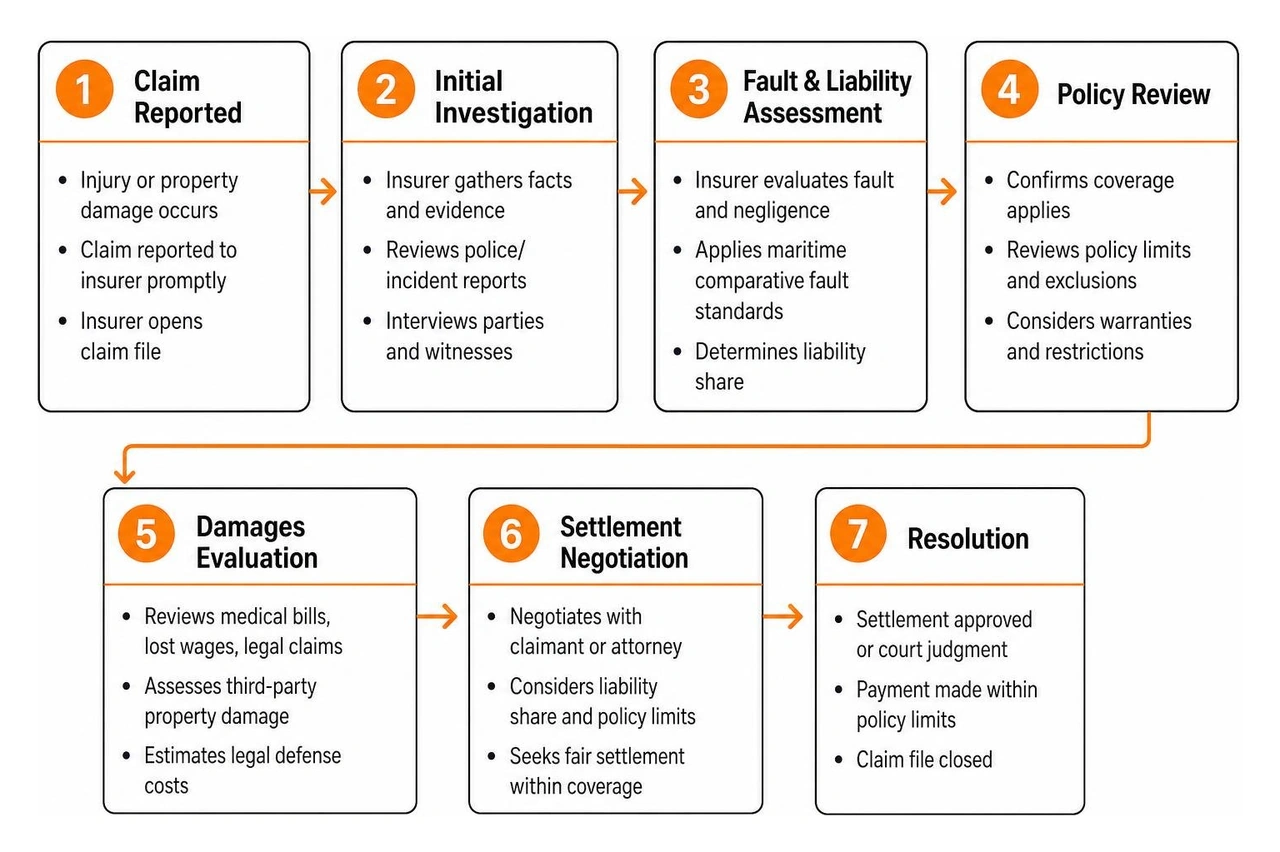
When an injury occurs, navigating claims becomes complex. Insurers review fault, policy limits, and maritime comparative fault standards closely. Understanding how insurance companies evaluate injury claims can help you anticipate how claims adjusters assess settlements. For boaters seeking straightforward financial protection without full physical vessel coverage, an Affordable Liability Only Insurance | BoatUS policy offers a way to secure required third-party protection without paying for hull repairs on an older craft owned free of liens.
Protection & Indemnity vs Physical Damage Coverage
A common misunderstanding among vessel owners is assuming that any marine insurance policy protects both their boat and other people. In reality, marine policies divide coverage into distinct categories: Protection and Indemnity (liability) and Hull and Machinery (physical damage).
| Coverage Dimension | Protection & Indemnity (Boat Liability) | Hull & Machinery (Physical Damage) |
|---|---|---|
| Primary Purpose | Protects your financial assets from third-party claims | Repairs or replaces your own watercraft and gear |
| Covers Third-Party Injuries | Yes (medical bills, lost wages, legal damages) | No |
| Covers Third-Party Property | Yes (other boats, docks, navigational aids) | No |
| Covers Your Own Vessel Damage | No | Yes (collisions, storms, fire, vandalism) |
| Covers Legal Defense Fees | Yes (attorney fees and court costs) | Limited to recovery actions |
| Mandated By | Marinas, government bodies, tournament organizers | Lenders, lienholders, yacht clubs |
While Hull and Machinery insurance ensures that your runabout, pontoon, or yacht can be repaired after a grounding or storm, liability coverage protects your personal savings, home, and future earnings from being seized to pay a judgment.
Common Policy Exclusions and Warranty Restrictions
Marine insurance policies contain strict exclusions and express warranties that can void coverage if violated. If an insurer proves you breached an explicit policy warranty, they can deny coverage entirely, leaving you personally exposed to claims.
Common exclusions and restrictions include:
- Wear, Tear, and Gradual Deterioration: Insurers do not pay for damage caused by dry rot, marine life (such as zebra mussels or barnacles), mold, rust, corrosion, or mechanical wear.
- Lay-Up Warranties: If your policy includes a seasonal lay-up discount (for example, stating your vessel will be stored ashore and winterized between November 1 and April 1), operating the vessel during that window suspends your liability and hull coverage.
- Navigational Boundary Violations: Policies outline specific cruising waters (such as inland lakes and rivers, or coastal waters within a set distance from shore). Venturing past these agreed coordinates without a formal endorsement invalidates your coverage.
- Unapproved Commercial Operations: Standard recreational policies strictly exclude coverage if you accept compensation, run paid passenger charters, lease your boat, or conduct commercial fishing.
- Intentional Acts and Reckless Operation: Operating under the influence of drugs or alcohol or intentionally causing damage can result in immediate claim denial and personal civil exposure.
Critical Add-Ons: Fuel Spills, Salvage, and Uninsured Operators
A comprehensive marine policy requires protection against hidden liabilities unique to water navigation: environmental remediation, emergency recovery, and reckless operators who carry no insurance. After any significant collision or sinking, dealing with insurance companies after an accident what you need to know is that insurers often contest secondary liabilities like salvage fees and fuel containment unless explicitly bound in your declarations.
Environmental Cleanup and Pollution Liability Under Maritime Law
Federal and state laws treat environmental damage from vessels seriously. Under the federal Oil Pollution Act of 1990, watercraft owners face strict liability for the discharge of fuel, oil, or hazardous chemicals into navigable waterways.
Boat owners may be liable for clean-up expenses under the Oil Pollution Act of 1990 up to the statutory limit (currently $939,800). If your vessel sinks at a dock or ruptures a fuel bladder during a collision, you are legally responsible for dispatching certified hazardous material containment teams, deploying booms, extracting contaminated water, and paying government fines. If your liability policy lacks dedicated fuel-spill coverage or caps pollution liability at low amounts (such as $10,000 or $25,000), you could face significant out-of-pocket expenses for environmental cleanup.
Protection Against Uninsured and Underinsured Boaters
Unlike automobile drivers, who face mandatory liability insurance requirements in most jurisdictions, boaters in many states are not legally mandated to carry liability coverage. This creates a substantial risk: a negligent, unlicensed operator can crash into your vessel, cause life-altering injuries to your family, and have zero insurance assets to cover the losses.
The risk is compounded by operator inexperience. Coast Guard data shows that 77% of recreational boating deaths occurred on vessels where the operator had received no boating safety instruction, compared to only 13% where the operator possessed a nationally approved safety certificate.
Uninsured/Underinsured Boater (UB/UIB) coverage steps in to pay for:
- Medical care, emergency surgeries, and physical therapy for you and your passengers
- Lost income resulting from severe injuries caused by an uninsured boater
- Hit-and-run collisions on the water where the at-fault vessel flees the scene
- Shortfalls when an at-fault boater's policy limits are exhausted by multi-victim injuries
As outlined in industry resources for Understanding boat insurance | Chubb, pairing robust uninsured boater endorsements with your general watercraft liability provides an essential safety net for recreational skippers.
Policy Limits, Valuation Models, and Commercial Exposures
Selecting proper policy limits is a critical step in setting up marine insurance. If you carry low coverage limits and cause a serious accident, injured parties can pursue your personal bank accounts, investments, and home equity to satisfy remaining judgments. When disputes arise over policy scope or bad-faith denials, skippers often face questions regarding what if my insurance company denies my claim, making upfront policy structure essential.
Why Minimum Boat Liability Insurance May Not Be Enough
Many entry-level boat policies offer baseline liability limits of $100,000 to $300,000. While this may sound sufficient for minor property damage, serious boating accidents often involve severe trauma, including propeller strikes, severe orthopedic fractures, brain injuries, and drowning incidents.
In a catastrophic multi-passenger incident, emergency airlift transport, prolonged trauma surgery, and lifelong attendant care can exceed $1,000,000 in days. Reviewing our analysis on recommended bodily injury liability coverage shows that selecting higher underlying limits—ideally $500,000 to $1,000,000—paired with a personal umbrella liability policy is the most effective way to protect against financial exposure. Umbrella policies often provide $1,000,000 to $5,000,000 in excess liability protection across your auto, home, and watercraft policies for a modest annual premium.
Agreed Value vs Actual Cash Value Settlement Impact
When choosing your hull and physical damage policy (which operates alongside your liability coverage), the settlement valuation model directly impacts your out-of-pocket exposure following a total or partial loss:
- Agreed Value: The insurer and policyholder agree on the vessel's value when the policy is written. If the boat experiences a total loss, the insurer pays the complete agreed-upon amount without deducting for depreciation. Partial repairs are typically made using new marine-grade parts without depreciation deductions.
- Actual Cash Value (ACV): The insurer compensates total or partial losses based on the market replacement value of the vessel at the precise moment of loss, deducting substantial depreciation for the age, hull condition, and engine hours.
In an example scenario, a 10-year-old motorboat insured under an Agreed Value policy might receive a full $35,000 payout following a total loss fire, whereas an Actual Cash Value policy for the exact same vessel might pay only $18,000 after calculating market depreciation.
Practical Ways to Lower Your Annual Marine Premiums
Securing comprehensive marine liability coverage does not require overpaying. Insurers price risk based on predictable actuarial metrics, and boaters who demonstrate proactive risk mitigation qualify for substantial premium reductions.
Factors Dictating Annual Watercraft Insurance Premiums
Insurance carriers assess several primary rating factors when underwriting watercraft:
- Vessel Type, Length, and Horsepower: High-performance speedboats and multi-engine center consoles carry higher premiums than family pontoon boats or sailboats due to collision velocity and accident severity risks.
- Operating Location and Waterway: Geographic risk heavily dictates pricing. Progressive's 2023–2024 pricing metrics show average annual boat insurance premiums in Florida reaching approximately $839 due to hurricane exposures and year-round navigation, whereas average premiums in northern freshwater regions such as Minnesota average just $267 for equivalent baseline coverage.
- Operator Boating History and Experience: Seasoned skippers with a clean driving and boating record, no loss history, and formal credentials receive preferred risk tiering.
- Storage and Security Measures: Vessels kept in locked dry-stack storage, private secured marinas, or equipped with automatic fire suppression and GPS tracking systems qualify for underwriting credits.
Strategies to Reduce Your Boat Liability Insurance Rates
You can actively manage and reduce your annual watercraft insurance costs using these proven strategies:
- Complete an Approved Boating Safety Course: Completing a recognized U.S. Coast Guard Auxiliary, U.S. Power Squadrons, or state-approved boating education course typically yields a 5% to 10% premium discount.
- Bundle Policies with a Single Carrier: Bundling your boat policy with existing personal auto or homeowners insurance can deliver savings of up to 17% on average. A boater paying $500 annually for standalone boat coverage can often drop that to $425 or $450 when bundled.
- Optimize Your Lay-Up Window: For seasonal boaters who store their vessel during the winter months, extending a formal lay-up endorsement—such as keeping the boat stored ashore for six months instead of three—can save 10% to 15% annually.
- Adjust Your Physical Damage Deductible: Increasing your hull deductible from $500 to $1,000 or $2,500 can reduce your annual hull and liability package premium by 10% to 20%, provided you maintain that reserve in emergency savings.
- Select Navigation Territory Accurately: Restricting your coverage territory to the specific lakes, rivers, or bays you actually use avoids surcharges for open ocean or international cruising zones.
Frequently Asked Questions About Watercraft Liability
Does a standard homeowners insurance policy cover boat liability on the water?
In most cases, standard homeowners insurance provides very limited protection for boats. While a homeowners policy may include modest liability coverage for small, non-motorized crafts (such as canoes or kayaks) or low-horsepower outboards (typically under 25 horsepower), it generally excludes high-performance motorboats, personal watercraft, and vessels over 16 to 26 feet in length once they leave your driveway. Homeowners policies also typically exclude environmental cleanup mandates, marine salvage, and watersports liability.
Is boat liability insurance legally mandated in all states?
While liability insurance is not universal across all state marine registrations, it is functionally required in many everyday boating scenarios. Commercial marinas typically require proof of at least $300,000 to $500,000 in liability and fuel-spill coverage before issuing a seasonal slip or mooring permit. Financial institutions holding a marine loan require both comprehensive hull and liability coverage to protect their collateral.
Does boat liability insurance cover water sports and towed passengers?
Standard recreational policies often include general passenger liability, but towing skiers, wakeboarders, and tubers introduces specialized risks that require verification. Many policies require a specific water sports liability endorsement to cover injuries sustained by individuals holding towlines or riding wakeboards. Always verify with your insurer that towed sports are included and not excluded under a recreational equipment limitation clause.
Protecting Your Rights After a Marine Collision
Recreational boating should provide relaxation and enjoyment, but operating a watercraft carries real legal responsibilities. Carrying reliable boat liability insurance protects your family’s financial well-being and ensures injured parties receive medical care and support if an unexpected collision occurs.
If you or a loved one has suffered serious injuries in a collision on the water caused by an inexperienced or negligent operator, our team can help you understand your legal options. At Hamo Law Firm, our attorneys bring over 40 years of trial experience fighting insurance companies for injury victims across Michigan. If you have questions regarding personal injury claims or navigating complex car accident liability and marine collisions, contact our office today for a free consultation. We operate on a contingency-fee model—meaning you pay no legal fees unless we win your case.