
When Local Automobile Accidents Disrupt Your Daily Commute
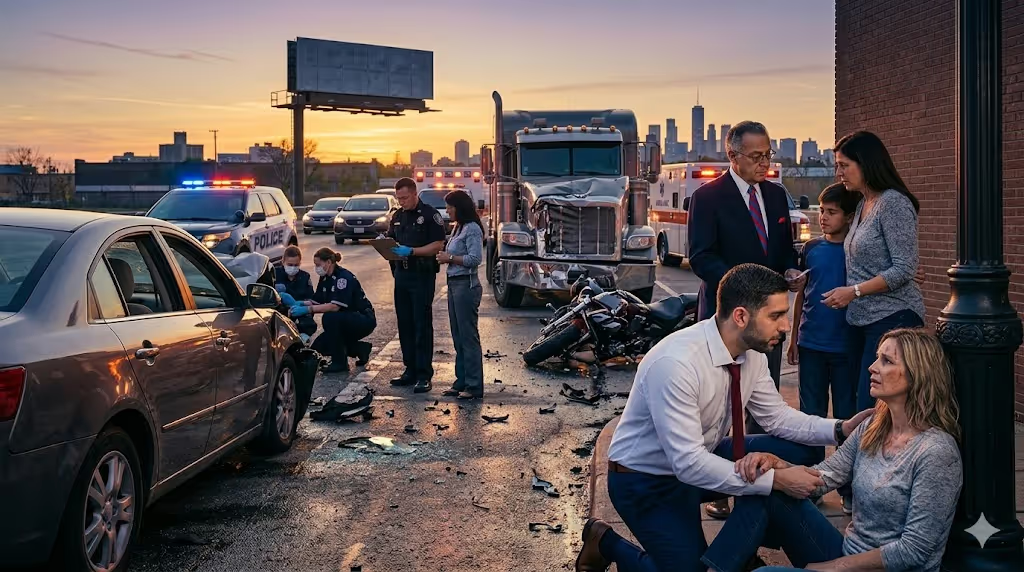
Local automobile accidents happen every day on Michigan roads — and knowing how to respond quickly can protect your health, your rights, and your wallet.
Here's what most people want to know right away:
How to find local crash reports and accident information:
- Check live state traffic portals — Michigan's Mi Drive updates incidents in near real-time
- Contact local law enforcement — police blotters list recent crashes by highway and county
- Request an official crash report — available to involved parties; public access is restricted for 60 days after filing
- Monitor Oregon State Police-style news releases — many state agencies publish fatal and serious crash press releases publicly
- Search by report number, name, or plate — most state patrol portals let you look up crash records within 5 to 7 business days of the incident
Traffic incidents are more common — and more dangerous — than most commuters realize. In just one recent month, Oregon State Police reported fatal crashes across more than a dozen highways, from Interstate 84 to Highway 58 to Highway 395. Contributing factors included excessive speed, impairment, failure to wear a seatbelt, and drivers failing to yield. Many of those crashes closed major roads for four to six hours at a time.
If you were injured in a crash caused by someone else's negligence, the steps you take in the hours and days after matter enormously.
I'm George Hamo, a Michigan personal injury attorney, and in this guide I'll walk you through everything you need to know — from finding local crash reports to protecting your legal rights after a collision.
Accessing Live Traffic Incident Reports and Crash Records
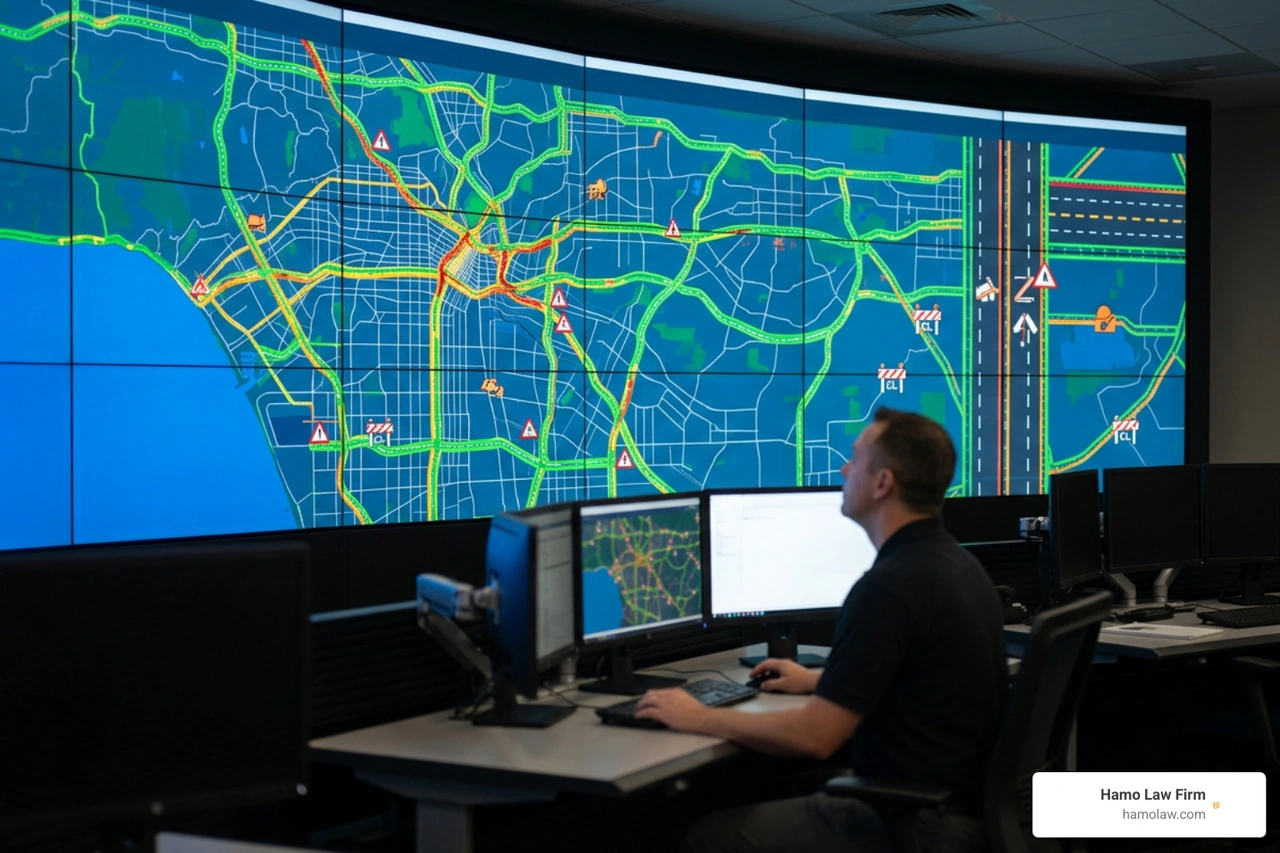
Navigating daily commuter corridors in Flint, Detroit, and across Genesee and Wayne Counties requires stay-in-the-know awareness. Knowing where to look for live accident updates helps you dodge severe traffic jams and keeps you informed about hazardous road conditions.
When serious collisions occur, state transportation departments and law enforcement agencies maintain live digital monitoring tools. In Michigan, commuters rely on the official state incident mapping tool, MDOT - Mi Drive Incidents, which streams real-time updates regarding highway lane closures, active emergency responses, construction hazards, and severe traffic slowdowns.
How to Access Reports for Local Automobile Accidents
Obtaining official documentation after a collision is crucial for personal recordkeeping, insurance claims, and legal representation. However, accessing official crash reports involves understanding specific statutory privacy windows and agency processing timelines:
- Processing Timelines: Following an incident, law enforcement officers enter crash reports into state databases. This administrative upload typically takes between 5 to 7 business days before the uncertified record becomes searchable online.
- 60-Day Confidentiality Rule: To protect personal privacy and prevent predatory solicitation, crash reports containing personal identification details remain confidential and exempt from public disclosure for 60 days post-filing under various privacy statutes.
- Party of Interest Eligibility: While the general public cannot view crash reports during the initial 60-day window, proper "Parties of Interest" — including drivers, passengers, vehicle owners, legal counsel, and insurance representatives — can request copies immediately.
- Certified Records: Online portal printouts are generally uncertified. If your insurance carrier or court proceeding requires a certified copy, it must be formally requested through the state DMV or issuing police agency desk.
If you need assistance gathering documentation after a crash, exploring our overview of Car Accidents can help clarify your rights.
Common Causes and Patterns in Local Automobile Accidents
Understanding how and why vehicle collisions occur helps drivers practice better defensive driving on congested Michigan routes.
| Collision Type | Primary Contributing Factors | Typical Road Closure / Impact Duration |
|---|---|---|
| Head-On Collisions | Excessive speed, passing on two-lane roads, lane drift | 4 to 5 hours |
| Rollover Collisions | High speed, driver impairment (DUII), overcorrection | 5 to 6 hours |
| Intersection Broadside (T-Bone) | Running red lights, stop sign violations, failure to yield | 2 to 4 hours |
| Multi-Vehicle Pileups | Severe weather, sudden braking, tailgating, high speed | 4 to 8 hours |
Driver behavior remains the overwhelming cause of catastrophic traffic incidents. Factors such as driving under the influence of drugs or alcohol (DUII), excessive speed, distracted driving, and failing to obey traffic control signals lead to devastating collisions across North America everyday, as highlighted in news reports like 1 Person Dead, Another Hospitalized After Three-Car MoCo Collision.
Analysis of High-Risk Corridors and Intersection Collisions
Heavy traffic corridors—such as I-75 and I-96 in Michigan, or major interstates like I-84 nationally—frequently register high concentrations of serious crashes. Broadside collisions at busy intersections are particularly frequent when drivers run stop signs or fail to yield right-of-way.
To examine regional driving safety trends and multi-year data, drivers can review official state summaries via Traffic Crash Statistics.
Investigating Fatal Crashes and Witness Appeals
When a severe or fatal collision occurs, specialized law enforcement units—such as the Collision Reconstruction Unit (CRU)—are deployed to the scene. Investigators use sophisticated tools, including small unmanned aircraft systems (sUAS drones) and laser measuring instruments, to perform high-precision aerial mapping.
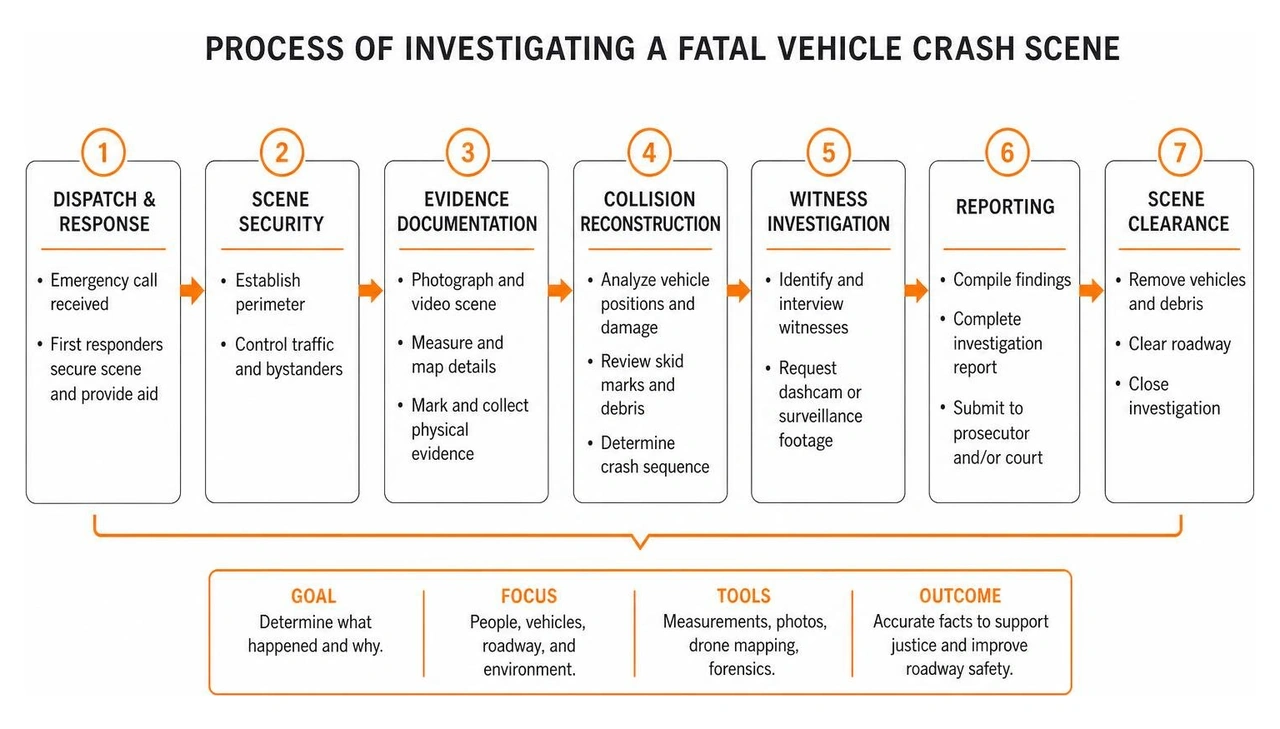
Because physical evidence only tells part of the story, police frequently issue public appeals for eyewitness testimony and dashcam footage to reconstruct the exact timeline of events.
Essential Safety Reminders and Enforcement Priority Areas

State law enforcement agencies maintain strict traffic safety operations aimed at curbing reckless driving behaviors:
- Work Zone Protection: Speeding through active highway work zones poses extreme risks to road crews. Fines and moving violation penalties are strictly enforced in construction corridors.
- Verifying Law Enforcement Officers: If an unmarked vehicle attempts to stop you and you suspect a non-legitimate stop, turn on your hazard lights, maintain a safe driving speed, pull over in a well-lit public space, keep your doors locked, and call 911 or dispatch to confirm the officer's credentials.
Preventive Driving Measures and Impairment Rules
Preventing local automobile accidents requires unwavering personal driver responsibility:
- Seatbelt Compliance: Wearing seatbelts significantly reduces the risk of occupant ejection during high-speed roll-over crashes.
- Zero Tolerance for Impairment: Operating a vehicle under the influence of alcohol, cannabis, or prescription medication severely impairs reaction times and judgment.
- Intersection Vigilance: Always double-check oncoming lanes before completing turns, even when you have the right-of-way.
Post-Crash Protocols: Actions to Take on the Road
Knowing what to do immediately after a crash can keep you safe and safeguard your legal claim.
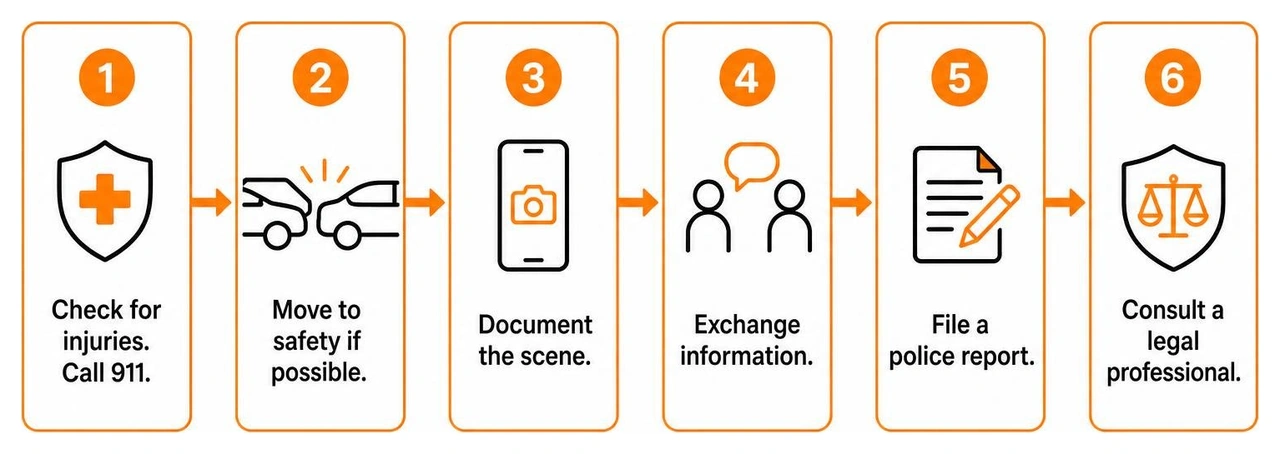
What to Do Immediately Following Local Automobile Accidents
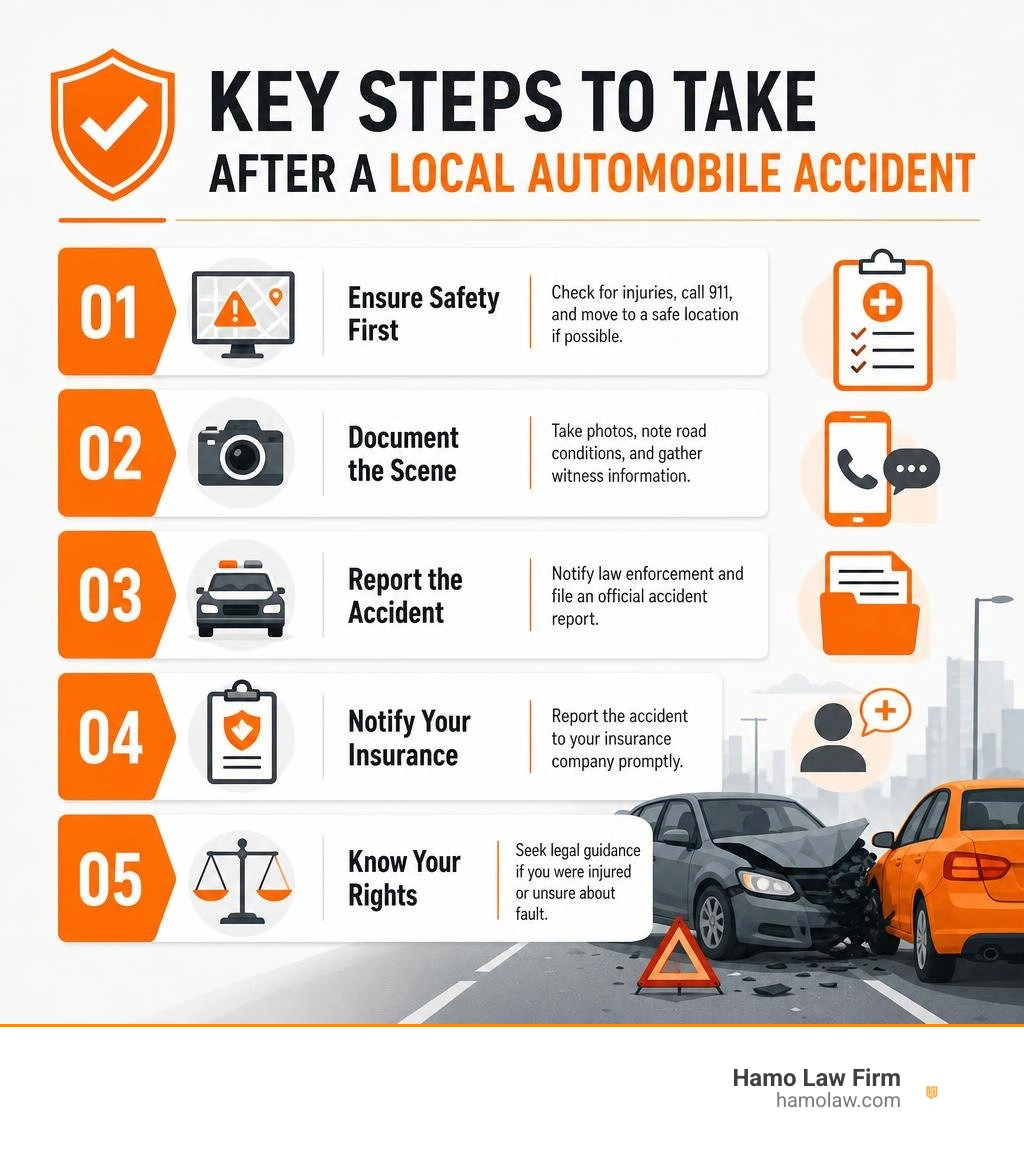
If you are involved in a collision, follow these critical steps:
- Prioritize Emergency Medical Care: Check yourself and passengers for injuries. Call 911 immediately.
- Reposition Vehicles Safely: If there are no severe injuries and your vehicle is operable, move off the main travel lane to avoid secondary collisions.
- Exchange Driver Details: Collect names, addresses, phone numbers, driver's license numbers, vehicle registrations, and insurance policy details from all involved motorists.
- Gather Eyewitness Contacts: Secure contact information from bystanders who witnessed the incident before they leave the scene.
- Refrain from Admitting Fault: Never apologize or accept blame at the scene. Fault is a complex legal determination made by insurance adjusters and law enforcement based on physical evidence.
For a detailed walkthrough on protecting your interests in Michigan, read our emergency guide on What Should I Do Immediately After a Car Accident in Michigan?.
Essential Roadside Safety Kit Checklist:
- First aid supplies and bandage kit
- Reflective safety triangles or emergency flares
- High-visibility safety vest
- Digital tire pressure gauge and heavy-duty jumper cables
- Flashlight with extra batteries
- Portable mobile phone power bank
Navigating Insurance Claims and Legal Deadlines
In Michigan, injury claims operate under a unique legal structure. Understanding How Michigan No-Fault Insurance Works is essential for securing Personal Injury Protection (PIP) medical benefits, wage loss reimbursement, and replacement services.
Furthermore, state statutory rules dictate strict crash reporting requirements. In many jurisdictions, drivers must file an official state crash report within 10 days if police do not investigate at the scene and the incident involves death, injury, or property damage exceeding set monetary thresholds ($1,500 when all parties are insured, or $500 if an involved driver is uninsured).
If you are struggling with medical bills or insurance adjusters, knowing When Should I Contact a Lawyer After an Accident? can help protect your rights.
Frequently Asked Questions About Traffic Crashes
How quickly are crash reports updated on state traffic portals?
Live traffic incident feeds (such as MDOT Mi Drive) update every 5 minutes for active congestion monitoring. However, official completed police crash reports typically take 5 to 7 business days to process and upload into state lookup portals.
Why are some crash records kept confidential for 60 days?
State privacy laws restrict public access to crash reports for 60 days post-incident to guard victims' personal identification details against commercial solicitation and identity theft. Direct involved parties, insurance carriers, and legal representatives can access these records immediately.
What is the property damage threshold for mandatory accident reporting?
In many jurisdictions, if law enforcement officers do not complete a crash report on scene, drivers must file a crash report within 10 days if the incident causes personal injury, death, or total property damage exceeding $1,500 (or $500 if any driver involved is uninsured).
Conclusion
Staying safe on your daily commute means staying alert, driving defensively, and knowing your legal rights when the unexpected happens. When local automobile accidents disrupt your life, acting quickly to secure crash reports, gather evidence, and obtain proper medical evaluation is vital.
At Hamo Law Firm, our team brings over 40 years of trial experience fighting for accident victims across Flint, Detroit, Genesee County, and Wayne County. Operating on a contingency-fee model — meaning you pay no legal fees unless we win your case — we stand ready to protect you against insurance companies.
If you or a loved one has been injured in a collision, learn more about our practice areas by visiting our guide on Automobile, Truck, Motorcycle Accidents or contact us today for a free consultation.