
Introduction

An inadequate security lawsuit is a claim against a property owner or another party responsible for safety after someone is hurt by a crime that reasonable security measures might have helped prevent. It falls under premises liability law. To bring a claim, you generally need to show that the party owed you a duty, failed to take reasonable steps against a foreseeable risk, and that the failure contributed to your injuries.
A broken lock or dark parking lot alone does not prove a case. Photos, police reports, prior complaints, and witness accounts can help show what the property owner knew and what happened. Get medical care, report the crime, and preserve evidence as soon as you can.
I'm George Hamo, and I'll explain how these claims work and what to look for in your own case.
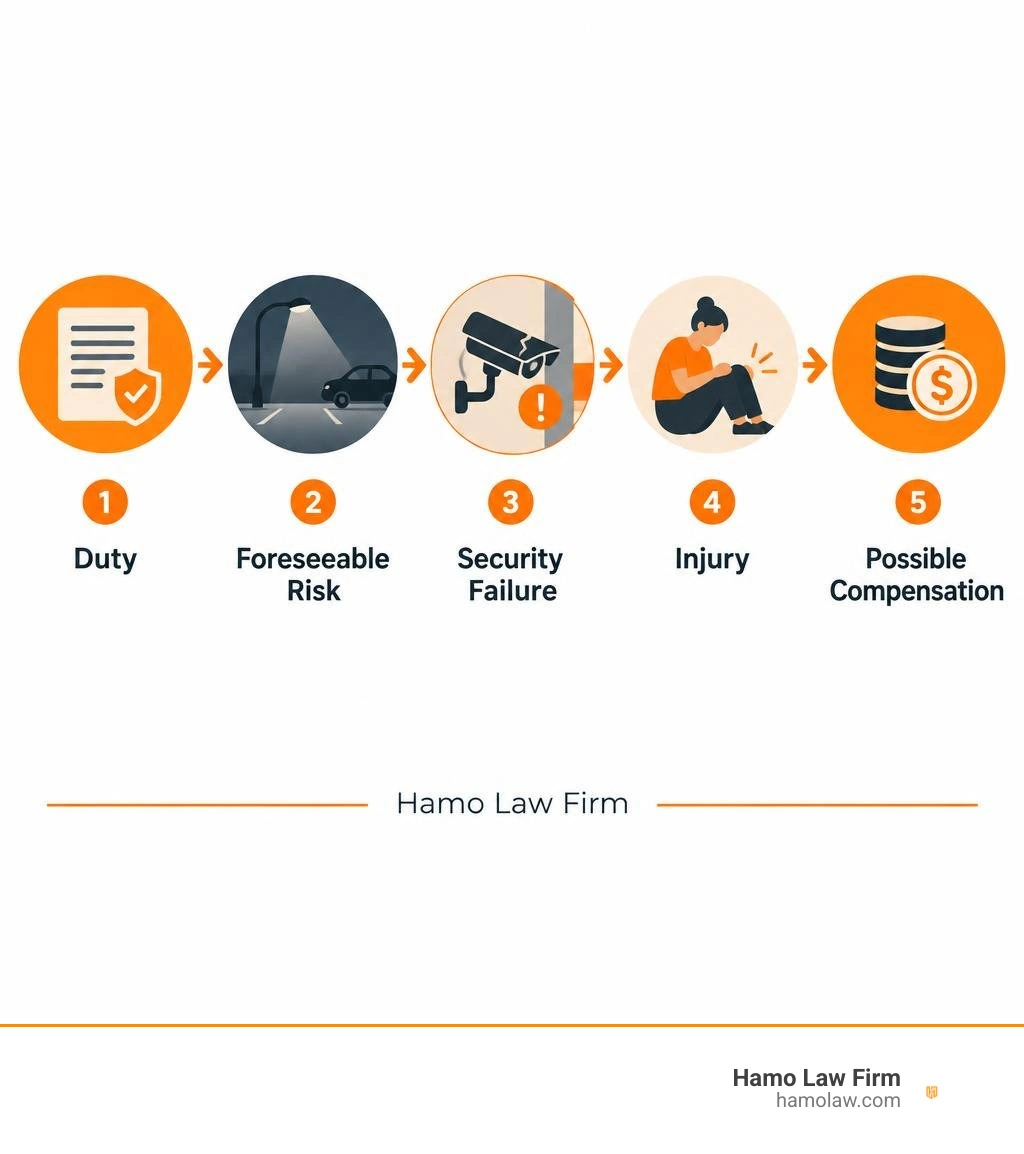
Legal Foundations of an Inadequate Security Lawsuit
When you visit a business, rent an apartment, or enter a commercial building, you have a right to expect reasonable safety measures. Under traditional rules of premises liability, real estate owners and commercial landlords must maintain their physical spaces so visitors are not exposed to unreasonable hazards.
While property owners are not personal bodyguards for every person who steps through the door, they cannot turn a blind eye when known security vulnerabilities invite criminal predators onto their grounds. When businesses ignore glaring warning signs—such as non-working floodlights or repeatedly broken gates—they create an environment where violent crime thrives.
Property Owner Duty of Care and Third-Party Crimes
A central question in premises liability is when property owners are liable for third party crimes. Under the law, your legal status on the property determines the standard of care the owner owes you.
- Invitees: Customers, retail shoppers, hotel guests, and tenants are classified as invitees. Owners owe invitees the highest duty of care. This standard requires actively inspecting the property, fixing known defects, and putting reasonable crime prevention protocols in place.
- Licensees: Social guests entering for their own purposes are owed a duty to warn of known, hidden dangers.
- Trespassers: Individuals entering without permission are generally owed only a duty to refrain from willful or wanton harm, with specific exceptions for children under the attractive nuisance doctrine.
When commercial enterprises invite the public onto their premises to generate revenue, they must deploy safety measures commensurate with the risks present in the surrounding area.
Proving the Four Elements in an Inadequate Security Lawsuit
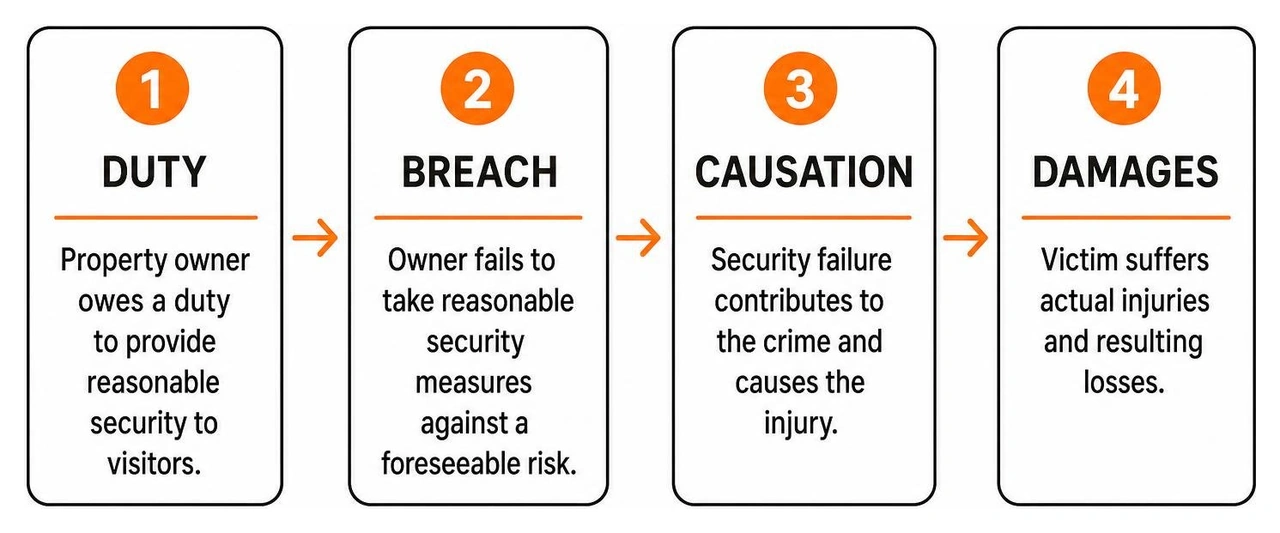
Succeeding in a negligent security claim requires establishing four specific legal elements. If you are wondering how to prove a property owner was negligent, each part of this framework must be supported by admissible evidence:
- Duty of Care: The defendant owned, operated, leased, or managed the premises and owed you a legal obligation to provide reasonable security.
- Breach of Duty: The owner failed to implement or maintain standard safety measures (e.g., ignoring burnt-out security lighting, failing to hire security personnel, or leaving broken building locks unrepaired).
- Proximate Causation: The security failure directly enabled or contributed to the criminal act. You must demonstrate that adequate security measures would likely have deterred, delayed, or prevented the attack.
- Compensatory Damages: You sustained verifiable physical injuries, emotional trauma, financial losses, or medical expenses as a direct result.
Establishing Foreseeability and Prior Criminal Activity
Foreseeability serves as the legal backbone of every negligent security case. A property owner cannot be held liable for a freak, unpredictable incident that no reasonable person could have anticipated. However, when an area has a documented track record of crime, property owners are expected to take note and act.
Courts evaluate foreseeability through several key evidentiary sources:
- Police Dispatch Logs: 911 calls and incident response histories for the specific address and immediate perimeter over the preceding one to three years.
- Prior Incident Reports: Written complaints submitted by tenants, shoppers, or staff alerting management to stalking, trespassing, or attempted break-ins.
- Crime In Similarity and Proximity: Evidence showing recent assaults, robberies, or carjackings on adjacent streets or neighboring retail plazas.
- Property History: Past physical altercations on-site that went unaddressed by ownership.
Common Security Failures and High-Risk Locations
Inadequate security takes many forms. Often, it is not a single catastrophic error, but rather a pattern of deferred maintenance and cost-cutting on basic safety protocols.
| Security Failure | Associated Criminal Risk | Standard Owner Remedy |
|---|---|---|
| Burnt-out / Dim Lighting | Concealed ambushes, parking lot robberies, muggings | High-lumen LED upgrades, routine night audits |
| Broken Door Locks & Latches | Unauthorized building entry, home invasion, sexual assault | Prompt latch repairs, self-closing commercial hardware |
| Unmonitored / Fake Cameras | Lack of real-time intervention, unhindered criminal access | Active video surveillance, recorded multi-angle feeds |
| Gaps in Perimeter Fencing | Uncontrolled foot traffic, trespass by violent offenders | Continuous security fencing, access-controlled gates |
| Understaffed Guard Details | Delayed emergency response, unpatrolled blind spots | Contract compliance, verified security patrols |
Broken Locks, Inadequate Lighting, and Staffing Gaps
Physical security measures work as interlocking layers. When one layer fails, the entire safety perimeter collapses.
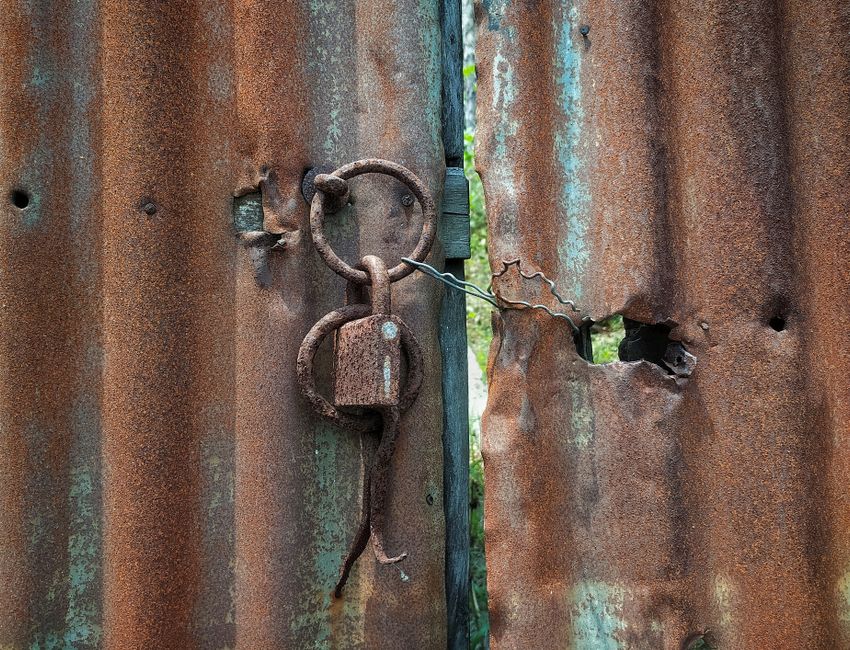
Dimly lit corridors, alleyways, and parking areas offer concealment for attackers. Defective door strikes, broken window latches, and malfunctioning electronic key fobs allow unauthorized individuals to slip into private residential or office spaces. Similarly, when businesses install dummy security cameras or leave real cameras unmonitored and broken for months, they project a false sense of safety while providing zero deterrent value.
Staffing shortfalls are equally dangerous. When management fails to schedule adequate staff, uses untrained personnel, or cuts contracted guard hours to save overhead, patrons are left exposed.
High-Risk Commercial and Residential Properties
Certain properties carry an elevated risk for violent third-party conduct due to high foot traffic, cash transactions, alcohol service, or 24-hour public access. Establishing liability for inadequate security frequently involves:
- Apartment Complexes and Gated Communities: Failure to fix broken vehicle entry gates, secure common laundry facilities, or rekey locks between tenants.
- Parking Garages and Commercial Lots: Poor visibility, blind stairwells, non-working call boxes, and absent roving patrols.
- Shopping Centers and Retail Strips: Inadequate exterior lighting and zero security presence in areas with known loitering and previous thefts.
- Nightclubs, Bars, and Music Venues: Overcrowded spaces exceeding legal capacity, poorly trained bouncers, and unmonitored parking lots after closing time.
- Hotels and Motels: Unrestricted stairwell access, poor keycard control, and lack of perimeter monitoring.
- Public Transit Centers and Light-Rail Lines: Unmanned platforms, unmonitored transit cars, and absent fare-enforcement barriers.
Key Defenses, Damages, and Statutory Deadlines
Negligent security claims are aggressively contested by commercial insurance carriers. To navigate these lawsuits successfully, victims must understand the defenses properties raise, the compensation available, and the filing deadlines that govern premises liability actions.
For a broader overview of premises law, our premises liability complete guide 2026 provides an in-depth look at property owner duties across different scenarios.
Common Defenses Raised by Property Owners
Defense attorneys and insurance adjusters rely on several standard arguments to avoid financial accountability:
- Unforeseeability of the Crime: Arguing that the attack was an erratic, unpredictable incident that no reasonable security measure could have deterred.
- Sole Fault of the Criminal Actor: Contending that the intentional, malicious acts of the third-party criminal constitute a superseding cause that breaks the chain of liability.
- Comparative Negligence: Claiming that the victim acted carelessly—such as walking while distracted, entering a restricted area, or engaging in a dispute.
- Adequate Measures Implemented: Demonstrating that the venue complied with minimum local building codes or industry standards, even if those measures failed in practice.
- Trespasser Defense: Asserting that the injured person had no legal right to be on the property when the incident occurred.
What Compensation Can Victims Recover in an Inadequate Security Lawsuit?
Victims of violent crimes enabled by negligent security often face devastating physical and emotional consequences. An inadequate security lawsuit allows injured individuals and their families to seek comprehensive financial recovery, including:
- Economic Damages: Emergency room bills, intensive care costs, surgeries, rehabilitation, prescription medications, future medical treatments, lost wages, and loss of future earning capacity.
- Non-Economic Damages: Physical pain and suffering, severe emotional distress, post-traumatic stress disorder (PTSD), mental anguish, scarring, permanent disability, and loss of enjoyment of life.
- Wrongful Death Damages: Funeral and burial expenses, loss of financial support, and loss of companionship for surviving family members when an attack turns fatal.
- Punitive Damages: Additional damages awarded in select cases where a property owner's conduct demonstrated gross negligence, willful misconduct, or conscious indifference to human safety.
Statutes of Limitations and Critical Filing Deadlines
Timing is critical. Every state establishes a strict statute of limitations limiting the window of time an injured party has to initiate a lawsuit. Missing this statutory deadline forfeits your legal right to pursue compensation forever.
Beyond statutory deadlines, early legal intervention is vital because security evidence deteriorates rapidly:
- Digital video surveillance footage is frequently overwritten automatically within 7 to 30 days.
- Electronic keycard access logs can be purged.
- Lighting conditions and broken locks might be quickly repaired after an incident, obscuring how the scene appeared at the time of the assault.
- Witness memories fade, and security personnel on duty may leave their jobs.
Real-World Case Studies in Negligent Security
Court decisions and active lawsuits illustrate how these legal principles play out in practice when security breakdowns lead to tragedy.

Public Transit and Security Guard Understaffing
A clear example of systemic security failures involves the wrongful death action highlighted in coverage of the Iryna Zarutska family sues Charlotte over light-rail security gaps | Fox News case, detailing the fatal light-rail train stabbing wrongful death lawsuit.
The legal complaint addresses serious contractual non-compliance. While the municipal transit security contract explicitly funded 219 security personnel for the fiscal year, the private security contractor had hired only 183 guards at the time of the incident. Furthermore, although the contract funded up to 39 armed guards, only 11 were actually deployed across the system.
The lawsuit alleges that the fatal attack on the light-rail car occurred without any security personnel aboard the train, in an environment lacking turnstiles or basic fare enforcement to restrict unauthorized access. The claim demonstrates how direct failures to meet contractual guard quotas and implement access controls provide compelling evidence of actionable negligence.
Nightclub and Venue Liability in Prior Violence Cases
The legal standard for foreseeability was thoroughly explored in the landmark Texas appellate decision Joaquin Garcia v. Fifth Club, Inc., Texas Court of Appeals, 3rd District (Austin), 2005.
In that case, Joaquin Garcia was shot outside a commercial nightclub. Evidence introduced at trial revealed that in the single year preceding the shooting, law enforcement had responded to over 20 separate police calls at the venue, including 14 distinct incidents involving aggravated violence, assaults, and robberies.
The appellate court held that a persistent pattern of violent assaults and criminal activity on the premises made future violent attacks foreseeable to management. By failing to coordinate security, patrol parking areas, or manage dangerous crowd conditions, the venue breached its duty of care to its patrons.
Frequently Asked Questions About Negligent Security Claims
How is foreseeability proven in a negligent security case?
Foreseeability is established through documented physical and historical evidence showing the property owner knew or should have known that criminal conduct was likely. This includes official police dispatch records, historical crime mapping around the property, internal incident reports, maintenance tickets detailing broken security hardware, and prior written safety complaints submitted by patrons or residents.
Who can be held liable for an assault on commercial property?
Depending on the operational structure of the premises, multiple parties may share legal liability. These include commercial property owners, master landlords, property management companies, commercial business tenants, and third-party security contractors hired to monitor and patrol the premises.
What should you do immediately after an assault on someone else's property?
First, seek immediate medical treatment for your injuries. Second, notify law enforcement right away so an official police report is generated. Third, take clear photographs and videos of the scene—capturing broken locks, burnt-out lighting, defective gates, and missing signage. Finally, collect contact information from all witnesses and speak with a premises liability attorney before providing recorded statements to commercial insurance adjusters.
Conclusion: Protecting Your Rights After a Negligent Security Incident
Property owners who prioritize cutting operational costs over protecting human lives must be held accountable. When businesses open their doors to the public, they carry an undeniable responsibility to provide safe, properly maintained, and reasonably secure environments.
If you were injured in a store or business, understanding your rights after a premises liability accident is the first step toward recovery. At Hamo Law Firm, our legal team brings more than 40 years of courtroom trial experience fighting powerful insurance companies on behalf of injury victims and grieving families throughout Michigan, including Flint, Detroit, Genesee County, and Wayne County.
We handle our cases on a contingency-fee basis, meaning you pay zero legal fees unless we successfully win your case. If you or someone you care about suffered harm due to poor lighting, broken security locks, or absent security staff, contact our team today for a free, confidential case evaluation.