
What to Do After a Premises Liability Accident
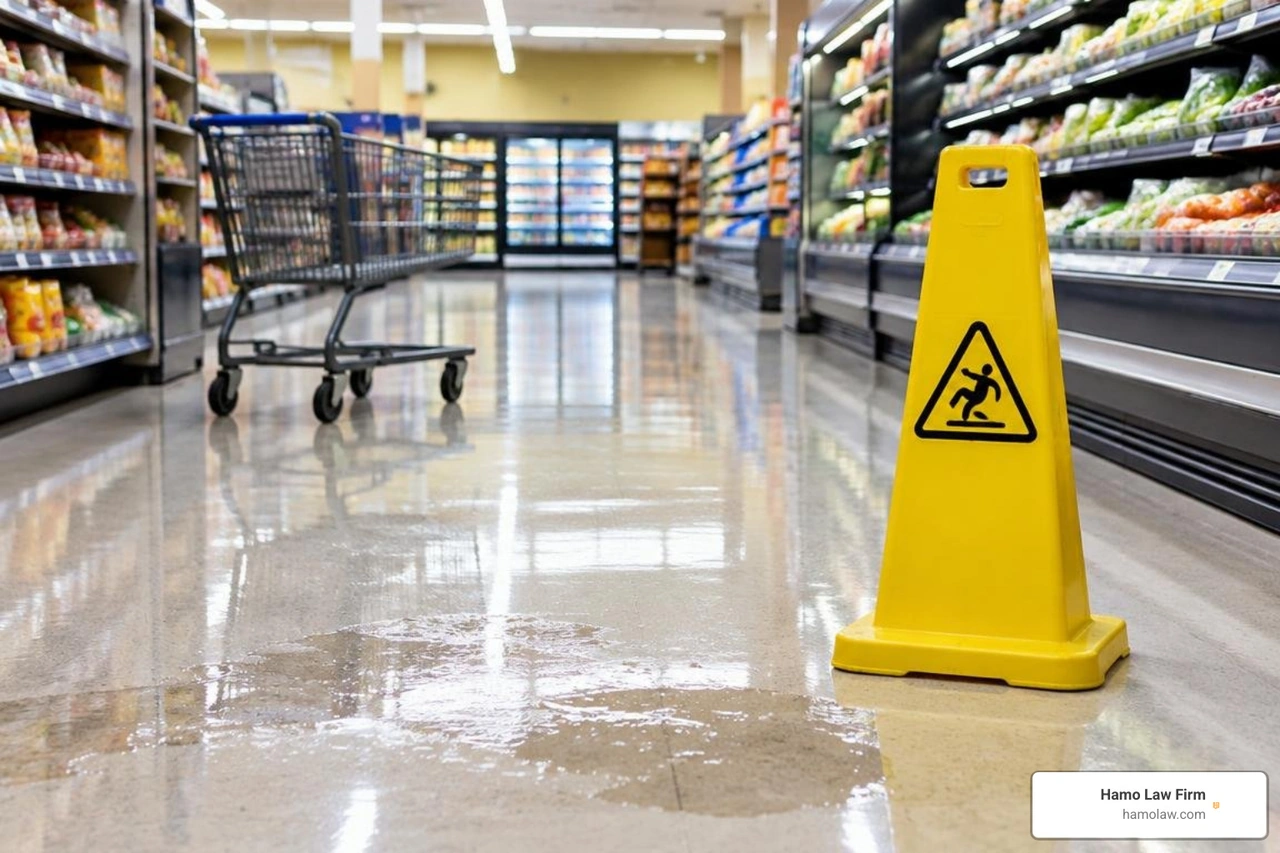
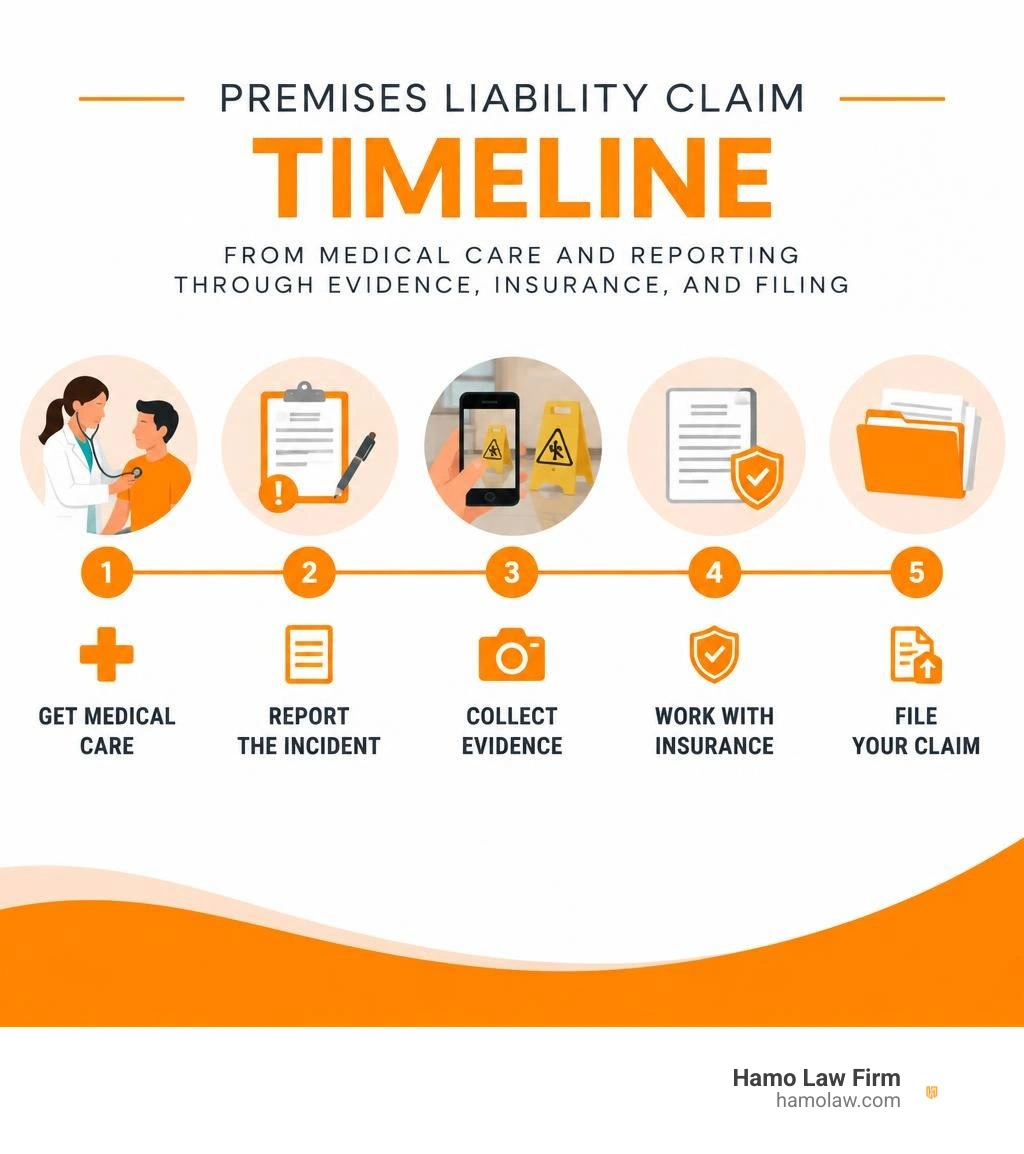
A premises liability accident happens when an unsafe condition on someone else’s property causes an injury and the person responsible for the property may have failed to address it. If you’re hurt, get medical care, report the incident, photograph the hazard, and save witness names and records of your costs. These steps can help show what happened and how the injury has affected you.
A claim is not automatic just because an injury happened on the property. You generally need to show that someone owed you a duty of care, breached it, caused your injury, and left you with damages. This guide walks through that process and the issues that can affect a Michigan claim.
I’m George Hamo, and I’ll help you understand what to look for at each step.
What Is a Premises Liability Accident and How Does It Occur?
When you step onto someone else's land, into a retail store, or through an apartment complex, you have a reasonable expectation that you will not be blindsided by hidden, dangerous hazards. Understanding what is premises liability in Michigan centers on one fundamental principle: property owners, landlords, and commercial tenants have a legal duty to keep their grounds reasonably safe for lawful visitors.
A premises liability incident occurs when a property possessor fails to uphold that legal duty. Whether the issue is a failure to inspect, neglect of routine maintenance, or a lack of clear warnings about an existing hazard, the law holds negligent parties accountable. Our work in premises liability shows that property ownership or control is what establishes this responsibility.
Common Hazards Leading to a Premises Liability Accident
Dangerous property conditions take many forms. Some hazards develop gradually over months of neglect, while others appear in seconds:
- Slippery Walkways and Aisles: Puddles, tracked-in slush, grease spills, or freshly waxed surfaces are common culprits in our slip and fall cases.
- Thermal and Electrical Dangers: Exposed wiring, malfunctioning water heaters, and structural code violations can cause severe burn injuries or electric shocks.
- Falling Objects: Unsecured warehouse pallets, crumbling ceiling plaster, or falling merchandise in big-box retail aisles can cause traumatic head and spinal injuries.
- Mechanical and Structural Failures: Broken handrails, collapsing decks, uneven concrete slabs, and sudden elevator drops.
- Aquatic Hazards: Unsecured gates or missing safety drain covers at public or private pools, as detailed in our swimming pool accident guide.
- Animal Attacks: Domestic pets left unrestrained on commercial or residential properties, where an experienced dog bite lawyer in Michigan can help establish owner liability.
- Toxic Environmental Exposures: Undisclosed mold, carbon monoxide leaks, asbestos, or improper chemical storage causing sudden respiratory failure.
Slip and Falls vs. Complex Premises Claims
While everyday slips, trips, and falls represent a significant portion of our work as a slip and fall lawyer in Michigan, premises liability encompasses far broader safety failures.
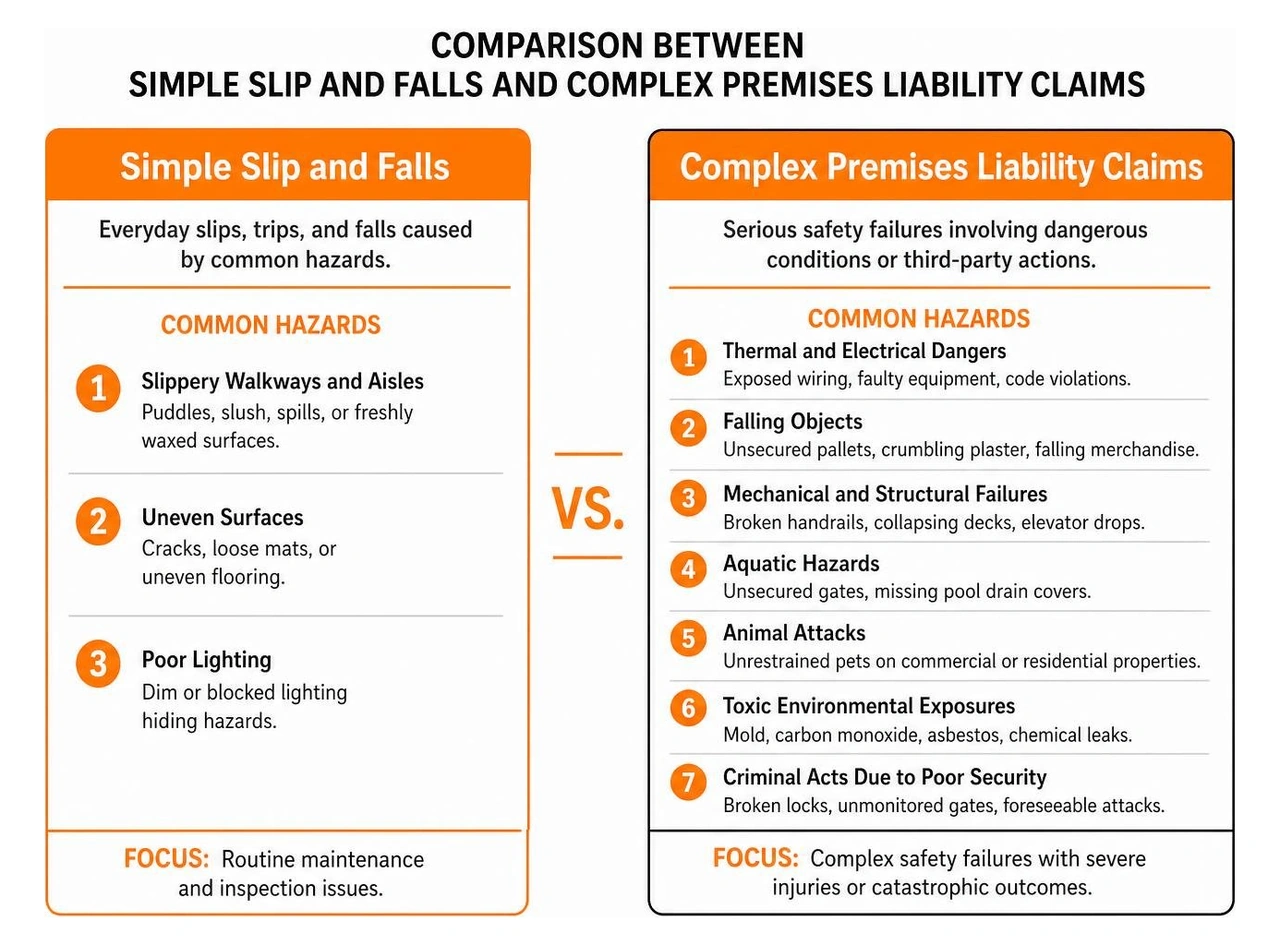
Complex premises cases often involve structural collapses, inadequate fire safety exits, or criminal acts enabled by broken locks and unmonitored gates. In situations involving violent third-party crimes, our insufficient security lawsuit guide outlines how landlords and commercial venues can be held accountable for foreseeable attacks. In the most severe cases, catastrophic property hazards lead to fatal outcomes, requiring the guidance of our fatal slip and fall guide.
Legal Elements: Proving Fault After a Premises Liability Accident

Securing compensation after being hurt on someone else's property requires proving specific legal elements. If you are wondering how to prove a property owner was negligent, Michigan law requires you to establish four core components:
- Duty of Care: The defendant owned, possessed, or controlled the property and owed you a specific standard of care.
- Breach of Duty: The possessor failed to maintain the property safely, failed to repair a known hazard, or neglected to provide adequate warnings.
- Causation: The specific hazardous condition directly caused your accident and subsequent injuries.
- Damages: You suffered real, compensable losses, such as emergency medical costs, lost wages, and pain and suffering.
Understanding how to prove negligence in Michigan slip and fall accidents requires examining the visitor's legal status, as that relationship defines the exact duty owed by the property owner.
Visitor Legal Status and Duties of Care
The standard of care a property owner owes depends directly on why you entered the property. Michigan categorizes visitors into three legal classifications:
| Visitor Status | Definition & Purpose of Visit | Legal Duty Owed by Property Possessor |
|---|---|---|
| Invitee | Enters for business purposes or on public property (e.g., store customers, restaurant patrons, contractors). | Highest Duty: Must inspect the premises, actively fix known hazards, and warn of hidden dangers. |
| Licensee | Enters with express or implied permission for social reasons (e.g., houseguests, friends, family). | Moderate Duty: Must warn of or repair known, hidden dangers; no active duty to inspect for unknown risks. |
| Trespasser | Enters without permission, invitation, or legal right. | Lowest Duty: No duty to maintain safe premises; must only refrain from willful and wanton misconduct. |
When determining who is liable for injuries on someone else's property, special exceptions apply to children. Under the attractive nuisance doctrine, property owners can be held liable for injuries suffered by child trespassers if a dangerous artificial condition—such as an unfenced swimming pool or heavy construction equipment—is likely to attract children who cannot appreciate the risk. Similarly, domestic animal incidents on private property invoke specialized rules covered under homeowner insurance dog bite policies.
Actual vs. Constructive Notice
To establish that a property owner breached their duty, an injured plaintiff must show the owner had notice of the hazard:
- Actual Notice: The owner, manager, or staff had direct knowledge of the defect. Examples include an employee spilling liquid and walking away, or a customer reporting a broken step to management before your fall.
- Constructive Notice: The hazardous condition existed for such a duration that a reasonable property inspection would have uncovered it. Proving constructive notice relies on maintenance logs, surveillance footage, and witness testimony showing how long the hazard remained unaddressed.
Defenses, Statutory Preemption, and Property Owner Protections

Property owners and their insurance carriers use several common defenses to limit or avoid liability.
One frequent defense is comparative fault. Under Michigan law, if an injured person shares blame for not watching their step, their financial recovery is reduced by their percentage of fault. If their fault exceeds 50%, non-economic damages like pain and suffering may be barred entirely.
Property owners also rely on the Michigan open and obvious doctrine in slip and fall claims, arguing that an everyday person should have seen and avoided the danger. In standard architectural settings, routine features like standard sidewalk curbs or marked parking stops often do not qualify as unreasonably dangerous defects. This principle was illustrated when a Mississippi court evaluated whether parking curbs constitute an unreasonably dangerous condition, finding that everyday architectural items with visible contrast are normal features rather than actionable hazards.
Alcohol Service and Dram Shop Act Preemption
In cases involving third-party assaults or bar fights, plaintiffs often wonder when property owners are liable for third party crimes. When alcohol service plays a central role, statutory dram shop acts often take precedence over ordinary common-law premises liability.
In many jurisdictions, commercial alcohol statutes serve as the exclusive legal remedy for alcohol-related harms. This principle was addressed in Texas appellate litigation in Parker v. 20801, Inc. (2006), where the court held that statutory alcohol regulations preempted common-law premises claims for injuries arising from adult alcohol service. Similar analyses appear in other Texas Court of Appeals opinions regarding the safe harbor defense and related appellate reviews under the John L. Parker v. 20801 Inc. decision, confirming that statutory alcohol provisions supersede general premises negligence claims.
The Safe Harbor Defense for Commercial Establishments
When alcohol providers face claims related to patron violence or overservice, they frequently raise statutory safe harbor affirmative defenses. To establish this defense, the establishment must generally prove:
- Mandatory employee participation in approved alcohol server training programs.
- Actual employee attendance and certification.
- That the employer did not directly or indirectly encourage staff to violate beverage service laws.
However, an establishment cannot rely on written policies alone. Courts require actual proof of on-the-ground policy enforcement, such as manager oversight logs and intervention records, to grant safe harbor protections.
The Step-by-Step Premises Liability Claim Process and Recoverable Damages
Pursuing an injury claim requires careful evidence collection and adherence to procedural rules.
Knowing what to do after a slip and fall accident in Michigan protects both your physical recovery and your legal rights:
- Step 1: Seek Immediate Medical Care: Prompt treatment creates a clean medical record linking your injuries directly to the incident.
- Step 2: Report the Incident: Notify the store manager, landlord, or security team and obtain a written copy of the incident report.
- Step 3: Document the Scene: Take clear photos and videos of the hazard, surrounding lighting, missing warning signs, and footwear.
- Step 4: Identify Witnesses: Collect names, phone numbers, and statements from anyone who saw the fall or the hazardous condition beforehand.
- Step 5: Preserve Evidence: Keep the unwashed clothing and shoes you were wearing in a secure location.
- Step 6: Track Financial and Personal Losses: Maintain a file of hospital bills, prescription receipts, therapy logs, and lost pay stubs.
Recoverable damages in a successful premises liability claim fall into three primary categories:
- Economic Damages: Measurable financial losses, including ER visits, physical therapy, surgical fees, future medical care, lost wages, and reduced earning capacity.
- Non-Economic Damages: Intangible losses, including physical pain, emotional trauma, loss of consortium, and reduced enjoyment of life. In cases resulting in loss of life, families may pursue a fatal slip death claim.
- Punitive Damages: Reserved for cases involving willful, wanton, or grossly reckless disregard for human safety.
Filing Deadlines and Statutes of Limitations
You must file your claim within strict legal deadlines:
- General Personal Injury: In Michigan, the standard statute of limitations for personal injury and premises liability claims is generally three years from the date of the injury. By comparison, other states maintain similar rules; for instance, the statute of limitations in South Carolina is also three years under general personal injury rules.
- Government and Municipal Properties: If you are injured on property owned by a city, county, or state entity (such as a public sidewalk or municipal building in Flint or Detroit), you face much shorter notice windows. Michigan law often requires formal written notice of the defect and injury to the government agency within 120 days of the accident. Failing to meet these notice requirements can permanently bar your claim.
Frequently Asked Questions About Premises Liability Claims
What are the four key elements required to prove a premises liability claim?
To prevail in a claim, you must prove: (1) Duty (the owner had a legal obligation to keep you reasonably safe), (2) Breach (the owner failed to inspect, repair, or warn about an unsafe condition), (3) Causation (that specific hazard caused your injury), and (4) Damages (you suffered measurable economic or non-economic losses). Learn more about how to prove negligence in a slip and fall case.
How does the attractive nuisance doctrine protect child trespassers?
The attractive nuisance doctrine holds property owners liable for injuries to child trespassers caused by dangerous, artificial conditions on their land that are likely to attract children. Because young children may not understand the risks associated with features like swimming pools, open pits, or heavy machinery, property owners must take reasonable measures—such as installing secure fencing and locking gates—to keep them safe.
What is the difference between actual notice and constructive notice?
Actual notice means the property possessor or their staff was directly aware of the hazardous condition because they created it, saw it, or received a report about it. Constructive notice means the dangerous condition existed for a long enough time that the owner should have discovered and corrected it through reasonable, routine inspections.
Conclusion
A hazardous property condition can disrupt your health, career, and financial security in an instant. Understanding your legal rights and preserving critical evidence right away gives you the best foundation for a successful claim. For a broader look at these cases, read our premises liability complete guide.
At Hamo Law Firm, our team brings over 40 years of trial experience fighting for accident victims across Flint, Detroit, Genesee County, and Wayne County. We operate on a contingency-fee model—meaning you pay no upfront legal fees unless we win your case.
If you or a loved one were hurt on commercial or residential property, learn more about your rights when injured in a store or business after a premises liability accident and reach out to our team today for a free consultation.