
What No-Fault Insurance Means After a Michigan Crash

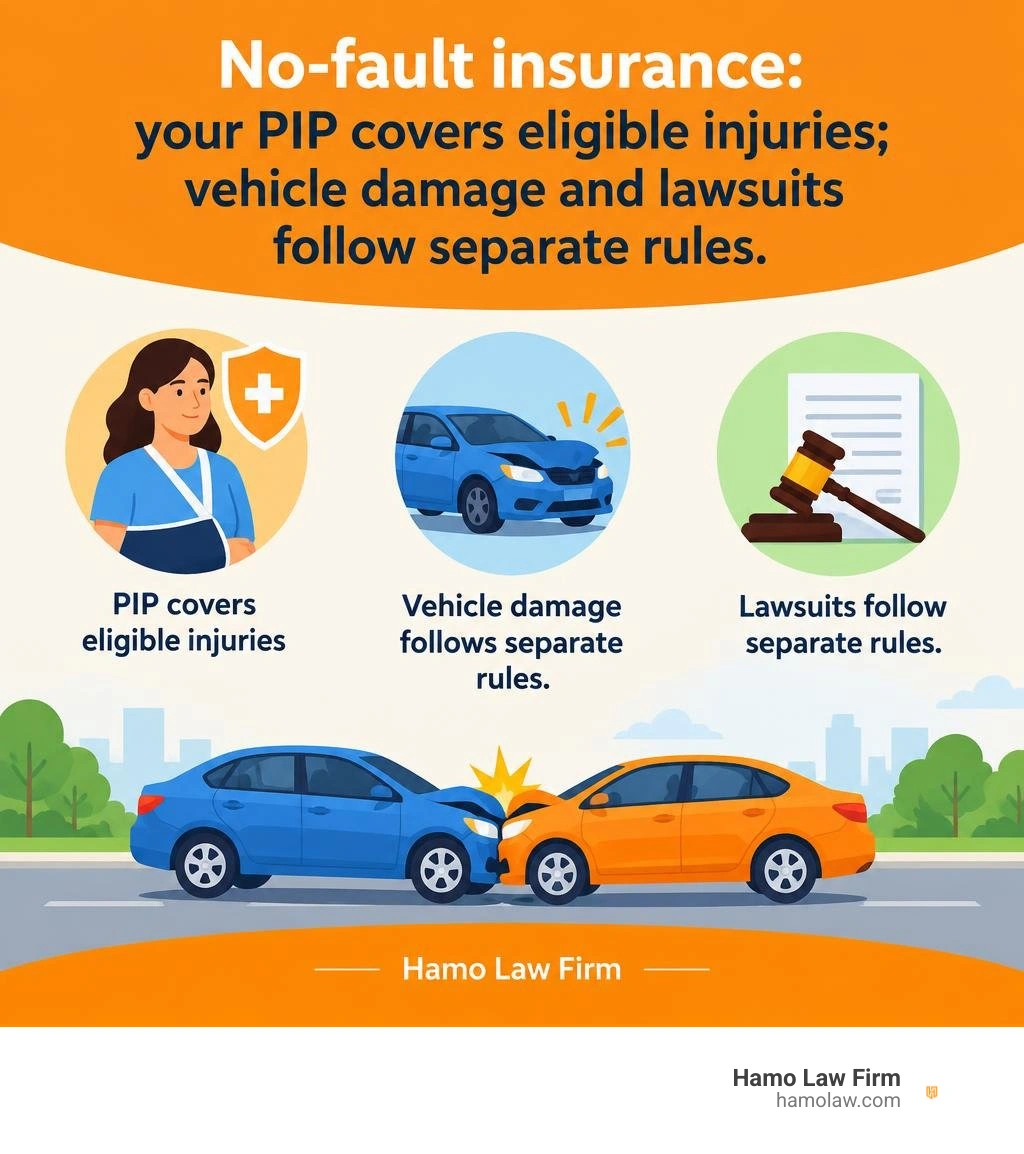
No fault insurance means your own auto coverage can pay for crash-related medical care and lost wages, even if another driver caused the accident. In Michigan, this coverage is called personal injury protection, or PIP. It does not automatically pay to repair your car, and it does not mean the other driver can never be held responsible.
The key is knowing which claim covers each loss and whether your injuries give you the right to sue. I’m George Hamo, and this guide will help you sort out those questions after a crash.
Understanding No Fault Insurance vs Traditional Tort Systems
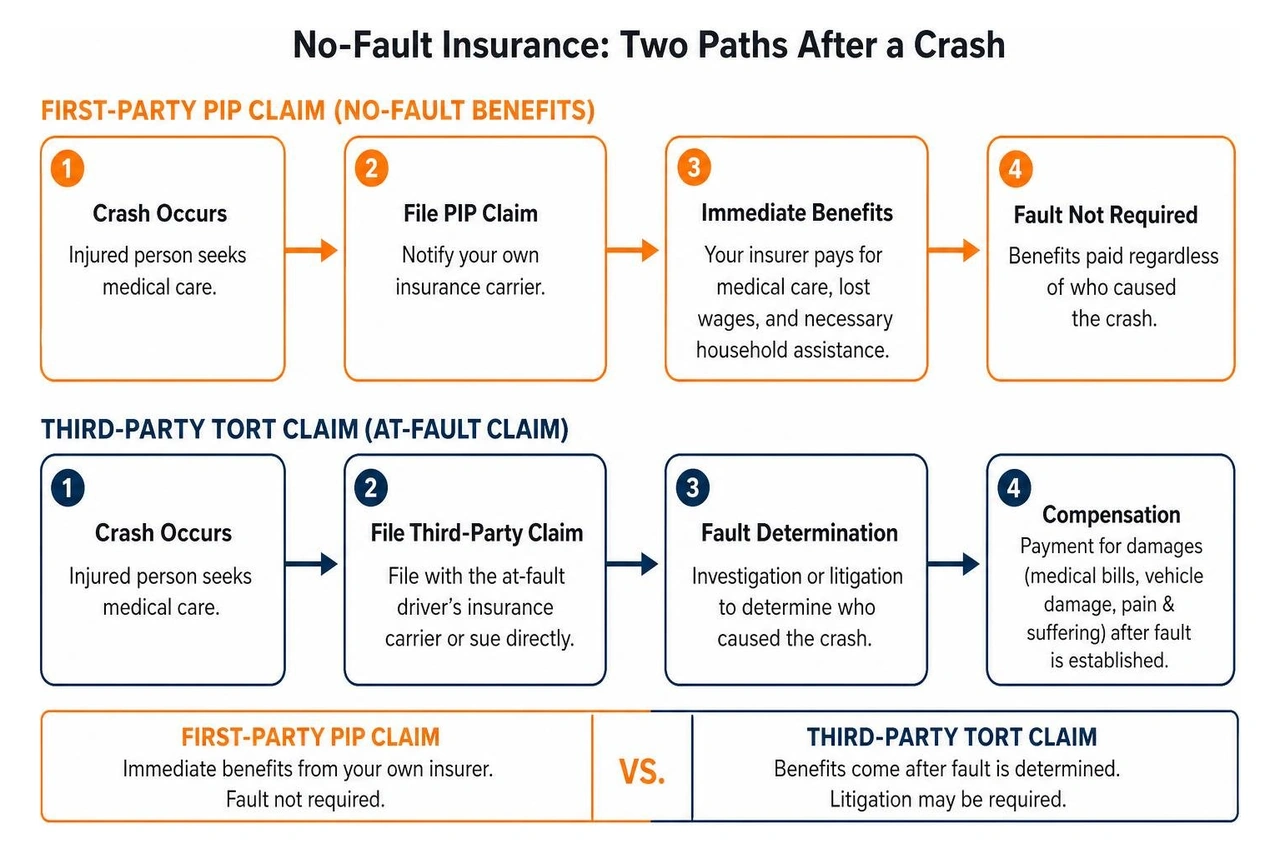
Auto insurance laws across the United States fall into two broad systems: traditional tort (at-fault) systems and no-fault systems. In a traditional tort state, the driver who causes a crash is legally liable for all resulting economic and non-economic harm. If you get rear-ended at a red light in a tort state, you must file a third-party claim against the at-fault driver's insurance carrier or sue them directly to recover funds for medical bills, car repairs, and pain and suffering. This setup often leads to lengthy disputes over who was to blame, during which injured victims may wait months or years for financial relief.
In contrast, no-fault insurance is designed around first-party benefits. Under this framework, your own insurance carrier pays for your medical treatment, wage replacement, and necessary household assistance right away, regardless of who caused the collision. The core goal of no-fault legislation is to eliminate delays in medical care and significantly reduce court congestion from minor injury lawsuits.
The state provides an overview through the official Brief Explanation of Michigan No-Fault Insurance. To see how these rules apply in real crash scenarios, you can review our breakdown of how Michigan no-fault insurance works.
| Feature | No-Fault Auto System | Traditional At-Fault (Tort) System |
|---|---|---|
| Primary Medical Payer | Your own auto insurer (via PIP) | The at-fault driver's auto insurer |
| Speed of Benefit Payouts | Immediate (first-party direct claim) | Delayed pending fault investigation or litigation |
| Fault Determination | Not required to receive medical/wage benefits | Required before any payout is approved |
| Right to Sue for Pain & Suffering | Restricted by statutory injury/monetary thresholds | Broad right to sue for any crash-related damages |
| Vehicle Damage Claims | Handled through collision coverage or limited tort | Paid directly by the at-fault driver's property damage liability |
Key Components of Mandatory No Fault Insurance Policies
A standard no-fault auto policy consists of several distinct coverages designed to protect both the driver and the public. Under Michigan law, every registered motor vehicle owner must maintain a policy that includes three mandatory pillars:
- Personal Injury Protection (PIP): This is the foundation of no-fault coverage. PIP pays for all reasonable and necessary medical care resulting from the crash. Depending on the tier selected, it can cover hospital bills, surgeries, rehabilitation, prescription medications, and durable medical equipment. PIP also covers up to three years of lost wages (subject to monthly statutory maximums) and up to $20 per day in replacement services for household chores the injured victim can no longer perform. For severe accidents, PIP covers attendant care (in-home nursing or aide services) and provides survivor benefits and funeral cost coverage in fatal crashes. You can explore policy structures in our basic no-fault coverage guide.
- Property Protection Insurance (PPI): PPI provides up to $1 million in coverage for damage your vehicle causes to other people's stationary property within the state, such as buildings, fences, guardrails, and properly parked vehicles.
- Residual Bodily Injury and Property Damage Liability (BI/PD): Although no-fault handles your own medical bills, you still need liability protection. Residual liability protects you if you are sued for causing a crash that results in catastrophic injury, permanent disfigurement, death, or out-of-state property damage. The legal minimum limits in Michigan are $20,000 per person for bodily injury, $40,000 per accident involving multiple injuries, and $10,000 for out-of-state property damage (commonly written as 20/40/10), though higher default limits apply unless lower tiers are chosen in writing.
Driving without this mandatory coverage is a misdemeanor punishable by a fine of up to $500, up to one year in jail, and driver's license suspension.
How PIP Differs from MedPay and Health Insurance Coverage
Drivers often wonder why they need PIP if they already have private health insurance or Medical Payments (MedPay) coverage. While these coverages overlap, their scope and operation differ substantially:
- Personal Injury Protection (PIP): PIP provides broad, comprehensive benefits. In addition to medical treatment, it replaces lost wages, pays for attendant care, and reimburses household replacement services. PIP covers you regardless of fault and typically pays primary benefits before regular health insurance kicks in.
- Medical Payments (MedPay): Common in fault-based states, MedPay is a narrower first-party coverage that pays medical and funeral bills only. It carries low policy caps (often $1,000 to $10,000) and provides zero wage loss or attendant care reimbursement.
- Private Health Insurance: Health insurance covers doctor and hospital visits, but policies carry network restrictions, high deductibles, and co-pays. Standard health insurance does not reimburse lost income or cover daily personal care assistance.
Under modern no-fault rules, drivers can choose to coordinate their auto insurance with their health insurance to lower auto premiums. If you have qualified health coverage—such as an employer health plan that does not exclude auto accident injuries and has an individual deductible under statutory caps—your health insurer pays first, and your auto PIP acts as secondary coverage for remaining balances. Drivers can review consumer resources via the State Insurance Department Consumer Guide to evaluate health coordination rules.
Coverage Rules, State Mandates, and Property Damage Exclusions
Nationwide, 12 states operate mandatory no-fault auto insurance systems: Florida, Hawaii, Kansas, Kentucky, Massachusetts, Michigan, Minnesota, New Jersey, New York, North Dakota, Pennsylvania, and Utah.

While the no-fault label sounds all-encompassing, it strictly applies to bodily injuries and specific statutory property claims. It does not cover everything. State regulatory publications like the Michigan DIFS Purchasing Auto Insurance FAQ outline key exclusions. Some jurisdictions outside the U.S. use different structural splits; for example, Quebec's Blended Automobile Insurance Plan divides property damage into private insurance while bodily injury is handled through a public administrative agency.
Understanding what no-fault insurance excludes protects you from unexpected out-of-pocket costs:
- Your Own Vehicle Damage: PIP never pays to repair your own damaged automobile after a collision.
- Theft and Vandalism: If your car is stolen or vandalized, no-fault PIP provides no coverage. You must carry comprehensive insurance for these events.
- Intentional Harm or Criminal Acts: Injuries sustained while committing a crime or intentionally causing a crash are excluded from no-fault recovery.
How Choice No Fault Insurance States Operate
A subset of no-fault jurisdictions uses a "choice no-fault" model. In these states—primarily New Jersey, Pennsylvania, and Kentucky—drivers choose when buying a policy whether they want to operate under a no-fault system or a traditional tort framework.
| State | Default System | Choice Mechanism | Lawsuit Threshold Type | Minimum PIP Requirement |
|---|---|---|---|---|
| New Jersey | Choice | Driver selects "Limitation on Lawsuit" or "No Limitation" | Verbal (6 serious injury categories) | $15,000 per person |
| Pennsylvania | Choice | Driver selects "Limited Tort" or "Full Tort" | Verbal (serious impairment of body function) | $5,000 per person |
| Kentucky | Choice | Driver can reject no-fault limitations in writing | Monetary ($1,000) or Verbal (fracture, permanent injury) | $10,000 per person |
| Michigan | Pure No-Fault | Tiered PIP choice ($50k Medicaid, $250k, $500k, Unlimited) | Verbal (serious impairment of body function) | Tier-dependent |
| New York | Pure No-Fault | Mandatory no-fault framework | Verbal (serious injury defined by statute) | $50,000 per person |
| Florida | Pure No-Fault | Mandatory no-fault framework | Verbal (significant/permanent loss) | $10,000 per person |
In choice states, selecting the limited tort or no-fault option lowers your monthly insurance premium, but you give up the right to sue an at-fault driver for non-economic damages (pain and suffering) unless your injuries meet a specific statutory severity threshold. If you pay a higher premium for full tort, you retain unlimited rights to sue an at-fault driver for pain and suffering from any injury.
Vehicle Repairs, Property Damage, and Mini-Tort Claims
One of the most common misconceptions about no-fault insurance is that your own insurance company will automatically fix your vehicle after a crash.
Your car's physical damage is handled through separate optional coverages:
- Collision Insurance: Covers repairs to your car regardless of fault. Forms include broad form collision (where your deductible is waived if you are less than 50% at fault), standard collision, and limited collision.
- Comprehensive Insurance: Covers damage from non-collision events, such as falling trees, animal strikes, fire, hail, or vehicle theft.
When another driver is at fault for a crash, Michigan law provides a limited exception to tort immunity known as the mini-tort statute. Under mini-tort rules, an accident victim can sue the at-fault driver (or file a claim directly against their mini-tort liability coverage) for up to $3,000 in uncompensated vehicle damages. This is primarily used to recover your out-of-pocket collision deductible or to pay for repairs if you did not carry collision insurance.
Legal Rights, Lawsuit Thresholds, and System Criticisms
Living in a no-fault state alters how and when you can pursue a personal injury lawsuit against a careless driver. Because your own PIP coverage pays your economic losses (medical bills and base wage loss), the legal system limits lawsuits to avoid clogging the courts with minor fender-benders.

When an accident causes catastrophic harm, you can step outside the no-fault system. Victims can bring a third-party tort claim against the at-fault driver for excess economic losses (medical costs and wage loss exceeding your PIP policy limits) and non-economic damages, commonly referred to as pain, suffering, and loss of enjoyment of life. Understanding how crash lawsuits work under no-fault is essential for anyone dealing with long-term disability, particularly when pursuing third-party claims for catastrophic injuries.
Verbal vs Monetary Thresholds for Suing an At-Fault Driver
To file a lawsuit for pain and suffering against an at-fault motorist in a no-fault state, your injuries must cross a statutory legal threshold. States divide these thresholds into two types:
- Monetary Thresholds: A victim may sue the at-fault driver once their medical treatment expenses exceed a specific dollar amount. For example, in Massachusetts, you must have medical damages in excess of $2,000 to file a bodily injury lawsuit. In Kentucky, the monetary threshold is $1,000.
- Verbal (Qualitative) Thresholds: Rather than looking at medical bills, the statute uses specific legal language ("verbal descriptions") to define what qualifies as a serious injury.
In Michigan, a victim can sue for pain and suffering only if their injuries result in:
- Death,
- Permanent serious disfigurement (such as severe scarring or loss of a limb), or
- Serious impairment of body function.
Under Michigan law, proving a "serious impairment of body function" requires showing an objectively manifested impairment of an important body function that affects the person's general ability to lead their normal life.
System Challenges: Higher Premiums and Fraud Concerns
While no-fault insurance guarantees rapid medical payouts, the system faces ongoing scrutiny. A landmark 2012 study by the RAND Corporation found that overall insurance costs and claims expenses tend to be higher in no-fault systems than in traditional tort states.
Several factors drive up these costs:
- High Premiums in Urban Areas: Michigan's average annual auto insurance rates remain among the highest in the country, and Detroit frequently ranks as the most expensive city in the nation for car insurance.
- Medical Billing and Overutilization: First-party medical coverage without strict fee schedules historically led medical providers to charge significantly higher rates for auto accident care compared to standard health insurance rates.
- Insurer Pushback and Claim Denials: To control payouts, auto insurers frequently use independent medical examinations (IMEs) to cut off legitimate PIP benefits. Knowing what to do when insurers deny injury claims helps ensure that accident victims receive the medical care and wage replacement they are legally owed.
Frequently Asked Questions About No-Fault Insurance
Does no-fault insurance mean nobody is blamed for the crash?
No. The term "no-fault" applies solely to how your immediate medical expenses and wage loss benefits are paid. Law enforcement officers still investigate crashes, assign fault, and issue traffic citations. Insurance companies evaluate driver negligence to handle vehicle damage claims, mini-tort recovery, and premium rate adjustments. Proving fault remains necessary if your injuries cross the statutory threshold and you file a lawsuit for pain and suffering. To learn more, see our detailed guide on how fault is determined after a crash.
Who pays for my vehicle damage in a no-fault state?
Your vehicle damage is covered by your own collision policy, not by no-fault PIP. If you carry broad form collision coverage and were not at fault, your insurer waives your deductible and pays for repairs. If you carry standard collision or no collision coverage, you can use Michigan's mini-tort law to seek up to $3,000 from the at-fault driver's insurance to cover your deductible or vehicle repairs. If your vehicle was legally parked and struck by another car, the moving driver's Property Protection Insurance (PPI) pays for your repairs in full.
How does no-fault insurance coordinate with my regular health insurance?
If you select a coordinated no-fault policy, your primary health insurance pays for crash-related medical bills first. Your auto insurer's PIP coverage then pays for expenses your health insurer refuses, such as deductibles, copayments, specialized rehabilitation, and medical mileage. If you choose an uncoordinated policy, your auto PIP pays your auto medical expenses as primary, allowing you to access medical providers without health insurance network restrictions.
Protecting Your Rights Under No-Fault Rules
Navigating no-fault insurance can feel overwhelming after a serious auto accident. Between strict one-year statutory notice deadlines, complex benefit applications, medical fee disputes, and proving third-party liability thresholds, insurer roadblocks can jeopardize your financial recovery.
For more than 40 years, Hamo Law Firm has stood up to auto insurance companies across Flint, Genesee County, Detroit, and throughout Michigan. We work on a contingency-fee basis—which means you pay no legal fees unless we successfully win your case. If you or a loved one is struggling with denied benefits or dealing with life-altering injuries, contact our team today for guidance on filing complex no-fault insurance claims and protecting your future.