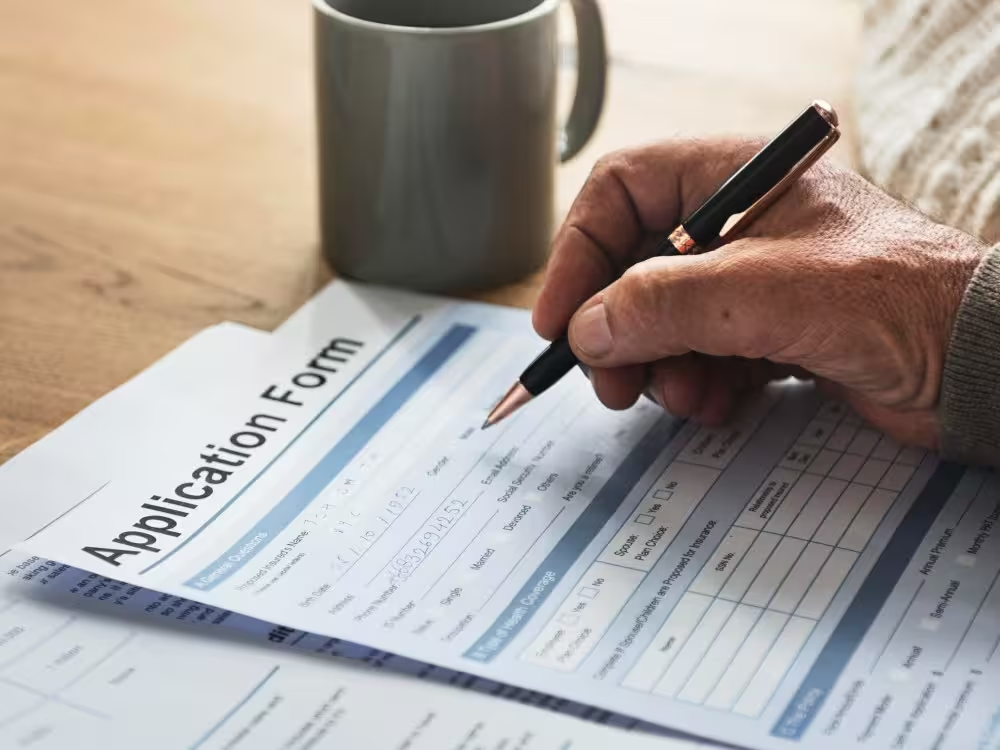
Most people never think about PIP benefits until they're lying in a hospital bed trying to make sense of a form. Someone hands them a stack of paperwork. They use a dozen unfamiliar terms and expect understanding while the person is still in shock. That is not fair, and it is not how we do things here.
We have spent more than 40 years helping Michigan families untangle the No-Fault system. George started this work decades ago, and Alex grew up watching him do it before joining him at the table. Somewhere along the way, we got tired of watching good people struggle to understand benefits they were entitled to all along.
What Michigan's No-Fault Law Actually Means for You
Your Own Insurance Pays First
Michigan is a no-fault state. That means after a car accident, your own auto insurance policy pays your medical bills first. It does not matter who caused the crash. Your insurer is on the hook for your care right out of the gate.
This is different from most other states. There, you would typically have to prove fault before any medical bills got paid. Michigan built a system meant to get injured people treatment faster. In practice, it does not always feel that fast.
Why This System Exists
Lawmakers designed No-Fault to reduce lawsuits and speed up medical payments after a crash. The idea was simple. Everyone carries insurance, and everyone's own policy responds first, regardless of blame. It sounds clean on paper.
The reality is more complicated. Insurance companies still control the process, and they still decide what gets paid and when. That is where families often need someone in their corner.
What PIP Benefits Actually Cover
Medical Expense Coverage
PIP is generally meant to cover what the law calls "allowable expenses." These typically include:
- Hospital and doctor bills related to the crash
- Rehabilitation and physical therapy
- Prescription medications
- Medical equipment and mobility devices
- Mileage to and from medical appointments
Wage Loss Benefits
If your injuries keep you out of work, PIP may help replace a portion of your lost income. This benefit is capped and subject to specific time limits and calculations under Michigan law. It is meant to help, not to fully replace your paycheck.
Attendant Care and Replacement Services
This is the benefit families overlook most often. If you need help with daily tasks like bathing, dressing, or basic home care while you recover, PIP may cover that assistance. It can also cover "replacement services," which means help with household work you can no longer do yourself, like cooking, cleaning, or yard work.
Quick FAQ:
Does PIP cover a family member who takes time off work to care for me? It may, depending on the type of care provided and how it is documented. This is an area where proper paperwork matters a great deal.
Does PIP cover mental health treatment after a crash? Coverage can extend to reasonably necessary psychological or psychiatric treatment connected to the accident, depending on your policy.
Is there a cap on how much PIP will pay? It depends entirely on which coverage level you selected. This brings us to the next section.
The Recent Changes People Don't Realize Affect Them
Coverage Level Choices
Michigan drivers now choose a specific PIP coverage tier when they buy their policy. Options range from unlimited lifetime medical coverage down to lower dollar limits. In some circumstances, an opt-out is also available. The tier chosen at purchase directly affects how much medical coverage is available after a crash.
The Fee Schedule
The law also introduced a fee schedule limiting how much medical providers can be reimbursed for treating crash victims. This has caused some providers to limit the number of auto accident patients they accept. It is a frustrating reality that affects access to care. It is worth understanding before you need treatment, not after.
Myth vs. Fact
Myth: All Michigan drivers still have unlimited lifetime PIP medical coverage. Fact: Unlimited coverage is now one option among several, not the automatic default it once was.
Myth: If your PIP coverage runs out, you have no other options. Fact: Depending on the circumstances, other avenues, including a claim against an at-fault driver, may still be available.
The One-Year-Back Rule: The Deadline Most People Never Hear About
What It Actually Means
Michigan law includes something called the one-year-back rule. In plain terms, waiting too long to submit a PIP claim has consequences. You may only recover expenses going back one year from the date you filed, not back to the original accident date.
Why It Trips People Up
Think about how recovery actually works. You are dealing with appointments, medication schedules, missed work, and a body that does not feel like your own. Filing insurance paperwork on a strict timeline is usually the last thing on your mind.
Quick Takeaway
If you are unsure where you stand on this timeline, here is what matters most:
- Document every medical expense as it happens, even small ones
- Submit claims for benefits promptly rather than waiting
- Keep copies of everything you send to your insurer
- Ask questions early instead of assuming benefits will simply arrive
When PIP Isn't Enough, and What Comes Next
The Limits of No-Fault Coverage
PIP benefits are designed to handle the medical and daily-life impact of a crash. But serious injuries often cost far more than PIP alone provides. Think traumatic brain injuries, spinal cord damage, or long-term disability. This is especially true once coverage tier limits, wage loss caps, and fee schedules come into play.
Third-Party Claims Against an At-Fault Driver
When injuries meet Michigan's legal threshold for serious impairment, a separate claim against the at-fault driver may become available. This is a different process from PIP. It can address damages like pain and suffering, which No-Fault benefits generally do not cover.
Whether this option applies depends heavily on the specifics of the injury and the crash. There are no guarantees here, only case-by-case evaluation of the facts.
Why Experienced Guidance Matters at This Stage
This is the point where families most often need someone who has walked this road before. Understanding where PIP ends and a liability claim begins takes real experience with Michigan law, not guesswork. It is also where insurance companies tend to get more aggressive about limiting what they pay.
Common Mistakes We See Families Make with PIP Claims
Over four decades, certain mistakes show up again and again. Most are understandable, and most are avoidable once you know what to watch for.
- Waiting too long to file for benefits or reimbursement, running into the one-year-back rule
- Not documenting attendant care or replacement services properly, which can lead to denied claims
- Assuming the insurance adjuster is working in their best interest, when the adjuster's job includes protecting the insurer's bottom line
- Failing to report every treating provider, creating gaps in the medical record
- Not understanding their own coverage tier until after they need to use it
- Signing documents from an insurer without understanding what rights they may be giving up
Why We Explain It This Way
We did not write this post to overwhelm you with legal terms. We wrote it because we have sat across the table from hundreds of Flint families who felt lost in exactly this system. Confusion leads to costly mistakes. Costly mistakes are the last thing anyone needs after a crash.
George built this practice on a simple belief: clients deserve straight answers from people who actually pick up the phone. Alex grew up inside that belief and carries it forward today. Two generations, one family firm, still explaining things the same honest way.
Talk to Someone Who Will Actually Explain It to You
If you are staring at a stack of insurance paperwork right now and none of it makes sense, you do not have to figure it out alone. We offer free case evaluations, and we mean it when we say you will speak with an actual attorney, not a call center.
Reach out whenever you are ready. There is no pressure and no obligation.
Hamo Law Firm
614 S. Grand Traverse Street Flint, Michigan 48502
Phone: 810-234-3667
Email: ahamo@hamolaw.com
Website: hamolaw.com
Follow us:
Facebook: facebook.com/HamoLawFirm
Instagram: instagram.com/hamolawfirm
LinkedIn: linkedin.com/company/hamo-law
YouTube: youtube.com/@HamoLawFirm
TikTok: tiktok.com/@hamolawfirm
The information provided here is for educational purposes and is not intended as legal advice. Every case is unique, and past success does not guarantee future results.