
Steps to Take After a Crash and What Not to Say to Insurance
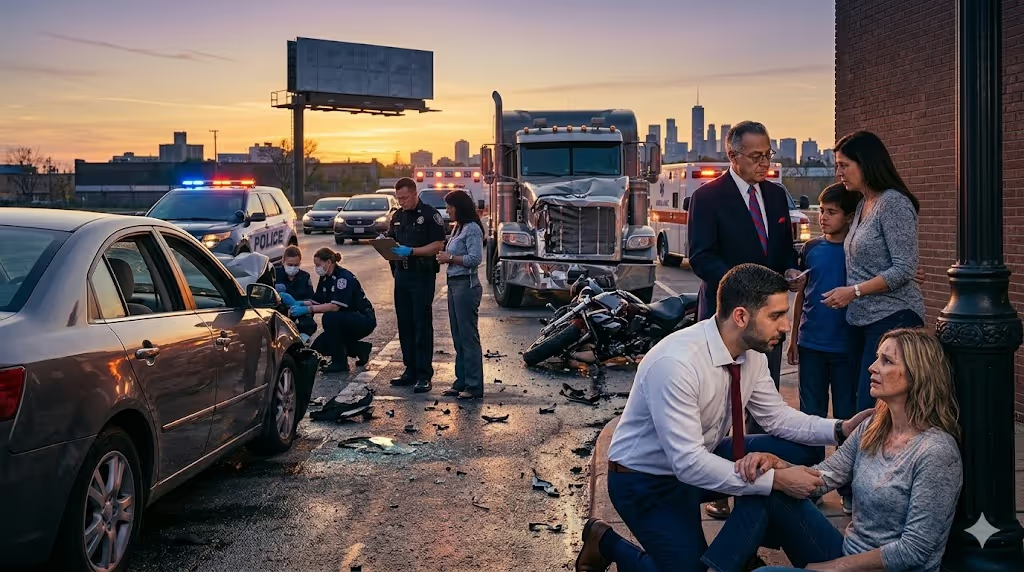
The moments right after a motorcycle crash are often chaotic and terrifying. Because riders do not have the protective metal shell, seatbelts, or airbags of a passenger car, even a low-speed impact can cause severe physical trauma. Taking the right steps on the scene and in the days that follow can protect both your health and your legal rights.
Here is the step-by-step sequence to follow immediately after an accident:

- Move to Safety and Check for Injuries: If you are physically able and it is safe to do so, move out of the flow of traffic. Do not attempt to stand or move if you suspect a spinal injury or feel severe back or neck pain.
- Call 911 Immediately: Always ask for emergency medical care and law enforcement. A police report creates an official record of the accident, vehicle positions, weather conditions, and initial statements.
- Seek Immediate Medical Evaluation: Never decline medical treatment at the scene or delay going to the emergency room. Shock and adrenaline often mask severe internal bleeding, soft tissue injuries, or traumatic brain injuries. Prompt medical care establishes a direct paper trail linking your injuries to the crash.
- Preserve Physical Evidence: Take detailed photos and videos of the crash scene, skid marks, road hazards, traffic signals, all vehicles involved, and your physical injuries. Do not throw away or clean your damaged helmet, torn leather, or scraped boots. Your gear is critical physical evidence that proves the impact forces involved.
Knowing what to do after an accident or injury sets the groundwork for a solid recovery, both physically and financially.
What Not to Say to Insurance Adjusters
Insurance representatives often call injured riders within hours of a crash. While they may sound friendly and deeply concerned, their main goal is to protect their company's bottom line by minimizing what they pay out.
To protect your claim, keep these critical rules in mind when dealing with insurance adjusters:
- Never Give a Recorded Statement: You are not legally obligated to give a recorded statement to the at-fault driver's insurance adjuster. Adjusters are trained to ask misleading questions designed to trap you into answers that hurt your case.
- Do Not Say "I'm Sorry" or Admit Fault: In everyday conversation, saying "I'm so sorry" is a natural expression of sympathy. On an insurance recording, adjusters will twist an apology into an admission of legal liability. Never admit fault or speculate on what happened.
- Avoid Downplaying Your Bodily Injuries: Saying "I think I'm okay" or "It's just a few scratches" before receiving a complete medical examination can derail your claim. Many catastrophic injuries—such as herniated discs or closed head injuries—take days or weeks to manifest fully.
- Do Not Discuss Pre-Existing Health Issues: Insurance companies routinely search medical records to argue that your pain stems from prior health conditions rather than the crash. Let your lawyer handle all medical documentation requests.
Understanding Fault, Comparative Negligence, and Crash Causes
Motorcycle collisions happen for a variety of reasons, but drivers failing to share the road safely cause the vast majority of them. Understanding what causes most motorcycle accidents helps highlight why riders are so frequently victimized on the road.
Common causes include:
- Left-Turn Collisions: The single most common cause of motorcycle crashes occurs when a passenger vehicle makes a left turn directly in front of an oncoming rider who has the right-of-way. Drivers often misjudge the motorcycle's speed or fail to see it altogether.
- Blind Spot and Unsafe Lane Changes: Motorists frequently fail to perform shoulder checks before merging, striking riders or forcing them off the road.
- Distracted and Impaired Driving: Drivers texting, browsing smartphones, or operating under the influence miss smaller profile vehicles like motorcycles.
- Roadway Hazards and Maintenance Defects: Gravel, loose asphalt, pothole ruts, and slick oil spots that might cause a minor bump for a car can lead to a catastrophic wreck for a motorcycle.
How Comparative Negligence Laws Impact Your Claim
When a crash occurs, insurance adjusters frequently attempt to shift blame onto the rider. How fault is allocated depends heavily on state fault systems.
In Michigan, personal injury claims are governed by comparative fault rules. Understanding how fault is determined in a Michigan car accident or motorcycle crash is crucial because your assigned percentage of fault directly impacts your financial recovery:
- Modified Comparative Negligence: Under Michigan law, if you are partially at fault for an accident, your financial recovery for non-economic damages (such as pain and suffering) is reduced by your percentage of fault.
- The 51% Bar Rule: If a rider is found to be 51% or more at fault for the collision, Michigan law bars them from recovering any non-economic pain and suffering damages from the other party.
For instance, if a jury determines your total non-economic damages are $100,000, but finds you were 20% at fault because you were traveling slightly over the speed limit, your final payout is reduced by 20% to $80,000. Because even a slight shift in assigned fault can cost you tens of thousands of dollars, having strong legal representation is essential to fight off unfair blame.
Unique State Regulations: Lane Splitting and Helmet Laws
Traffic laws and safety regulations vary across state lines, but understanding local statutes is essential when pursuing compensation.
Lane Splitting
Lane splitting—riding a motorcycle between lanes of stopped or slow-moving traffic—is explicitly legal under strict conditions in states like California. However, in Michigan, lane splitting is illegal under current traffic codes. If a rider splits lanes in Michigan and gets hit, insurance companies will use that statutory violation to argue the rider was primarily or entirely at fault for the crash.
Helmet Laws and Legal Recovery
In Michigan, riders over the age of 21 who meet specific insurance requirements and have held a motorcycle endorsement for at least two years may legally ride without a helmet. However, if an unhelmeted rider suffers a head injury in a crash, defense lawyers will inevitably argue that failing to wear a DOT-certified helmet constitutes comparative negligence.
To counter this defense, expert medical evidence must demonstrate whether helmet use would have actually altered or prevented the specific injuries sustained (such as spinal cord trauma or internal organ damage, where helmet status is completely irrelevant). Wearing DOT-certified protective helmets and gear not only protects your life—it also shields your legal claim from aggressive insurance defenses.
Why You Need a Specialized Motorcycle Accident Lawyer
Many general personal injury lawyers handle car accidents daily, but motorcycle crash claims present entirely unique challenges. Motorcyclists face widespread societal and jury prejudice. Insurance companies exploit the false stereotype that all bikers are reckless speed-demons who accept the risk of injury the moment they start their engines.
A specialized motorcycle accident lawyer understands the complex physics of motorcycle handling, counter-steering, breaking distance, and road dynamics. When insurance adjusters try to claim you "lay the bike down" out of panic rather than taking evasive action, a lawyer who knows motorcycle operation can break down the mechanics of the crash to disprove their claims.
Here is what a dedicated trial team brings to your case:
- Accident Reconstruction: Partnering with certified crash reconstruction experts, forensic engineers, and human factors specialists to analyze skid marks, crush patterns, and vehicle telemetry.
- Overcoming Anti-Rider Bias: Crafting compelling legal arguments for juries and insurance adjusters that dismantle negative stereotypes and show the driver's failure to yield or pay attention.
- Navigating Michigan No-Fault and PIP Rules: Michigan's No-Fault insurance system has unique rules for motorcyclists. Motorcyclists are not required to purchase traditional No-Fault Personal Injury Protection (PIP) policy coverage for their bike, but if they are involved in a crash with a motor vehicle, they may be eligible for PIP benefits through the policy of the owner or driver of the motor vehicle involved. Knowing how to navigate these complex priority rules is vital.
Learning what a personal injury trial lawyer does clarifies why specialized experience is so important for securing full justice.
How a Motorcycle Accident Lawyer Proves Liability and Calculates Claim Value
Calculating what a claim is worth requires evaluating both financial losses and the personal toll of severe injuries. Knowing how much your car or motorcycle accident case is worth depends on gathering thorough documentation across two main categories of damages:
| Damage Category | Description | Examples |
|---|---|---|
| Economic Damages | Direct, quantifiable financial losses resulting from the accident | Emergency medical bills, surgeries, physical therapy, lost wages, future lost earning capacity, motorcycle repairs/replacement, and damaged riding gear. |
| Non-Economic Damages | Subjective, non-monetary losses affecting your physical and emotional well-being | Physical pain and suffering, emotional distress, permanent scarring and disfigurement, loss of enjoyment of life, and loss of consortium. |
To calculate these values accurately, we work closely with medical doctors, life-care planners, and economists. We ensure every future surgery, lifetime physical therapy session, and lost promotional opportunity at work is accounted for before engaging in settlement negotiations.
Statute of Limitations and Timeframes for Legal Action

Time is a critical factor after any vehicle crash. Every state imposes strict legal deadlines, known as statutes of limitations, within which an injured person must file a lawsuit.
Under the statute of limitations for Michigan personal injury claims, you generally have three years from the date of the motorcycle accident to file a lawsuit for personal injury or wrongful death.
However, relying on a three-year window can be dangerous:
- Claims Against Government Entities: If your crash was caused by a defective road hazard, unmaintained pothole, or an official government vehicle, notice requirements and filing deadlines are significantly shorter—sometimes requiring notice in as little as 120 days.
- Evidence Degradation: Traffic camera footage is routinely overwritten after 30 days. Physical evidence on the road fades, vehicles are repaired or salvaged, and eyewitness memories fade quickly.
When to Contact a Motorcycle Accident Lawyer
Knowing when to contact a lawyer after an accident is simple: as soon as possible after receiving emergency medical treatment.
Contacting an attorney immediately allows your legal team to launch a rapid scene investigation. We can send spoliation letters to preserve nearby business surveillance video, subpoena black-box data, canvas for witnesses, and handle all communications with aggressive insurance adjusters while you focus on healing.
Frequently Asked Questions About Motorcycle Accident Claims
Can I recover compensation if I was partially at fault for the crash?
Yes. Under Michigan’s modified comparative negligence framework, you can still recover financial compensation as long as your share of fault is 50% or less. Your total award is reduced by your percentage of responsibility. However, if you are found to be 51% or more at fault, you are barred from receiving non-economic pain and suffering compensation.
Do helmet laws prevent me from recovering damages if I was injured?
Not wearing a helmet does not automatically invalidate your personal injury claim. While the defense may argue comparative negligence for head or facial injuries, failing to wear a helmet has zero bearing on injuries to your spine, limbs, or internal organs. An experienced attorney can hire medical experts to prove which injuries occurred independently of helmet use.
How much does it cost to hire a motorcycle accident attorney?
At Hamo Law Firm, we represent injured clients on a contingency-fee basis. Understanding how much it costs to hire Hamo Law Firm comes down to a simple commitment: there are zero upfront costs or out-of-pocket expenses. We only receive an attorney fee if we successfully secure a financial settlement or court verdict on your behalf. If we do not win, you owe us nothing.
Conclusion
If you or a loved one has suffered injuries in a motorcycle crash, you do not have to battle insurance companies alone. At Hamo Law Firm, we bring over 40 years of trial experience to fighting for the rights of injured motorcyclists across Flint, Detroit, Genesee County, Wayne County, and all of Michigan.
We understand the biases riders face, the physics of motorcycle crashes, and how to hold negligent drivers accountable for every dollar you deserve. Through our contingency-fee model, you get battle-tested trial representation without financial stress.
To explore your legal options, protect your evidence, and demand maximum compensation, visit our page on Motorcycle Accidents or contact us today for a free, no-obligation consultation.