
When Someone Gets Hurt on Another Person's Property in Michigan
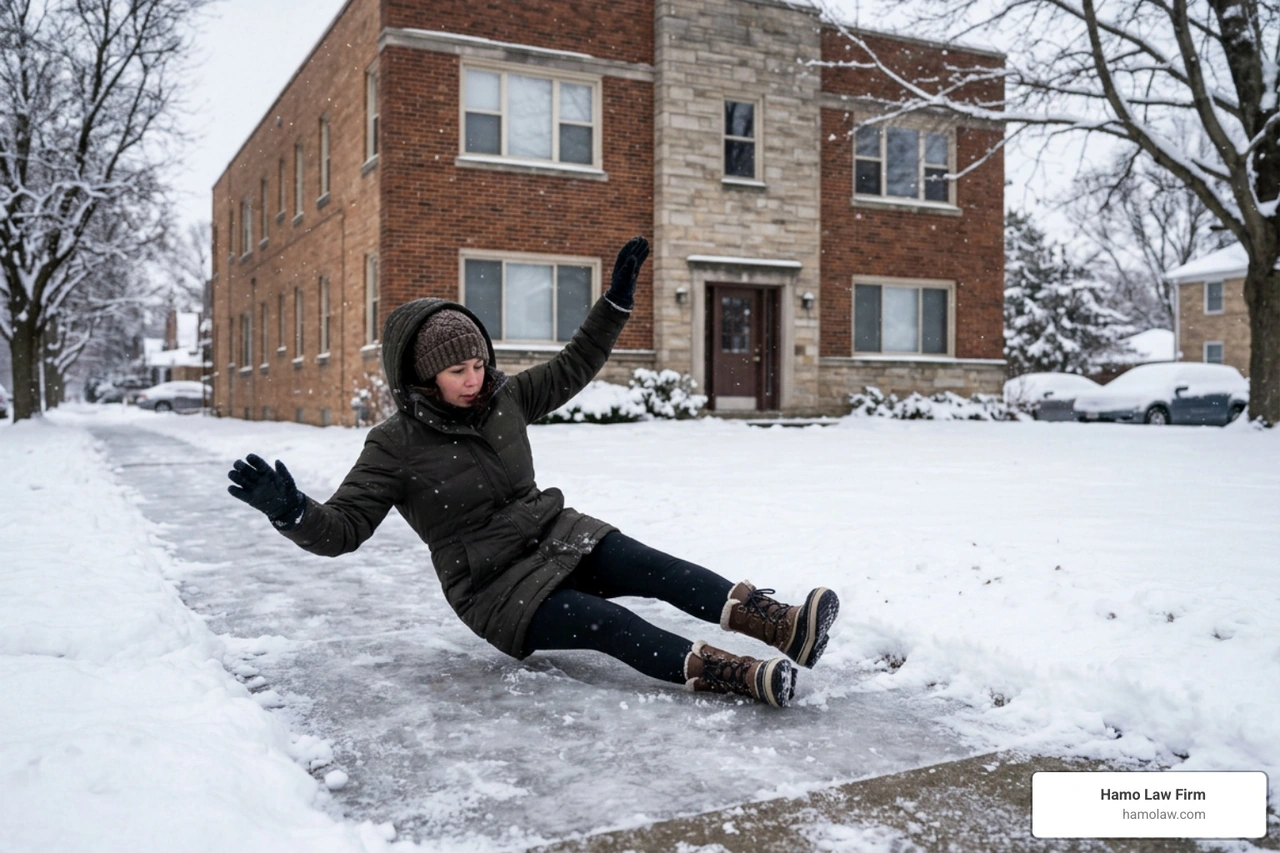
A Michigan premises liability lawyer helps injured people hold property owners accountable when a dangerous condition causes harm — whether that's a slip on an icy sidewalk, a trip on broken stairs, or an assault due to inadequate security.
Here's what you need to know at a glance:
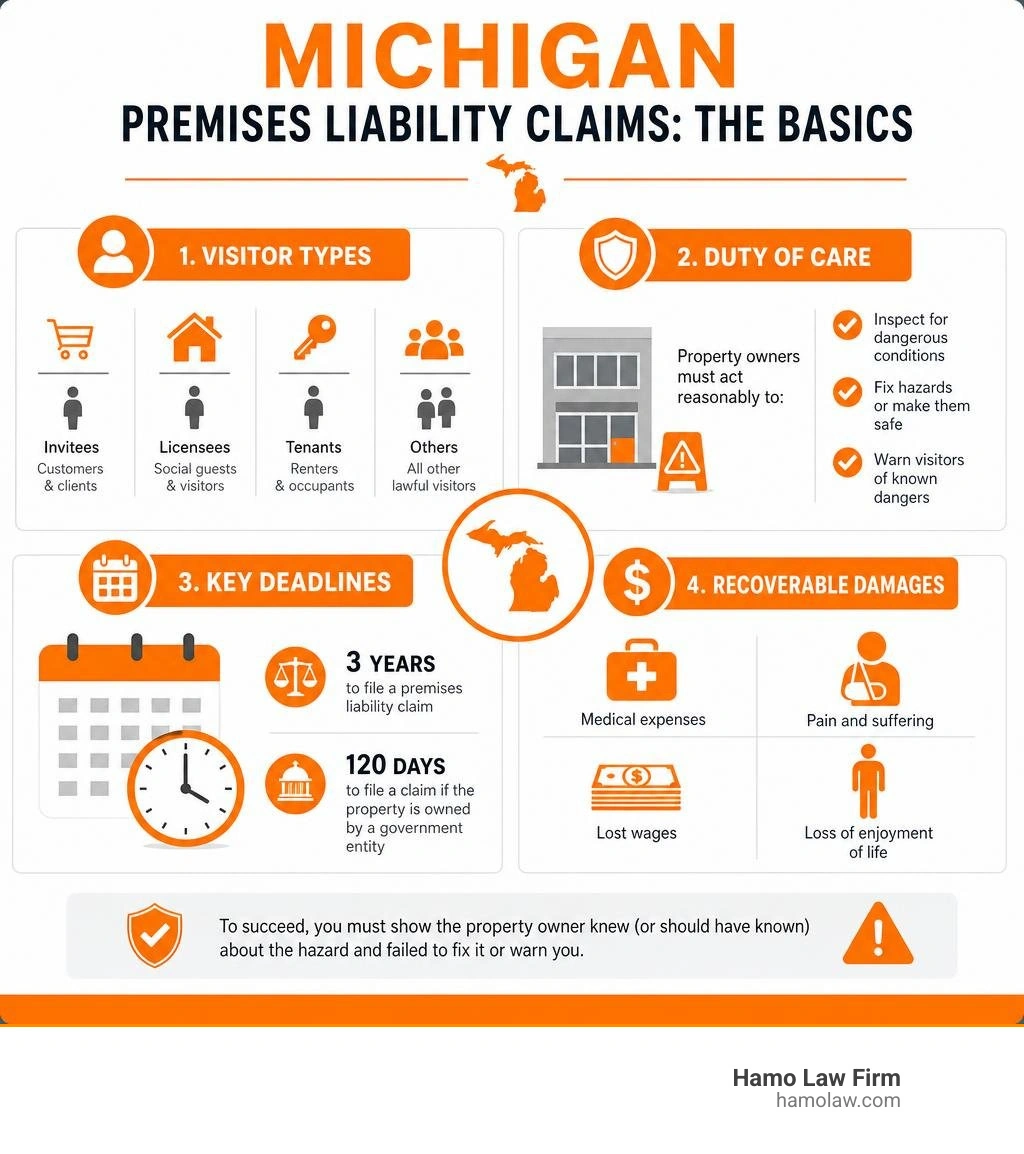
- What it is: Premises liability is the legal right to seek compensation when a property owner's negligence causes your injury.
- Who can file: Customers, tenants, guests, and other visitors injured on someone else's property.
- What you must prove: The owner knew (or should have known) about the hazard and failed to fix it or warn you.
- Time limit: Generally 3 years from the injury date — but only 120 days if the property is government-owned.
- Cost to start: Most premises liability attorneys work on contingency — no fee unless you win.
- Recent change: A landmark 2023 Michigan Supreme Court ruling (Kandil-Elsayed v. F & E Oil, Inc.) made it significantly easier to pursue claims, even when a hazard was visible.
Every year, tens of thousands of people are seriously injured — or killed — in preventable falls and property accidents across the U.S. In 2022 alone, over 46,000 deaths were linked to falls at home and at work. Many victims don't realize they have a legal right to compensation. Others wait too long and lose their chance entirely.
Michigan's premises liability laws are more complex than most people expect. The rules changed in 2023. Deadlines are strict. And insurance companies work hard to minimize what they pay out.
This guide breaks it all down in plain language.
What is Premises Liability in Michigan?
To understand how these cases work, we must first look at the legal foundation. In simple terms, premises liability is a specific legal theory that applies when an injury is caused by a physical defect or dangerous condition on someone else's land.
If you slip on an icy sidewalk outside a store in Flint or trip over a torn carpet in a Detroit apartment building, your legal claim is built on premises liability. This is distinct from a general negligence claim, which involves a person’s direct, active conduct (such as a store clerk accidentally dropping a heavy box on your foot). In premises liability, the focus is entirely on the condition of the property itself.
To learn more about how this legal theory operates, you can read our detailed breakdown of What is Premises Liability in Michigan and When You Have a Case.
A central concept in these cases is that the person or entity who has possession and control of the property is responsible for keeping it safe. Usually, this is the property owner, but it can also be a commercial tenant, a property management company, or a governmental body. When they fail to maintain their premises, everyday situations can turn into life-altering accidents. For a deeper look at specific accident types, check out our resources on Slip and Fall injuries.
Common Examples of Property Hazards
Dangerous conditions can take many forms depending on the type of property. Over our decades of experience, we have represented clients facing injuries from a wide variety of hazards, including:
- Weather-Related Hazards: Unplowed parking lots, icy walkways, and uncleared snow on steps.
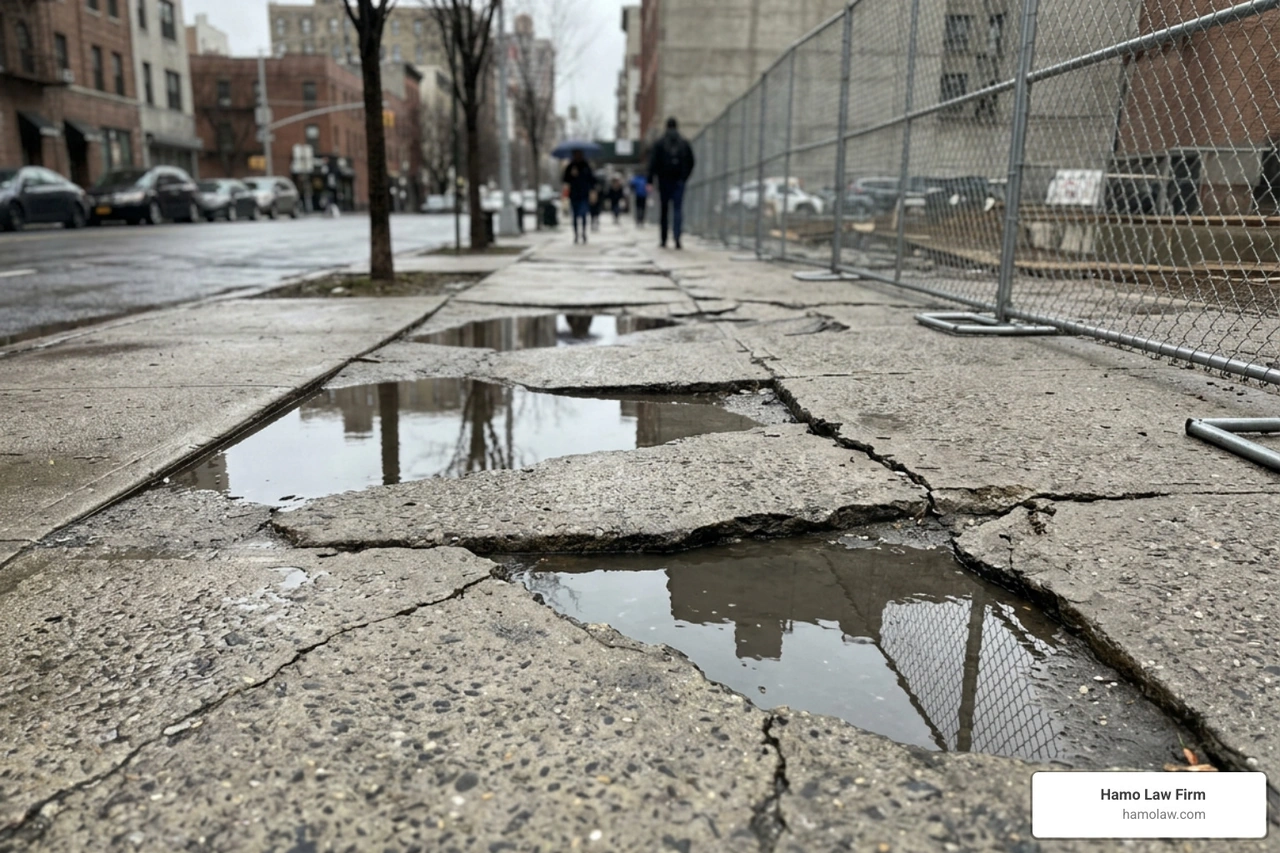
- Maintenance Failures: Loose handrails, broken steps, torn carpeting, uneven sidewalks, and poor lighting.
- Structural Failures: Defective railings, collapsed decks, or compromised ceilings.
- Retail and Commercial Hazards: Wet floors without warning signs, spilled liquids in grocery aisles, and falling merchandise.
- Environmental and Recreational Hazards: Swimming pool accidents, dog bites, and toxic chemical exposure.
Structural failures often lead to catastrophic, life-altering injuries. For instance, a $4,140,000 settlement was reached for the wrongful death of a 33-year-old man who fell when a defective guard railing collapsed. In another local case, a tenant received a $2,305,000 jury verdict against a Flint apartment complex after falling because a handrail detached from a staircase.
Additionally, property hazards are not limited to physical obstacles. Under Michigan law, property owners can also be held liable for Inadequate Security if they fail to protect visitors from foreseeable criminal acts. To understand when a business or landlord is legally responsible for crimes committed by third parties on their land, see our guide on When Property Owners Are Liable for Third Party Crimes.
Visitor Classifications and the Property Owner's Duty of Care
If you are injured on someone else's property, your legal rights depend heavily on why you were there. Michigan law divides visitors into three distinct categories, and the property owner owes a different "duty of care" to each. To explore this further, read our guide on Who is Liable for Injuries on Someone Else's Property.
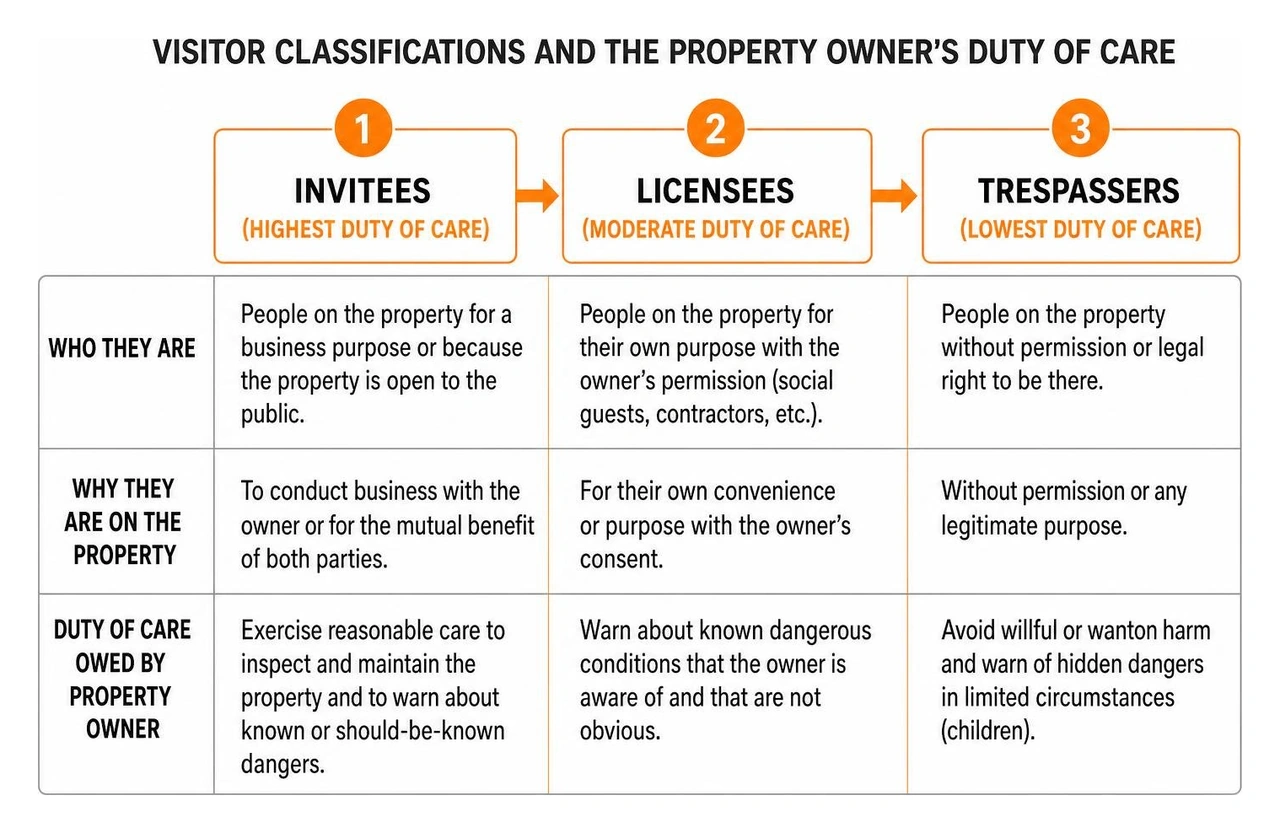
Here is a breakdown of the three visitor classifications:
1. Invitees (Highest Duty of Care)
An invitee is someone who enters the property for a business purpose or because the land is open to the public. Classic examples include retail store customers, restaurant diners, hotel guests, and tenants in common areas of an apartment building.
Property owners owe invitees the highest duty of care. They must:
- Maintain the property in a reasonably safe condition.
- Conduct regular inspections to discover hidden hazards.
- Promptly repair dangerous conditions or provide clear warnings about them.
2. Licensees (Intermediate Duty of Care)
A licensee is someone who enters the property with the owner's express or implied permission for social or personal reasons. The most common example is a social guest visiting a friend's home.
For licensees, the property owner's duty is slightly lower. The owner must:
- Warn the visitor of any hidden, dangerous conditions that the owner already knows about.
- Refrain from injuring the guest through active negligence.
- Note: Unlike with invitees, property owners do not have an active duty to inspect their land for unknown hazards before a licensee arrives.
3. Trespassers (Lowest Duty of Care)
A trespasser is someone who enters a property without permission or legal right. Generally, property owners owe no duty to unknown trespassers other than to refrain from willful or wanton misconduct (such as setting traps).
However, there is a major exception for children under the attractive nuisance doctrine. If a property owner has a feature that is highly appealing to children (like a swimming pool or trampoline) and fails to secure it, they can be held liable if a child trespasses and gets hurt.
| Visitor Category | Example | Purpose of Visit | Owner's Duty of Care |
|---|---|---|---|
| Invitee | Store customer, tenant | Mutual business / Public access | Inspect, repair, and warn of hazards |
| Licensee | Social guest | Personal / Social | Warn of known, hidden dangers |
| Trespasser | Uninvited visitor | None | Refrain from willful/wanton harm |
Proving Negligence and the Impact of the Kandil-Elsayed Decision
For many years, Michigan property owners and their insurance companies held a massive advantage in personal injury lawsuits due to a legal defense known as the "open and obvious" doctrine. Under the old rules, if a hazard was visible—meaning an average person would have noticed it upon casual inspection—the property owner owed no legal duty to protect or warn visitors. This rule allowed insurance companies to get countless valid cases dismissed before they ever reached a jury.
However, the legal landscape in Michigan shifted dramatically. In the landmark 2023 decision Kandil-Elsayed v. F & E Oil, Inc., the Michigan Supreme Court overruled the old framework.
Today, in 2026, the "open and obvious" nature of a hazard is no longer an automatic escape hatch for negligent property owners. Instead of wiping out the owner's legal duty entirely, whether a hazard was visible is now analyzed as part of comparative negligence (which we discuss below). This means that even if a hazard was visible, a jury must decide if the owner was still negligent for leaving it there, rather than a judge throwing the case out of court immediately.
To read a detailed history of this doctrine and how it impacts modern slip and fall cases, see our article on the Michigan Open and Obvious Doctrine Slip and Fall.
How a Michigan Premises Liability Lawyer Proves Negligence
Even with the favorable ruling in Kandil-Elsayed, winning a premises liability case is not automatic. As the injured plaintiff, you carry the burden of proof. To secure a settlement or jury verdict, a Michigan premises liability lawyer must establish four key elements:
- Duty of Care: We must establish that the defendant possessed or controlled the property and owed you a legal duty based on your visitor status (invitee or licensee).
- Breach of Duty: We must prove the property owner failed to act reasonably. This requires showing they had actual knowledge of the hazard (e.g., a tenant reported a broken handrail) or constructive knowledge (the hazard existed for so long that they should have discovered it during routine maintenance). For help understanding this step, see How Do I Prove a Property Owner Was Negligent.
- Causation: We must show a direct link between the property owner's breach and your injury. In other words, you didn't just fall; you fell because of the specific hazard they failed to fix.
- Damages: We must document the physical, emotional, and financial injuries you suffered as a direct result of the accident.
To explore the specific evidence required for these elements, you can read our FAQ on How Do I Prove Negligence in a Slip and Fall Case.
Comparative Negligence, Damages, and Filing Deadlines
If you are injured in Michigan, your final financial recovery will be governed by our state's modified comparative negligence rules (specifically under MCL 600.2959).
Under this system, a jury evaluates the accident and assigns a percentage of fault to both the property owner and the injured visitor. If you are found partially at fault for your own fall—perhaps because you were looking at your phone or wearing inappropriate footwear—your financial compensation will be reduced by your percentage of blame.
For example, if a jury awards you $100,000 in damages but finds you 20% responsible for the accident, your final recovery will be reduced by 20%, leaving you with $80,000.
The 50% Threshold: If you are found to be more than 50% at fault for the accident, Michigan law bars you from recovering any noneconomic damages (such as pain and suffering). You may still be able to recover a portion of your economic damages, but your overall recovery will be severely limited. This is why having an experienced attorney is vital to counter the insurance company's efforts to blame you for your own injuries.
For a comprehensive overview of how these calculations work, you can read What is Premises Liability in Michigan.
Types of Damages You Can Recover
A successful premises liability claim can help you recover several types of compensation:
- Economic Damages: These are measurable financial losses, including medical bills, rehabilitation costs, future medical care, and lost wages if you missed work.
- Noneconomic Damages: These compensate you for non-financial impacts, such as physical pain and suffering, emotional distress, scarring, disfigurement, and loss of enjoyment of life.
- Exemplary Damages: In rare cases, if we can prove the property owner acted with willful disregard for your safety or demonstrated malicious conduct, you may be awarded exemplary damages to compensate for mental anguish.
These damages can add up to substantial amounts, especially in cases involving severe injuries like spinal damage, traumatic brain injuries (TBIs), or wrongful death. Let's look at some real-world examples of premises liability recoveries in Michigan:
- $1.5 Million Settlement: For a worker who fell through an unprotected hole in a building.
- $1.42 Million Jury Verdict: For a slip and fall on a wet restaurant floor in Detroit.
- $1.32 Million Settlement: For a slip and fall spinal injury in Pontiac.
- $1.17 Million Settlement: For a back injury caused by a fall on defective wooden steps.
- $1,000,000 Settlement: For a child who suffered a head injury when a heavy box fell from a high shelf in a retail store.
- $950,000 Wrongful Death Settlement: For the family of a child who died due to a defective mini-cord blind in her apartment.
- $750,000 Settlement: For a man who fell through unsecured particle board in an attic, requiring orthopedic surgery.
- $600,000 Settlement: For a woman who sued her apartment complex for failing to clear ice or salt the sidewalk.
- $545,000 Wrongful Death Settlement: For a 65-year-old man who fell down stairs due to a handrail failure.
- $350,000 Settlement: For a slip and fall on an icy apartment complex sidewalk.
Statute of Limitations and Government Claims
Timing is everything in personal injury law. In Michigan, the standard statute of limitations for filing a premises liability lawsuit is three years from the date the injury occurred (MCL 600.5805). If you miss this three-year deadline, you lose your right to file a lawsuit forever.
However, if your injury occurred on property owned by a government entity (such as a public school, a city sidewalk, or a government office building in Wayne County or Genesee County), the rules are much stricter. Under MCL 691.1404, you must file a formal, written notice of your claim with the government agency within 120 days of the accident. This notice must detail the exact location of the hazard, the nature of your injuries, and any witnesses. Failing to file this notice within the 120-day window will result in your case being permanently dismissed due to governmental immunity.
To understand who can be held responsible in these complex scenarios, read Who is Responsible for a Premises Liability Accident.
Why You Need a Michigan Premises Liability Lawyer After an Accident
It is a common mistake to think you can handle a premises liability claim on your own. Insurance adjusters are trained professionals whose primary goal is to pay you as little as possible—or nothing at all. They may try to get you to make recorded statements that damage your case, or offer you a quick, lowball settlement before you even know the full extent of your injuries.
When you hire a skilled attorney, we take the burden of dealing with the insurance companies off your shoulders. We immediately launch an independent investigation to gather and preserve critical evidence, including:
- Surveillance Footage: Security camera video from nearby businesses or homes often captures the exact moment of a fall. This footage is frequently overwritten within days if a formal preservation letter is not sent.
- Maintenance and Inspection Logs: These records show whether a business was routinely checking for hazards or if they neglected their property for hours or days.
- Incident Reports: Written reports filed by store managers or security staff at the time of the accident.
- Prior Complaints: Evidence that other visitors had complained about the same hazard, proving the owner had notice of the danger.
- Expert Witness Testimony: We work with medical experts, structural engineers, and accident reconstructionists to build a solid case.
To learn more about the critical steps required to protect your rights, see our guide on What to Do After a Slip and Fall Accident in Michigan.
How a Michigan Premises Liability Lawyer Navigates Insurance Tactics
Insurance companies have a deep playbook of tactics designed to avoid paying claims. They may argue that your injuries were pre-existing, claim that you were trespassing, or argue that you were entirely at fault for not seeing the hazard.
We know how to counter these defenses. Our legal team prepares every single case as if it is going to trial. This rigorous preparation shows the insurance companies that we are not afraid to fight for you in court, which often forces them to offer a fair settlement.

For a step-by-step checklist of how to handle the immediate aftermath of an accident, read our FAQ on What Should I Do After a Slip and Fall Accident.
For more detailed information on our firm's approach, visit our Premises Liability Lawyer Michigan Hamo Law Firm page, or check out our general Practice Areas Premises Liability overview.
Frequently Asked Questions about Michigan Premises Liability
What should I do immediately after a slip and fall accident?
If you are hurt on someone else's property, take these steps immediately to protect your health and your legal rights:
- Seek Medical Attention: Go to an emergency room, urgent care, or your primary doctor right away. Inform them exactly how you were injured. This creates an immediate, official medical record linking your injuries to the accident.
- Document the Scene: Take clear photos and videos of the hazard that caused you to fall (e.g., the patch of ice, the broken stair, the liquid spill) from multiple angles. Take these photos immediately, before the property owner cleans up or repairs the hazard.
- Gather Witness Information: Get the names, phone numbers, and addresses of anyone who saw you fall or noticed the hazard.
- Report the Incident: Notify the property owner, manager, or landlord in writing. Request a copy of any written incident report they create, but do not sign any statements admitting fault.
- Save Your Footwear and Clothing: Keep the shoes and clothes you were wearing in a safe place; do not wash them, as they may contain physical evidence of the hazard.
- Contact an Attorney: Consult a lawyer before speaking with any insurance adjusters or giving recorded statements.
Can I still recover damages if I was partially at fault for my fall?
Yes. Under Michigan's modified comparative negligence rules, you can still recover financial compensation as long as you are not more than 50% at fault for the accident. Your final compensation will be reduced by your percentage of fault. However, if a jury finds you 51% or more at fault, you will be barred from recovering noneconomic damages like pain and suffering.
How long do I have to file a premises liability claim in Michigan?
Generally, you have three years from the date of the accident to file a lawsuit against a private property owner, business, or landlord. However, if the injury occurred on public or government-owned property, you must file a formal written notice with the responsible government agency within 120 days of the accident, or you will lose your right to seek compensation.
Conclusion
If you or a loved one has been injured due to a dangerous condition on someone else's property, you do not have to face the physical, emotional, and financial burdens alone. The legal team at Hamo Law Firm is here to help.
For more than 40 years, we have been fighting for injury victims in Flint, Detroit, Genesee County, Wayne County, and throughout Michigan. We bring extensive trial experience to every case, and we operate on a contingency-fee model—meaning you pay absolutely nothing upfront, and we collect no legal fees unless we successfully win your case.
For additional legal resources or to discuss other types of personal injury matters, you can also explore how we handle automobile, truck, and motorcycle accidents.
Don't let an insurance company dictate what your recovery is worth. Contact us today for a free, no-obligation consultation, or visit our Premises Liability Lawyer Michigan Hamo Law Firm page to learn more about how we can protect your rights.
For broader legal context, you can consult directories such as Justia Genesee County.
Protect your rights with our experienced legal team and let us secure the compensation you deserve.