
What a Car Property Damage Attorney Does — and When You Need One

Hiring a car property damage attorney can make a real difference in how much money you recover after a crash — especially when an insurance company is pushing a lowball offer or disputing who was at fault.
Here's a quick overview of what you need to know:
| Question | Quick Answer |
|---|---|
| What does a car property damage attorney do? | Negotiates with insurers, disputes low valuations, files claims, and represents you in court if needed |
| When should you hire one? | When liability is disputed, your car is totaled, the offer seems low, or the other driver is uninsured |
| What can you recover? | Repair costs, fair market value, rental car expenses, towing, and diminished value |
| How much does it cost? | Most attorneys work on contingency — no fee unless you win |
| How long do you have to file in Michigan? | Generally 3 years for property damage claims; 1 year for no-fault PIP benefits |
After a crash, most people just want it over. The car is damaged, the insurance adjuster is calling, and the paperwork feels endless. It's tempting to accept the first offer and move on.
But that first offer is often not the fair one.
In 2022, U.S. auto insurers paid out roughly $35.5 billion in property damage liability claims — averaging $4,680 per claim. Insurance companies are experienced at settling fast and cheap. Without someone in your corner, you may walk away with far less than your vehicle is actually worth.
This guide walks Michigan drivers through the full property damage claims process — what to do after a crash, how insurers value your car, what a property damage attorney actually does, and how to avoid the mistakes that can sink your claim.
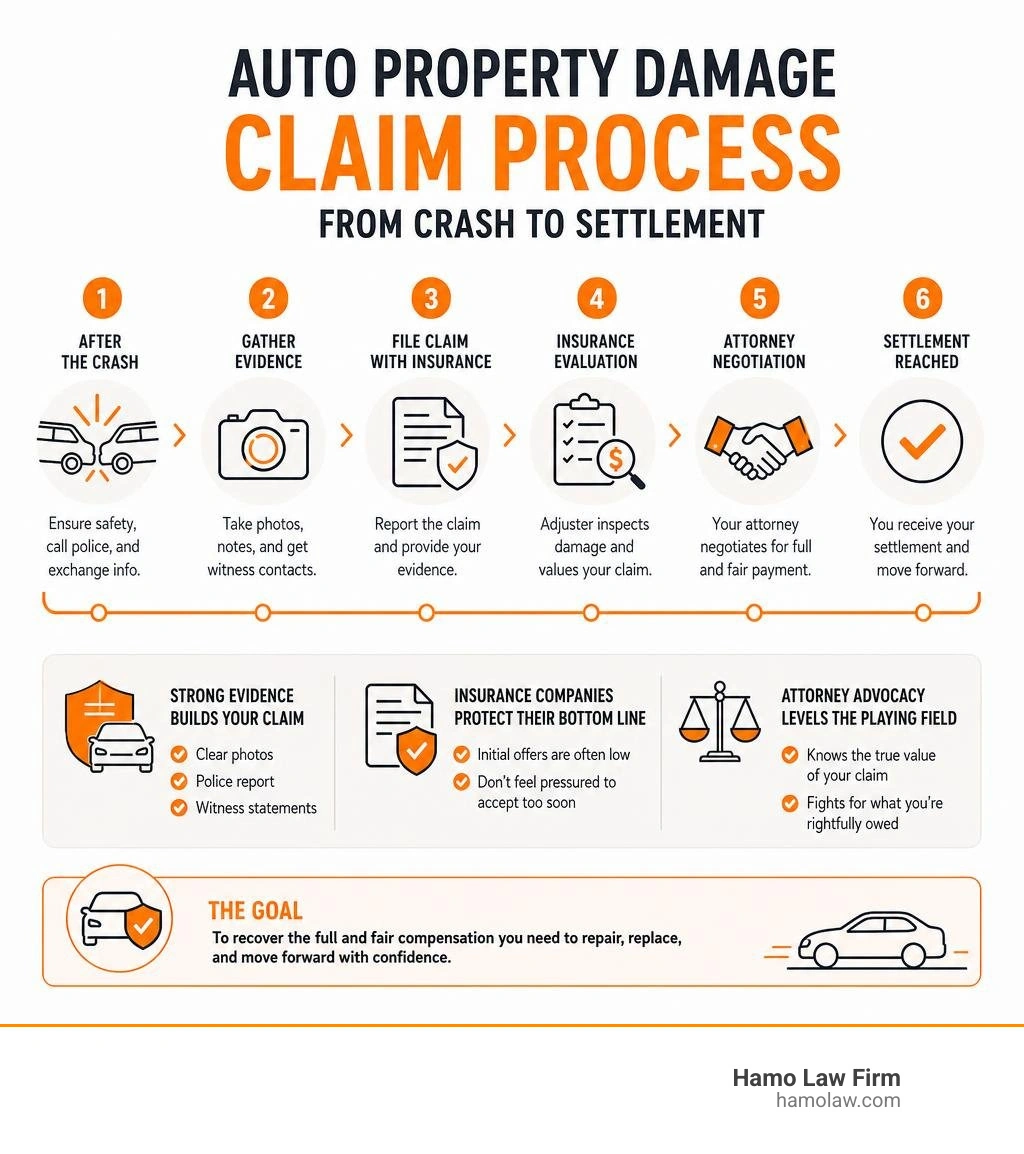
Why You Might Need a Car Property Damage Attorney

Many people assume they only need a lawyer if they are severely injured. However, property damage disputes can quickly turn into a administrative nightmare. If your car is your lifeline for commuting to work in Detroit or driving across Genesee County, a delayed or underpaid claim is more than an inconvenience—it is a financial threat.
What Does a Car Property Damage Attorney Do?
A dedicated car property damage attorney acts as your shield and advocate against aggressive insurance carriers. While insurance adjusters are trained to minimize payouts using proprietary estimating software, our legal team focuses on maximizing your recovery.
We assist you by:
- Investigating the Incident: Gathering police reports, traffic camera footage, and witness statements to establish liability.
- Documenting Losses: Coordinating with independent mechanics and certified appraisers to determine the true cost of repairs, towing, and storage.
- Handling Insurance Negotiations: Taking over all communications so you do not accidentally make statements that damage your claim.
- Filing Litigation: If the insurance company refuses to play fair, we can file a lawsuit to demand full compensation under Michigan law.
When to Hire a Car Property Damage Attorney After a Crash
You do not always need a lawyer for a simple, undisputed fender-bender where the insurance company pays the repair shop directly. However, you should call a lawyer immediately if you encounter any of the following red flags:
- Disputed Fault: The other driver’s insurer claims you caused the crash, even though you know you did not.
- Lowball Offers: The insurer offers a total loss settlement that is far below the actual market value of your vehicle.
- Unreasonable Delay: The insurance adjuster ignores your calls, delays the vehicle inspection, or drags out the claim processing beyond reasonable timelines.
- Uninsured Drivers: The at-fault driver has no insurance, leaving you to navigate complex uninsured motorist claims.
To better understand when it is time to transition from dealing with adjusters yourself to bringing in professional representation, read our detailed guide on When Should You Call a Lawyer After a Car Accident in Michigan.
How Insurance Companies Value and Process Property Damage Claims
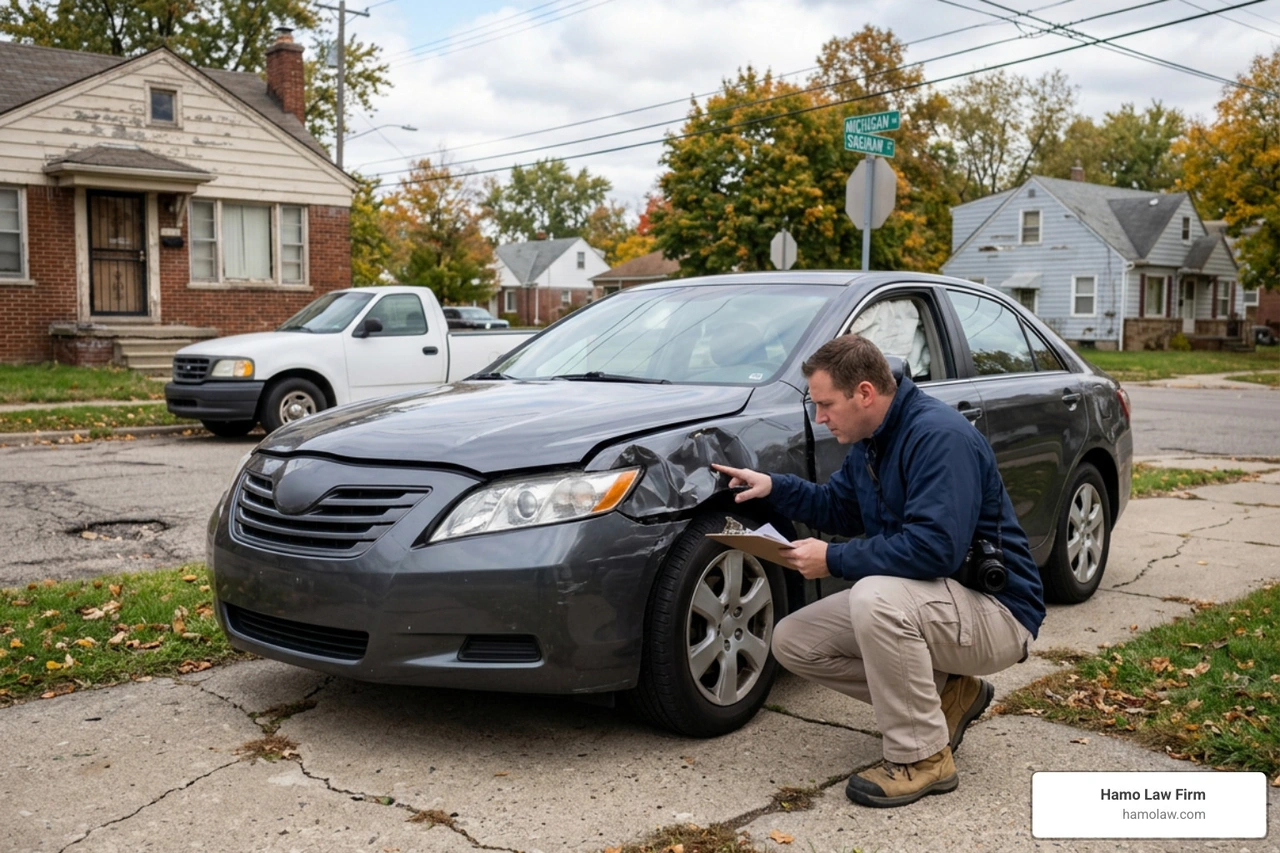
To get a fair settlement, you have to understand how insurance companies calculate the value of your damaged property. To them, your vehicle is not a beloved car that gets you safely around Flint; it is a set of depreciating data points on a spreadsheet.
Determining Vehicle Value and Total Loss Thresholds
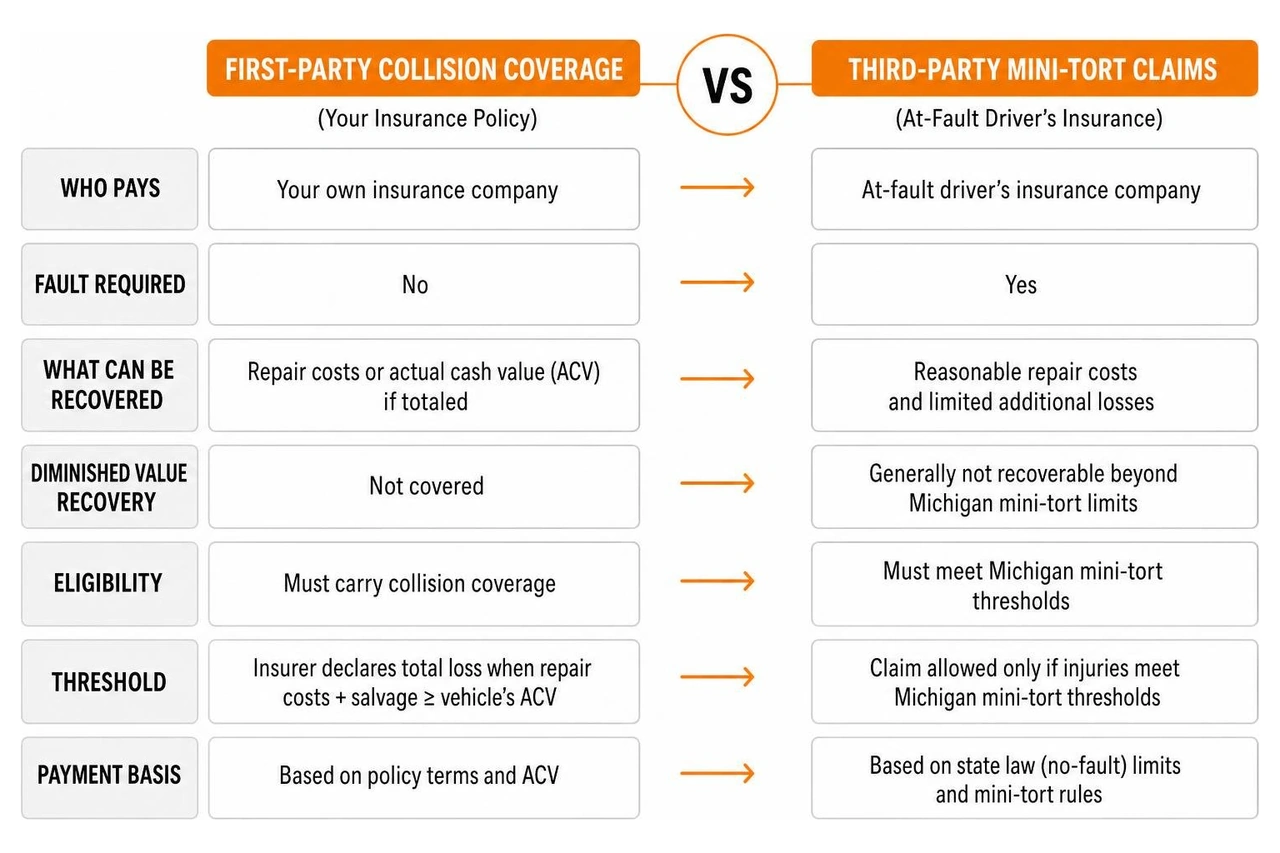
If the cost of repairing your vehicle approaches or exceeds its actual cash value (ACV), the insurance company will declare it a "total loss." In many states, this threshold is set by law. While some states use a strict percentage (like 70% or 80%), insurers in Michigan evaluate whether the cost of repairs plus the salvage value of the vehicle exceeds the car's pre-accident market value.
If your car is totaled, the insurer is obligated to pay you the ACV of the vehicle immediately before the crash. They calculate this using local market databases, looking at comparable vehicle sales in areas like Wayne County or Detroit. However, these databases often rely on low-end dealer trade-in values rather than retail replacement costs.
To protect your financial interests, you must research independent valuation sources like NADA or Kelley Blue Book. If you want to dive deeper into how legal professionals calculate the overall worth of an accident claim, check out our resources on How Much Is My Car Accident Case Worth and How Much Is My Michigan Car Accident Case Worth.
Understanding Diminished Value Claims
Even if your vehicle is perfectly repaired with original equipment manufacturer (OEM) parts, its market value drops simply because it now has an accident history on reports like Carfax. This loss of resale value is known as diminished value.
There are three types of diminished value:
- Inherent Diminished Value: The loss of value that remains simply because the vehicle has a crash record.
- Repair-Related Diminished Value: Value lost due to sub-par repairs, such as mismatched paint or imperfect frame straightening.
- Immediate Diminished Value: The difference in the vehicle's resale value immediately after the crash before repairs are made.
While some states permit third-party diminished value claims directly against the at-fault driver's insurance, Michigan’s unique no-fault laws severely restrict these claims. In Michigan, you generally cannot sue an at-fault driver for standard diminished value beyond what is recoverable under the state's specific "mini-tort" system, making it vital to work with an experienced local attorney who understands these regional boundaries.
Steps to Protect Your Claim and Gather Evidence
What you do in the hours and days following an auto accident will directly impact the success of your property damage claim.
To help you visualize your options, here is a comparison of how property damage claims are handled in Michigan:
What to Do Immediately After a Car Accident
- Prioritize Safety: Move your vehicle to the side of the road if possible, turn on your hazard lights, and check for injuries.
- Call the Police: Always contact local law enforcement to file an official report, whether you are on I-75 in Flint or a busy street in Detroit. A police report is vital evidence.
- Document the Scene: Take clear, well-lit photos and videos of all vehicle damage, license plates, road conditions, skid marks, and traffic signs.
- Exchange Information: Get the other driver's name, phone number, insurance company, policy number, and license plate.
- Identify Witnesses: Collect contact information from anyone who saw the crash occur.
For a comprehensive checklist of immediate actions to take, read our guide on What Should You Do Immediately After a Car Accident in Michigan and learn more about What to Do After a Car Accident in Flint.
Proving Your Claim with Strong Evidence
Insurance companies love to argue that property damage was pre-existing or that repair estimates are inflated. To defeat these tactics, you must build an undeniable paper trail. This includes:
- Detailed repair estimates from independent, certified body shops of your choice.
- Clear before-and-after photos of the vehicle.
- Maintenance records showing the vehicle was in excellent condition prior to the crash.
- Receipts for recent upgrades, new tires, or major mechanical work.
Avoiding simple mistakes during this evidence-gathering phase is critical. You can learn more by reading about The Biggest Mistakes People Make After an Injury Accident and How to Avoid Them.
Dealing with Uninsured Drivers and Statutes of Limitations
An estimated 13% of drivers on U.S. roads are uninsured. If you are hit by an uninsured motorist in Michigan, you cannot file a third-party claim against their insurance. Instead, you must rely on your own first-party insurance policies, such as collision coverage or Uninsured Motorist Property Damage (UMPD) coverage if you purchased it.
Additionally, you must keep strict legal deadlines in mind. In Michigan, the statute of limitations to file a lawsuit for property damage is three years from the date of the accident. If you miss this window, you lose your right to pursue compensation forever. To understand how liability and insurance recovery interact in these scenarios, see our guide on How Fault Is Determined in a Michigan Car Accident.
Frequently Asked Questions About Property Damage Claims
Can I settle my property damage claim separately from my personal injury claim?
Yes. In Michigan, property damage claims are routinely settled separately from personal injury claims. This allows you to get your car repaired or replaced quickly while your medical treatment and bodily injury claim remain ongoing.
Warning: Before signing any document from an insurance company to settle your property damage, read the fine print carefully. Ensure it is a "Release of Property Damage" and not a general release of liability that waives your right to pursue future compensation for physical injuries or unresolved medical expenses.
How does Michigan's mini-tort system work for vehicle damage?
Michigan's no-fault insurance system is highly unique. Under the law, you generally cannot sue an at-fault driver for damage to your vehicle. Instead, you must look to your own collision coverage to repair your car.
However, there is an exception: the Michigan Mini-Tort. If you were not more than 50% at fault for the accident, you can recover up to $3,000 (the statutory limit) from the at-fault driver's insurance to cover your out-of-pocket expenses, such as your collision deductible. You can review the statutory framework in Michigan Compiled Laws Section 500.3135. Navigating these rules can be complex, which is why having an experienced local attorney on your side is highly beneficial.
What happens if the repair costs exceed the insurance estimate?
It is very common for a body shop to discover hidden, structural damage once they begin taking the vehicle apart. When this happens, the repair shop will submit a supplemental claim to the insurance company.
The insurer will send an adjuster to verify the additional damage. If the insurer refuses to pay the supplement, a car property damage attorney can step in to negotiate with the insurance company and prevent you from having to pay the difference out of pocket.
Conclusion
Dealing with auto property damage does not have to break your spirit. By understanding your rights under Michigan's unique insurance laws, gathering strong evidence, and knowing when to call in professional legal help, you can protect your investment and get back on the road safely.
At Hamo Law Firm, we have spent more than 40 years fighting insurance companies on behalf of accident victims in Flint, Detroit, Genesee County, and Wayne County. We operate on a contingency-fee model, meaning you pay us nothing upfront, and we collect no fees unless we win your case.
If you are struggling to get fair treatment from an insurance adjuster, let us take the wheel. Contact a skilled Car Accident Lawyer Michigan Hamo Law Firm today for a free, no-obligation consultation. You can also reach out to a Michigan Car Crash Lawyer Hamo Law Firm or an Auto Accident Attorney Michigan Hamo Law Firm to discuss your options.