
Why a Detroit Injury Lawyer Can Protect Your Claim

A Detroit injury lawyer can help you protect evidence, deal with insurance companies, and pursue compensation after someone else's negligence causes harm. In a city with more than 20,000 reported crashes each year, the right legal guidance can matter when medical bills, missed work, and insurance calls start piling up.
- Cases often involve: car, truck, motorcycle, pedestrian, bicycle, premises liability, medical malpractice, and wrongful-death claims.
- Michigan auto claims are different: No-fault benefits may cover certain losses, while a lawsuit against an at-fault driver may be available in qualifying cases.
- Most injury lawyers use contingency fees: You generally do not pay attorney fees upfront; the fee is usually paid from a recovery.
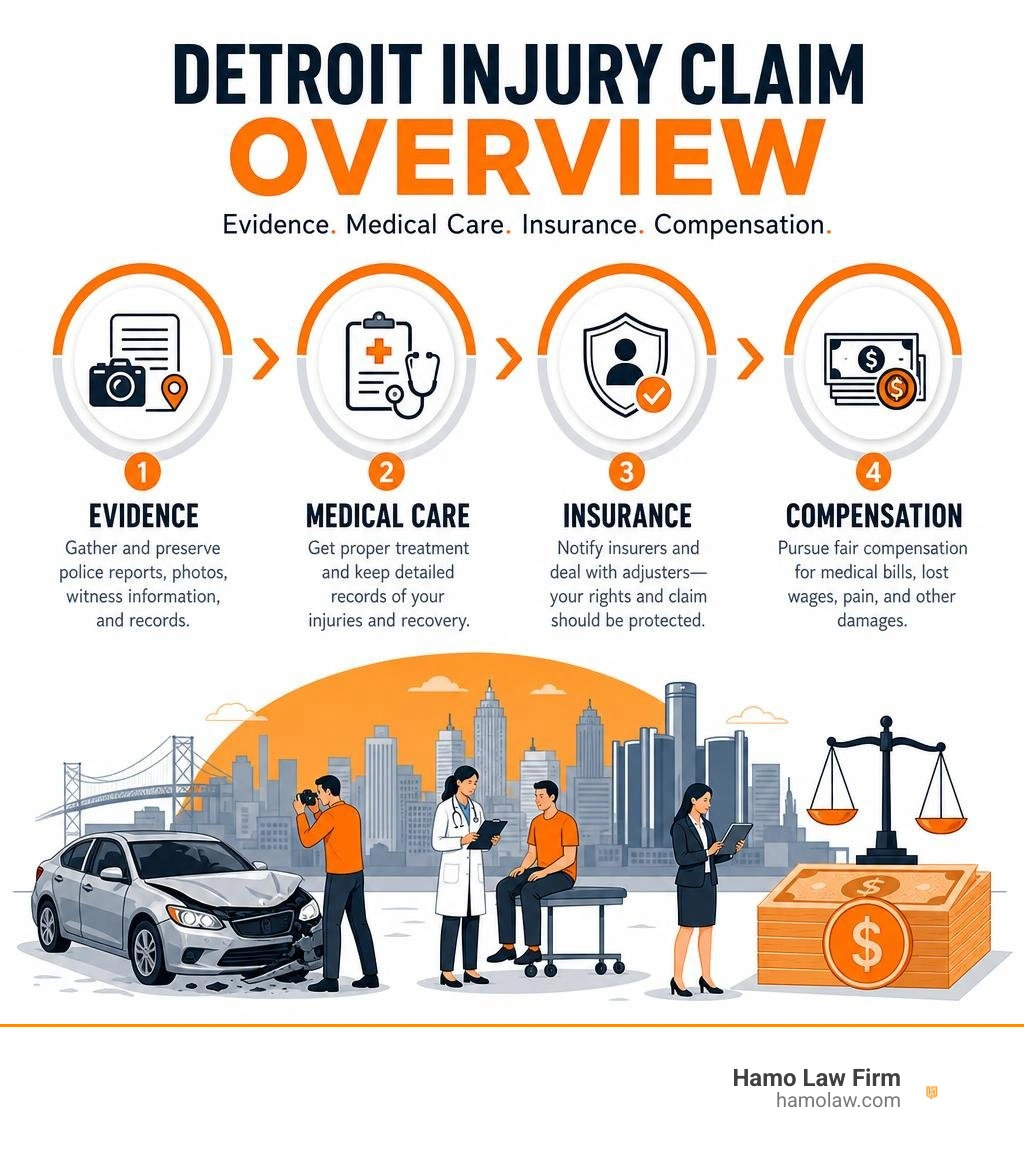
- Act quickly: Medical care, crash reports, photos, witness details, and early legal advice can help preserve your claim.
Detroit's traffic risks are especially serious. Motor vehicle collisions account for an estimated 40% of local personal injury claims, and Detroit represented roughly one-quarter of Michigan pedestrian deaths in 2022, according to traffic safety reports from the Michigan State Police. Still, every case turns on its own injuries, insurance coverage, evidence, and fault.
I am George Hamo, and this guide explains what to expect when hiring legal help after an injury in Detroit.
Key Types of Claims Handled by a Detroit Injury Lawyer
Navigating a personal injury claim in Wayne County requires an understanding of both state statutes and local courtroom procedures. When negligence interrupts your life, having a dedicated detroit injury lawyer ensures that your rights are shielded from aggressive insurance adjusters. Personal injury law encompasses a broad spectrum of accidents, but they all center on one principle: when someone else fails to exercise reasonable care, they should be held accountable for the resulting damages.
In our decades of practice at Hamo Law Firm, we have found that injury cases generally fall into distinct categories. Whether an incident occurs on I-75, inside a commercial property, or within a healthcare facility, understanding your specific claim category is the first step toward financial recovery.
Our legal team regularly manages a wide range of personal injury categories, including:
- Car, Truck & Motorcycle Accidents
- Premises liability and slip-and-fall incidents
- Medical malpractice and surgical errors
- Severe neurological and spinal trauma
- Wrongful death claims for surviving family members
Traffic-Related Injury Claims
Traffic collisions account for the vast majority of personal injury cases in Detroit. In fact, Detroit residents are three times more likely to be involved in a motor vehicle accident than the average Michigan resident. With high-speed interstates like I-94, I-75, and the Lodge Freeway cutting through dense urban areas, the potential for serious wrecks is constant.
Different types of motor vehicle accidents involve distinct legal standards and evidentiary needs:
- Car Accidents: Standard auto collisions often involve complex no-fault benefit applications alongside third-party tort claims against reckless or distracted drivers.
- Truck Accidents: Collisions with commercial semi-trucks involve federal highway safety regulations, logbook audits, and multi-layered corporate insurance policies.
- Motorcycle Accidents: Riders face unique prejudice from insurance adjusters despite suffering devastating injuries due to unobservant motorists.
- Pedestrian Accidents: With Detroit accounting for approximately 25% of all pedestrian fatalities in Michigan, these cases demand immediate crash reconstruction and evidence preservation.
- Bicycle Accidents: Cyclists sharing urban corridors are highly vulnerable to doorings, turning vehicles, and poorly maintained road surfaces.
- Uber/Lyft Accidents: Rideshare claims introduce multi-tiered policy limits depending on whether the driver was logged into the app, waiting for a ride, or carrying a passenger.
Severe Harm and Complex Liability
Not all injuries stem from motor vehicle crashes. Many of the most life-altering cases we represent involve specialized areas of law where injuries permanently alter an individual's quality of life.
When an accident results in life-changing physical harm, the legal strategy must account for long-term medical care and lifelong lost earning capacity:
- Traumatic Brain Injuries (TBI): Concussions and severe brain trauma require detailed neuro-psychological testing and expert testimony to illustrate invisible cognitive impairments.
- Spinal Cord Injuries: Partial or complete paralysis claims necessitate comprehensive life care plans detailing ongoing rehabilitation and home modification costs.
- Catastrophic Injuries: Amputations, severe burn injuries, and organ damage demand maximal insurance payouts to cover lifelong accommodations.
- Wrongful Death: When negligence proves fatal, surviving spouses and children may pursue damages for loss of companionship, funeral expenses, and financial support.
- Premises Liability: Property owners who fail to repair dangerous ice build-ups, defective steps, or inadequate security can be held liable for slip-and-fall injuries.
- Medical Malpractice: Doctors and hospital systems that violate accepted standards of care, leading to surgical mistakes or delayed diagnoses, are subject to strict legal scrutiny.
How Michigan Personal Injury Laws and No-Fault Rules Impact Claims
Understanding personal injury law in Detroit requires a clear grasp of Michigan's unique legal structure. Unlike many other states, Michigan operates under a auto no-fault system that separates first-party medical and economic benefits from third-party pain and suffering lawsuits.
Navigating these dual tracks can be confusing without an experienced detroit injury lawyer guiding your steps. Michigan's legislature significantly revamped the system with auto insurance reform laws, adding customizable Personal Injury Protection (PIP) coverage tiers and new fee schedules.
| Claim Type | Primary Target | Recoverable Benefits / Damages | Key Requirements |
|---|---|---|---|
| First-Party PIP Claim | Your own auto insurer (or assigned policy) | Medical care, lost wages (up to statutory limit), attendant care, replacement services | Must be filed within one year of the accident date; covers losses regardless of who caused the crash. |
| Third-Party Tort Claim | The at-fault driver's insurance | Pain and suffering, excess economic loss, emotional distress | Requires proof that the at-fault driver was negligent AND that your injuries meet the "threshold" requirement. |
Michigan No-Fault Coverage Basics
Under Michigan's No-Fault Insurance Claims framework, your own auto insurance carrier is primarily responsible for providing first-party PIP benefits after a motor vehicle accident, regardless of who was at fault for the crash.
These critical PIP benefits include:
- Medical Expenses: Necessary medical treatment, surgeries, hospital stays, prescription medications, and physical therapy resulting from the crash.
- Wage Loss: Reimbursement for up to 85% of your lost income for up to three years from the date of the accident, capped at a monthly statutory maximum.
- Attendant Care: Payment for non-medical nursing care or assistance with daily activities, which can be provided by professionals or family members.
- Replacement Services: Up to $20 per day to hire help for routine household chores you can no longer perform yourself.
However, strict notice rules apply. You must notify your insurance company promptly, and any lawsuit for unpaid PIP benefits must be filed within one year of the date the specific expense was incurred (known as the "one-year-back" rule).
Comparative Negligence and Filing Deadlines
While first-party no-fault claims cover basic financial losses, they do not compensate you for physical pain, emotional distress, or reduced quality of life. To recover these non-economic damages, you must file a third-party lawsuit against the at-fault driver.
To qualify for a third-party claim in Michigan, your injuries must meet a specific legal threshold: death, serious impairment of body function, or permanent serious disfigurement. A "serious impairment of body function" means an objectively manifested impairment of an important body function that affects your general ability to lead your normal life.
Furthermore, Michigan applies a modified comparative fault rule (specifically, a 51% bar rule) for non-economic damages:
- If you are 50% or less at fault: Your financial recovery is reduced by your percentage of fault. For example, if a jury awards you $100,000 but finds you 20% responsible for the accident, your final payout is reduced to $80,000.
- If you are 51% or more at fault: You are completely barred from recovering any non-economic pain and suffering damages from the other party.
In addition to comparative fault rules, you must obey the statutory deadlines. In Michigan, the standard statute of limitations for personal injury lawsuits is three years from the date of the accident. If you miss this deadline, you forfeit your legal right to seek compensation forever.
What to Do Immediately After an Accident in Detroit
The steps you take in the hours and days following an accident can significantly impact your personal injury claim. Insurance companies begin building their defense immediately; taking decisive action helps protect your rights.
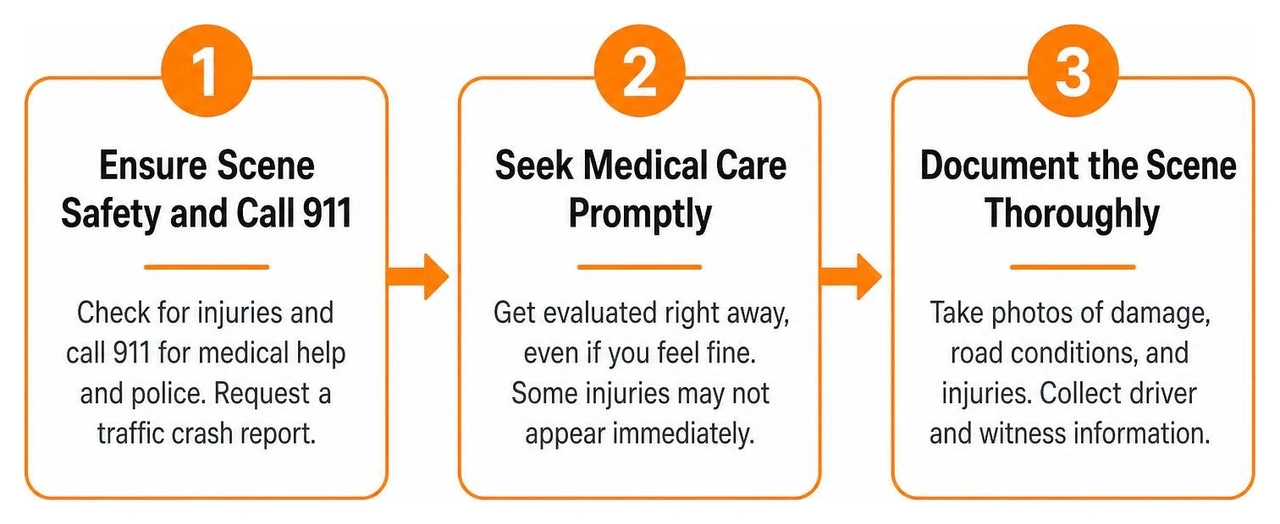
If you are involved in an accident in Detroit, follow these essential steps to preserve evidence and strengthen your case:
- Ensure Scene Safety and Call 911: Check for injuries and immediately request emergency medical help and law enforcement. Ask the responding Detroit Police Department officer or Michigan State Police trooper to create a formal traffic crash report.
- Seek Medical Care Promptly: Even if you feel okay at the scene, seek evaluation at an emergency room or urgent care center right away. Conditions like concussions, internal bleeding, or soft tissue injuries often manifest hours or days later. Delaying treatment gives insurance adjusters an excuse to argue your injuries were not caused by the crash.
- Document the Scene Thoroughly: Use your smartphone to take wide photos and close-ups of vehicle damage, skid marks, road conditions, traffic signals, visible injuries, and property damage. Collect contact and insurance information from all involved drivers, as well as names and phone numbers of eyewitnesses.
- Watch What You Say: Avoid apologizing or making statements like "I'm fine" or "I didn't see them." Simple polite statements can be interpreted by insurance companies as admissions of fault or lack of injury.
- Refuse Recorded Statements Until You Seek Counsel: Insurance adjusters may call you quickly, offering fast settlements or asking for recorded statements. Do not sign releases or give recorded statements without consulting a qualified detroit injury lawyer.
How Compensation and Contingency Fees Work
Understanding the financial side of a personal injury case helps relieve anxiety during recovery. Victims often wonder what their case is worth and how they can afford top-tier legal representation when medical bills are accumulating.
In Detroit, personal injury settlements vary widely based on liability, available insurance limits, and injury severity. While the average personal injury settlement in Detroit typically ranges between $15,000 and $75,000 for moderate injuries, catastrophic cases involving severe disability or wrongful death can result in six- or seven-figure outcomes.
Calculating Settlements with a Detroit Injury Lawyer
When calculating the value of a claim, an experienced attorney evaluates both economic and non-economic damages:
- Economic Damages (Tangible Losses): Medical expenses, future rehabilitation costs, lost wages, diminished future earning capacity, out-of-pocket medical supplies, and property repair costs.
- Non-Economic Damages (Intangible Losses): Physical pain and suffering, mental anguish, loss of enjoyment of life, loss of consortium, and permanent scarring or disfigurement.
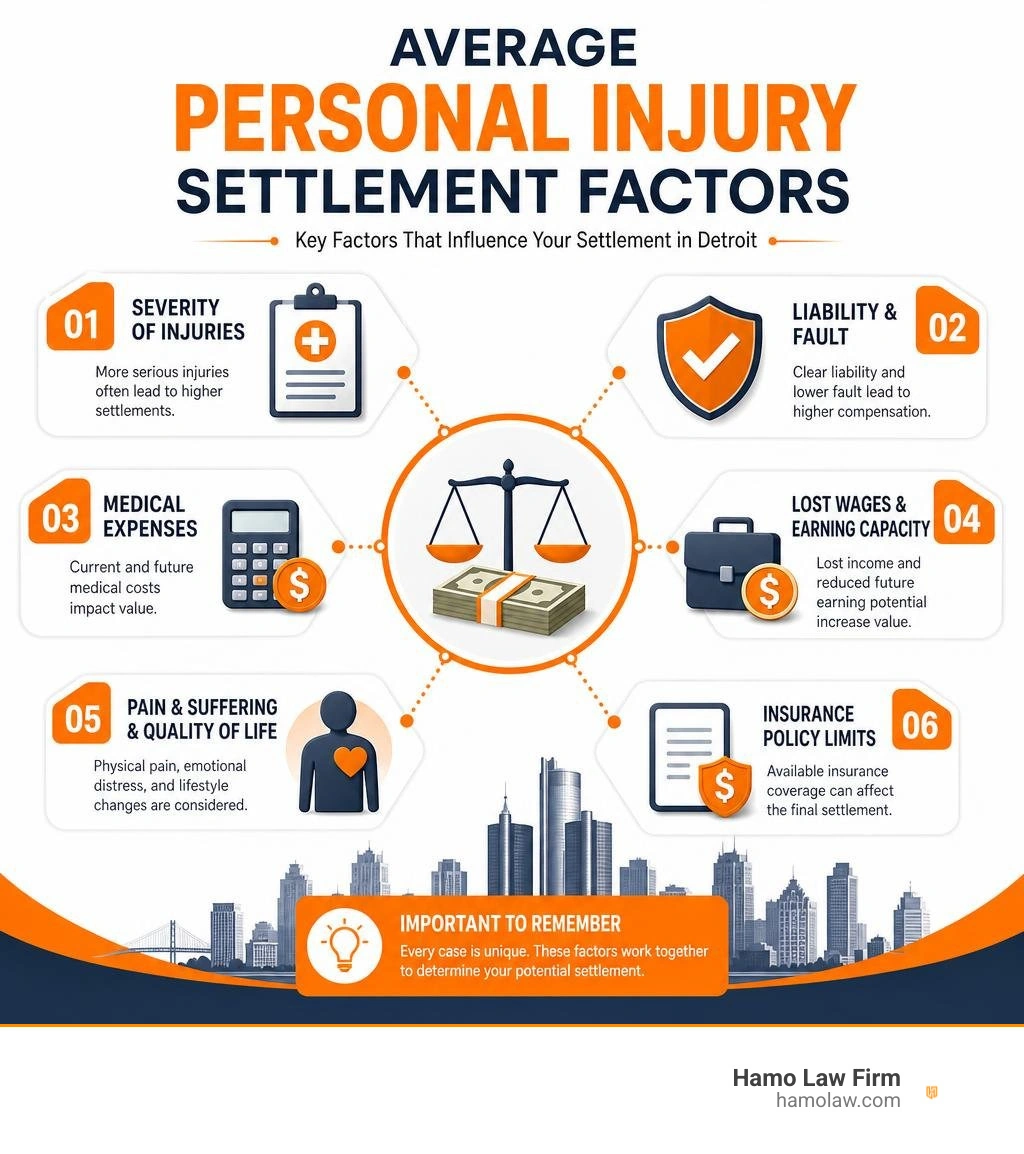
Key factors that influence settlement amounts include:
- Severity and Permanence of Injuries: Permanent disabilities yield higher compensation than temporary injuries.
- Clear Liability: Uncontested fault on the part of the defendant increases settlement leverage.
- Insurance Policy Limits: The maximum coverage available under the at-fault party's policy (and your own uninsured/underinsured motorist coverage) places a practical cap on standard recoveries.
Choosing the Right Detroit Injury Lawyer for Your Case
Hiring an attorney is one of the most important decisions you will make following a serious injury. You want a team with demonstrated trial experience, deep familiarity with local Michigan courts, and a proven track record across diverse Case Types.
At Hamo Law Firm, we believe top-quality legal representation should be accessible to everyone, regardless of their financial situation. That is why we work on a contingency-fee model.
Under a contingency-fee agreement:
- You pay zero upfront costs to hire our firm.
- We cover all legal costs, evidence gathering, expert witness fees, and trial preparation expenses during the litigation process.
- We only collect an attorney fee if we successfully recover money for you through a court verdict or negotiated settlement. If we do not win your case, you owe us no attorney fees.
When vetting attorneys, ask about their trial experience. Insurance companies know which lawyers settle quickly for low offers and which trial lawyers are ready to take a case to a jury. Having seasoned trial litigators on your side ensures your claim is taken seriously from day one.
Frequently Asked Questions About Personal Injury Claims
What is the statute of limitations for filing an injury claim in Michigan?
In Michigan, the standard statute of limitations for filing a personal injury lawsuit against an at-fault party is three years from the date of the incident. For first-party no-fault insurance PIP claims, a strict one-year rule applies for filing claims and suing for unpaid medical or wage loss benefits. If your claim involves a government entity (such as a municipality or road commission responsible for a dangerous road defect), written notice requirements can be as short as 120 days. Consulting an attorney immediately ensures you do not miss critical legal deadlines.
Can I still receive compensation if I was partially at fault for the accident?
Yes. Michigan follows a modified comparative fault rule. As long as you were 50% or less at fault for the crash, you can still recover non-economic pain and suffering damages, though your recovery will be reduced proportionally by your assigned percentage of fault. If you are found to be 51% or more at fault, state law prevents you from recovering non-economic damages from the other party. However, your first-party no-fault PIP medical benefits remain accessible regardless of fault.
How much does it cost to hire an injury attorney in Detroit?
It costs nothing out-of-pocket to hire our firm. We operate on a contingency fee framework. We handle all upfront expenses required to investigate, build, and litigate your case. Our fee is a percentage of the final recovery we secure for you. If we do not obtain a financial settlement or jury award on your behalf, you pay no legal fees.
Conclusion
Sustaining a serious injury in a crash or sudden accident can disrupt your family, financial stability, and long-term wellbeing. In a busy city like Detroit, navigating complex insurance claims and Michigan's auto no-fault laws on your own can feel overwhelming.
Having an aggressive, experienced trial legal team on your side helps level the playing field against insurance corporations. At Hamo Law Firm, we bring over 40 years of trial experience to every client we represent across Michigan, fighting to ensure accident victims get every dollar they deserve.
If you or a loved one has suffered an injury due to someone else's negligence, visit our Michigan Personal Injury Trial Lawyers page to learn more about our litigation capabilities, or head directly to our Contact page to schedule a free, no-obligation case evaluation today. Let us handle the legal battle so you can focus on your recovery.