
When a Simple Fall Turns Deadly: What You Need to Know
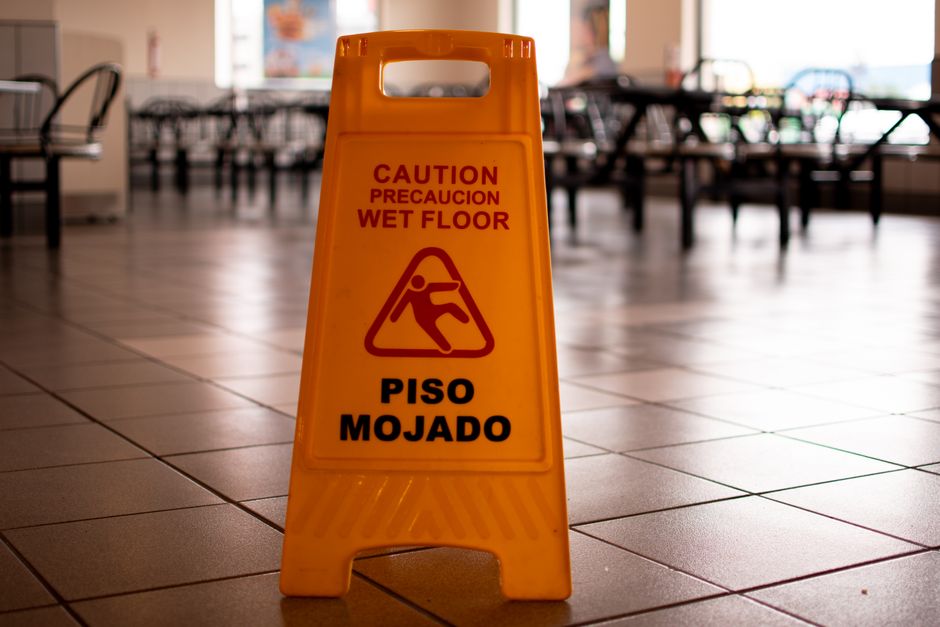
A fatal slip and fall is more common than most people realize — and the consequences for surviving families can be devastating, both emotionally and financially.
Quick answer: What is a fatal slip and fall?
- A fatal slip and fall occurs when a person dies as a result of injuries sustained in a slip, trip, or fall accident
- These deaths are often preventable and may result from a property owner's failure to maintain safe conditions
- Surviving family members may have the right to file a wrongful death lawsuit against the responsible party
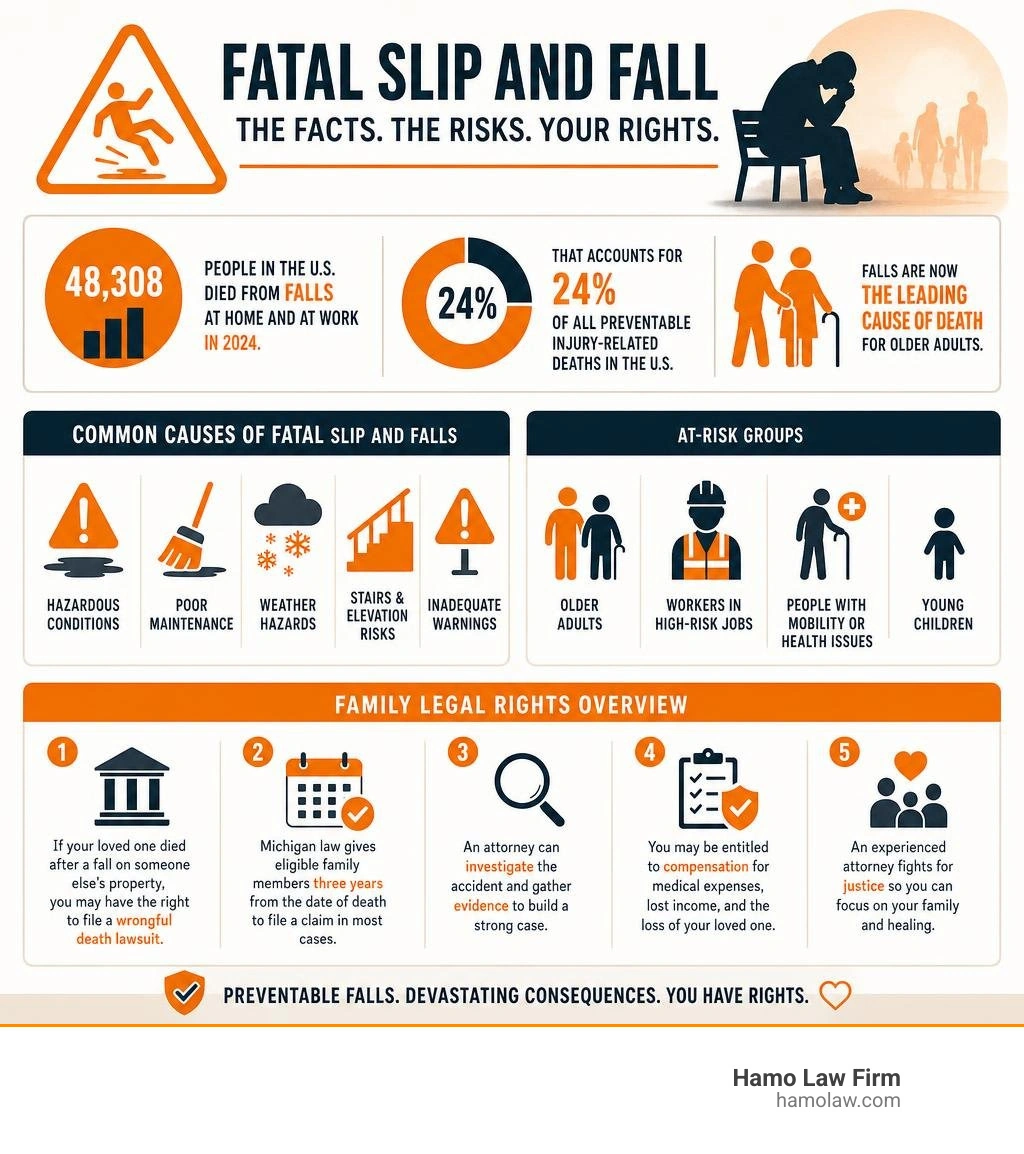
- Michigan law gives eligible family members three years from the date of death to file a claim in most cases
- An experienced wrongful death attorney can investigate the accident, gather evidence, and pursue compensation on your behalf — with no upfront costs
Most people picture a slip and fall as a minor embarrassment — a brief stumble that ends with a bruised ego. But the reality is far more serious.
In 2024 alone, 48,308 people in the U.S. died from falls at home and at work. That accounts for 24% of all preventable injury-related deaths in the country. Falls are now the leading cause of death for older adults, and they claim the lives of hundreds of workers every single year.
Behind every one of those numbers is a family left grieving — and often wondering if someone could have, or should have, prevented what happened.
If your loved one died after a fall on someone else's property, you are not alone. And you may have legal options.
The Shocking Statistics and Causes of Fatal Falls
When we look at the numbers, the scale of fall-related fatalities is staggering. Many of us don't think twice about walking across a parking lot or climbing a flight of stairs, but a single patch of ice or a loose handrail can change a family's life forever.

According to data compiled by the National Safety Council, falls are the second leading cause of unintentional injury-related death globally, right behind poisonings. Consider these critical statistics:
- Global Impact: Worldwide, approximately 37 million falls are severe enough to require medical attention every year, resulting in roughly 684,000 deaths.
- Emergency Room Visits: In 2023, more than 8.8 million people in the United States were treated in emergency departments for injuries sustained in falls.
- Workplace Danger: In 2024, 844 American workers died in falls (accounting for 17% of all workplace fatalities), and nearly 480,000 were injured severely enough to miss work.
- Construction Risks: Construction remains one of the most hazardous industries. Falls, slips, and trips accounted for 39.2% of construction fatalities in 2023, making up 47.8% of all fatal falls across all sectors.
To understand how these tragedies occur, we must distinguish between same-level falls and falls from elevated heights.
| Fall Type | Common Environments | Key Statistics & Risk Factors |
|---|---|---|
| Same-Level Falls | Sidewalks, parking lots, grocery store aisles, office floors | In 2024, same-level falls alone claimed the lives of 145 workers. These are highly associated with slick surfaces and liquid spills. |
| Falls from Heights | Ladders, scaffolding, roofs, stairwells, ledges | Falls from heights of 6 to 30 feet account for 64.4% of fatal construction falls. Ladders and stairs alone caused 109 construction deaths in 2023. |
Common Causes of a Fatal Slip and Fall
A fatal slip and fall rarely happens in a vacuum. Almost always, there is an underlying hazard that went ignored. We regularly see cases where simple, routine maintenance could have saved a life.
The most frequent culprits behind these tragic accidents include:
- Wet and Slick Floors: Spilled liquids, freshly mopped floors without warning signs, or tracked-in rainwater and snow.
- Unmaintained Walkways: Uneven concrete, cracked sidewalks, loose carpeting, or unexpected clutter in high-traffic walkways.
- Poor Lighting: Dark stairwells, unlit parking lots, and dim hallways that prevent people from seeing changes in elevation or obstacles.
- Unsafe Structural Elements: Missing handrails, rotted wood on decks, or deteriorated steps.
The fatal consequences of these hazards are documented worldwide. For instance, a BBC News report on a warehouse fall detailed how a 32-year-old worker was killed in a 13-foot fall when wall panels collapsed onto his scissor lift. The investigation revealed that the employer failed to conduct proper risk assessments and omitted critical structural supports.
Similarly, a Times of India report on a terrace fall highlighted the extreme hazards of seasonal maintenance, where a worker fell from a three-story residential terrace while trying to secure plastic sheets over a leaking roof.
Even recreational environments present severe risks when walking surfaces are compromised. A Coroner's report on a Hocking Hills trail fall showed that an experienced 63-year-old hiker lost her life after tripping on a muddy, wet berm next to deteriorated concrete stairs, ultimately sliding off a ledge.
Who is Most at Risk for a Fatal Slip and Fall?
While a fall can happen to anyone, two specific demographics are disproportionately affected: older adults and industrial workers.
Older Adults (Ages 65 and Older)
Falls are the leading cause of injury-related death for older Americans. As we age, our bones become more fragile, and our balance can decline. A fall that a young person might walk away from with a bruise can cause a hip fracture or traumatic brain injury (TBI) in an older adult.
Often, the fall itself is not the immediate cause of death; rather, it is the secondary medical complications—such as blood clots, pneumonia from immobility, or surgical infections—that prove fatal weeks or months later.
Construction and Industrial Workers
Those working on roofs, scaffolding, and ladders face daily, life-threatening hazards. The lack of proper fall protection systems, inadequate training, and faulty equipment turn routine tasks into deadly situations.
Recreational hikers and outdoor enthusiasts also face high risks on unmaintained public lands. An WLOS report on a Big Bradley Falls accident detailed the tragic death of a 29-year-old hiker who fell 75 to 100 feet from a waterfall, reminding us how quickly a slip on a slick surface can turn fatal.
Even seemingly minor falls can lead to bizarre, lethal complications. In a tragic case highlighted by an Independent report on a bamboo cane fall, a gardener died from necrotizing fasciitis (a rare flesh-eating disease) just four days after slipping and falling onto a bamboo cane. The fall embedded a tiny fragment of denim fabric into his skin, triggering a rapid, fatal infection.
No matter who the victim is, when a fall occurs on someone else's property, the legal concept of premises liability comes into play. To learn more about how the law protects victims in these scenarios, you can read our guide on What is Premises Liability in Michigan.
Proving Liability in a Fatal Slip and Fall Case
To successfully pursue a legal claim after a fatal slip and fall, we must establish that another party's negligence caused the accident. This is the foundation of premises liability law.

Proving negligence when the victim is no longer here to tell their story is one of the greatest challenges we face. It requires a meticulous, exhaustive investigation. If you are wondering how this process works, you can explore our detailed breakdown: How Do I Prove Negligence in a Slip and Fall Case.
The Role of Premises Liability
Under Michigan law, property owners, business operators, and landlords have a legal duty to maintain their premises in a reasonably safe condition for visitors. The extent of this duty depends on the visitor's legal status (invitee, licensee, or trespasser), with the highest duty of care owed to business customers (invitees).
Property owners must actively inspect their premises, repair known hazards, and warn visitors of dangerous conditions that are not easily visible. When they fail to do so, they can be held legally responsible for the consequences.
For a complete look at how these laws apply to your situation, see our resources on What is Premises Liability in Michigan and When You Have a Case and discover Who is Responsible for a Premises Liability Accident.
Proving Negligence and Notice
To win a premises liability case, we must prove that the property owner had "notice" of the hazard. Notice can be established in two ways:
- Actual Notice: The owner or their employees knew about the hazard (e.g., a customer told a store manager about a spill, or an employee saw a broken step but did nothing).
- Constructive Notice: The hazard existed for a long enough period of time that the owner should have discovered and corrected it during routine inspections.
We gather a wide range of evidence to build a strong case, including:
- Surveillance Footage: Security cameras often capture the fall itself or show how long a hazard (like a spill) was left unaddressed.
- Maintenance Logs: We examine cleaning and inspection records to see if the property owner was actually checking for hazards.
- Incident Reports: Internal store or corporate reports filed immediately after the accident.
- Expert Testimony: We work with safety engineers and floor safety experts to analyze the slip resistance of the walkway.
For a step-by-step look at proving these elements, read our FAQ on How Do I Prove a Property Owner Was Negligent.
Overcoming Common Defenses
Insurance companies and property owners will do everything they can to avoid paying a claim. In Michigan, the most common defense used is the Open and Obvious Doctrine.
This legal doctrine argues that if a hazard was visible enough that an average person should have seen and avoided it, the property owner has no duty to warn or protect you from it. However, the application of this doctrine has evolved, and there are critical exceptions—such as when a hazard is "effectively unavoidable."
To understand how this defense might impact your case, read our guide on the Michigan Open and Obvious Doctrine Slip and Fall.
Legal Claims and Damages for Surviving Families
When a loved one passes away due to a fatal slip and fall, the family is left with immense emotional grief alongside unexpected financial burdens. Under Michigan law, families can pursue justice through a wrongful death action.
Navigating these complex legal waters during a time of mourning is incredibly difficult. Working with an experienced Wrongful Death Lawyer Michigan Hamo Law Firm ensures your family's rights are protected while you focus on healing.
Wrongful Death Claims
In Michigan, a wrongful death claim is a civil action brought when a person's death is caused by the wrongful act, neglect, or fault of another.
It is important to know that individual family members cannot file a wrongful death lawsuit directly. Instead, the claim must be filed by the personal representative (executor) of the deceased person’s estate. This representative acts on behalf of all eligible family members, which may include spouses, children, parents, grandparents, and siblings.
To find out who qualifies to recover damages and how the estate representative is appointed, read Who Can File a Wrongful Death Claim and learn more about What Qualifies as Wrongful Death in Michigan.
Recoverable Damages and Statute of Limitations
The damages available in a Michigan wrongful death case are designed to compensate the estate and surviving family members for both financial and emotional losses.
Economic Damages
- Medical Bills: The cost of medical care, emergency room visits, and surgeries provided to your loved one between the time of the fall and their death.
- Funeral and Burial Costs: Reasonable expenses associated with laying your loved one to rest.
- Loss of Financial Support: The loss of income, benefits, and financial contributions your loved one would have provided to their dependents.
Non-Economic Damages
- Pain and Suffering: Compensation for the physical pain and mental anguish your loved one experienced before they passed away.
- Loss of Companionship: Compensation for the loss of love, guidance, society, and companionship suffered by surviving family members.
To understand how these damages are calculated and distributed, read our FAQ on Damages in Michigan Wrongful Death Claim.
The Statute of Limitations
In Michigan, you generally have three years from the date of the person's death to file a wrongful death lawsuit. However, this timeline can vary depending on the specific circumstances of the accident (such as if a governmental entity is involved, which requires much shorter notice periods). Failing to file before the deadline means losing your right to seek justice forever.
Steps to Take Immediately After a Fatal Accident
If a loved one has suffered a catastrophic fall, taking swift action can make a massive difference in your ability to seek justice later. Property owners often clean up spills, repair broken steps, or delete security footage quickly after an accident occurs.
Knowing what to do in the immediate aftermath of a tragedy is critical. We recommend reviewing our comprehensive checklist: What to Do After a Slip and Fall Accident in Michigan.
How Families Can Strengthen Their Claim
To protect your family's legal rights and build a strong foundation for a future claim, try to complete the following steps as soon as possible:
- Preserve the Scene: If possible, take high-quality photographs and videos of the exact hazard that caused the fall. Capture the hazard from multiple angles and show the lighting conditions.
- Identify Witnesses: Gather names, phone numbers, and addresses of anyone who saw the fall or noticed the hazard prior to the accident.
- Request the Incident Report: If the fall happened at a business, ask the manager to fill out an incident report and demand a copy.
- Save Physical Evidence: Keep the footwear and clothing your loved one was wearing at the time of the fall. Do not wash or alter them, as they may be needed to disprove claims that their shoes caused the slip.
- Keep Detailed Records: Keep every medical bill, funeral invoice, and piece of correspondence from insurance companies.
For additional guidance on protecting your family during this difficult time, please see our resource on What Should I Do After a Slip and Fall Accident.
Frequently Asked Questions about Fatal Falls
Can I sue if my loved one died in a fatal slip and fall accident?
Yes. If your loved one’s death was caused by a property owner’s failure to maintain safe conditions, the personal representative of their estate can file a wrongful death lawsuit. You must prove that a dangerous condition existed, the property owner knew or should have known about it, and their failure to fix it directly caused the fatal fall.
What is the statute of limitations for a wrongful death claim after a fatal slip and fall?
In Michigan, the statute of limitations for filing a wrongful death claim is generally three years from the date of the deceased person's death. However, some cases involving governmental property or specific entities have much shorter notice deadlines. It is vital to consult an attorney as soon as possible to ensure you do not miss these critical deadlines.
How do you prove a property owner is responsible for a fatal slip and fall?
To prove liability, we must establish that the property owner had actual or constructive notice of the hazard. This is done by showing the dangerous condition (like a wet floor, broken stair, or icy walkway) existed long enough that the owner should have discovered and resolved it during routine maintenance, or that they created the hazard themselves. We use security footage, witness statements, maintenance logs, and expert analysis to build this proof.
Conclusion: We Are Here to Fight for Your Family
Losing a loved one to a preventable fatal slip and fall is an unimaginable tragedy. While no amount of money can bring your family member back, pursuing a wrongful death claim can provide the financial security your family needs and hold negligent property owners accountable for their actions.
At Hamo Law Firm, we have spent more than 40 years fighting insurance companies on behalf of accident victims and grieving families in Flint, Detroit, Genesee County, and Wayne County, Michigan. We understand the pain you are going through, and we are committed to handling your case with the utmost compassion, dedication, and trial-tested expertise.
We operate on a contingency-fee model, which means you pay absolutely nothing upfront, and we receive no legal fees unless we successfully win your case. Let us carry the legal burden so you can focus on your family.
Schedule a consultation with our Wrongful Death Lawyers today for a free, confidential evaluation of your case.