Why Swimming Pool Accident Attorneys Matter After a Serious Injury
Swimming pool accident attorneys help injured swimmers and grieving families investigate what went wrong, identify who may be responsible, and pursue compensation from insurers or other liable parties.
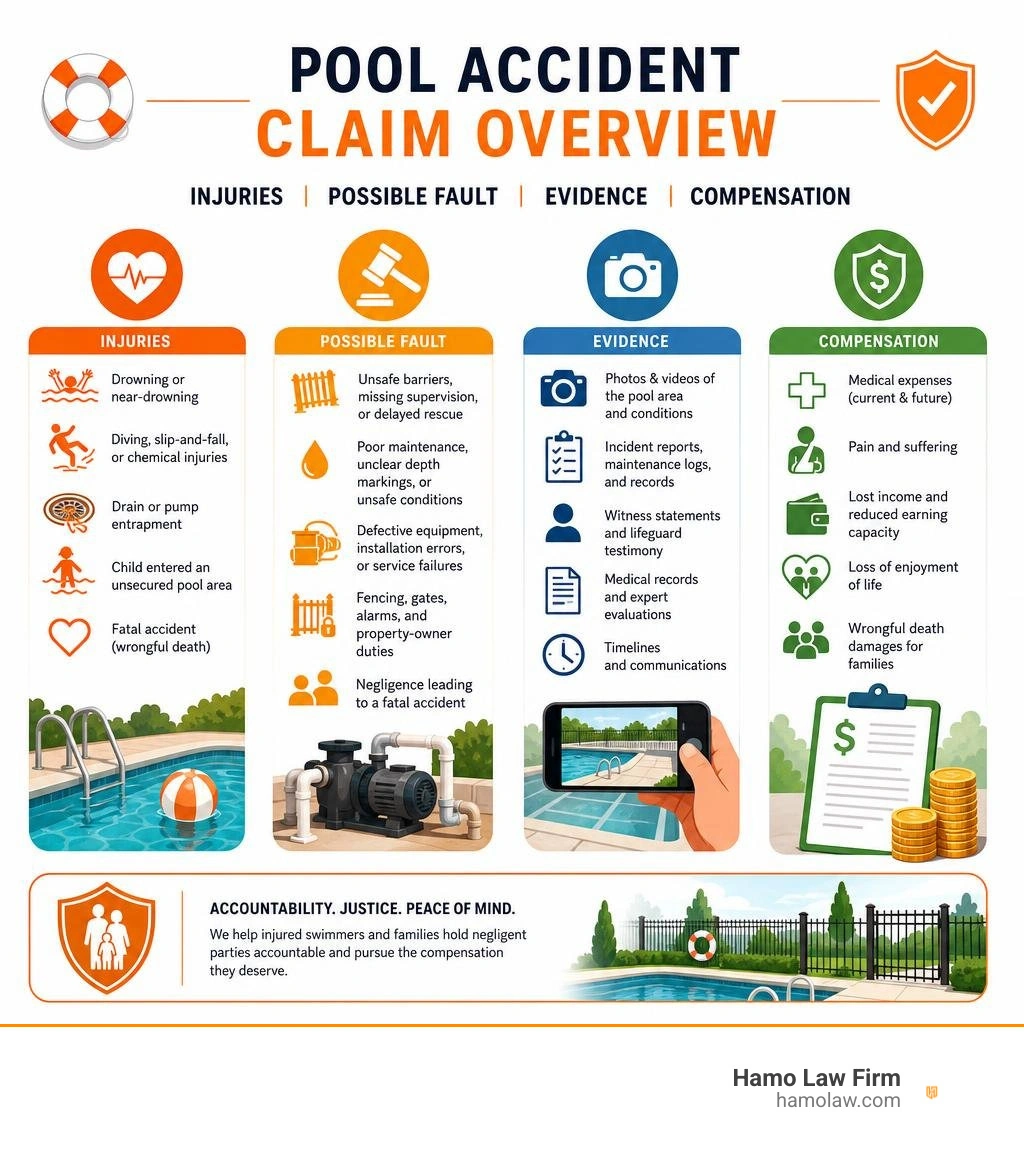
If a pool accident harmed you or a loved oneA lawyer can help assessDrowning or near-drowningUnsafe barriers, missing supervision, or delayed rescueDiving, slip-and-fall, or chemical injuriesPoor maintenance, unclear depth markings, or unsafe conditionsDrain or pump entrapmentDefective equipment, installation errors, or service failuresA child entered an unsecured pool areaFencing, gates, alarms, and property-owner dutiesA fatal accident occurredA possible wrongful death claim and the family's losses
A pool should be a place for recreation, not a life-changing emergency. Yet drowning remains a leading cause of death for children ages 1 through 4, and nonfatal submersion can cause permanent brain injury from oxygen loss. Serious accidents can also involve spinal injuries from diving, electrical hazards, slippery decks, chemical burns, and dangerous drain suction.
For Michigan families, the key question is often simple: Did someone fail to take reasonable steps to keep the pool safe? The answer may involve a homeowner, landlord, hotel, apartment complex, pool operator, maintenance company, or equipment manufacturer.
I am George Hamo, and this guide explains the legal issues that can arise after a swimming pool accident and what may happen next.
Common Swimming Pool Accidents and Severe Injuries
According to data from the Centers for Disease Control and Prevention, across the United States, more than 12,000 fatal and nonfatal drowning incidents occur every year, averaging roughly 11 fatal drownings every single day. While a quick dip on a hot summer afternoon in Wayne County or Genesee County is meant to be refreshing, swimming pools present hidden hazards when safety protocols fall by the wayside.
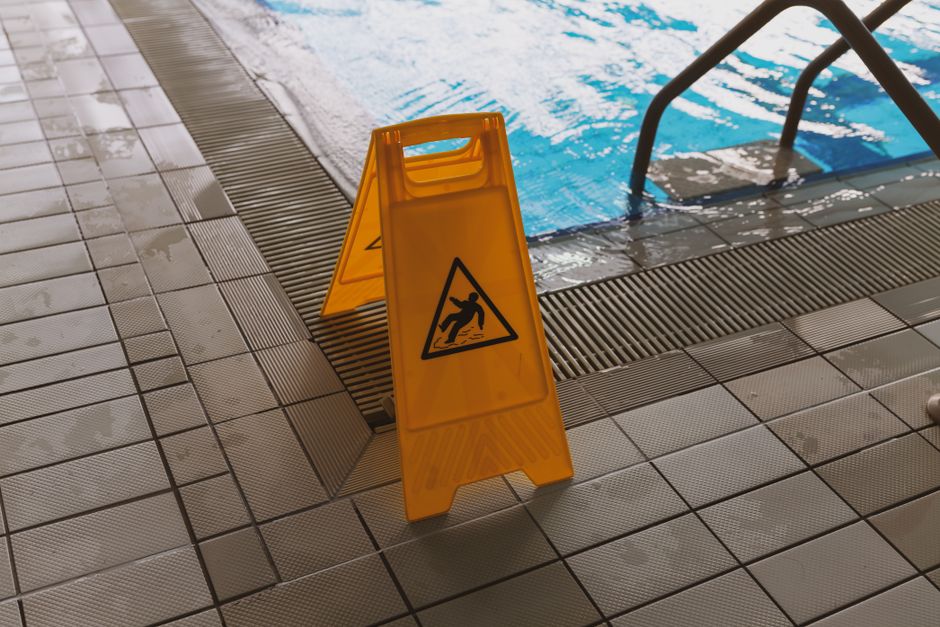
Pool accidents are rarely minor mishaps. When safety rules are ignored or equipment fails, victims often require emergency medical intervention and ongoing rehabilitation. When injuries are severe and life-altering, working with a dedicated catastrophic injury lawyer michigan can make all the difference in securing the resources required for lifelong care.
Primary Causes of Water Recreation and Pool Accidents
Most swimming pool accidents do not occur purely by chance; they are usually the direct result of human error, poor maintenance, or defective equipment. The primary underlying causes include:
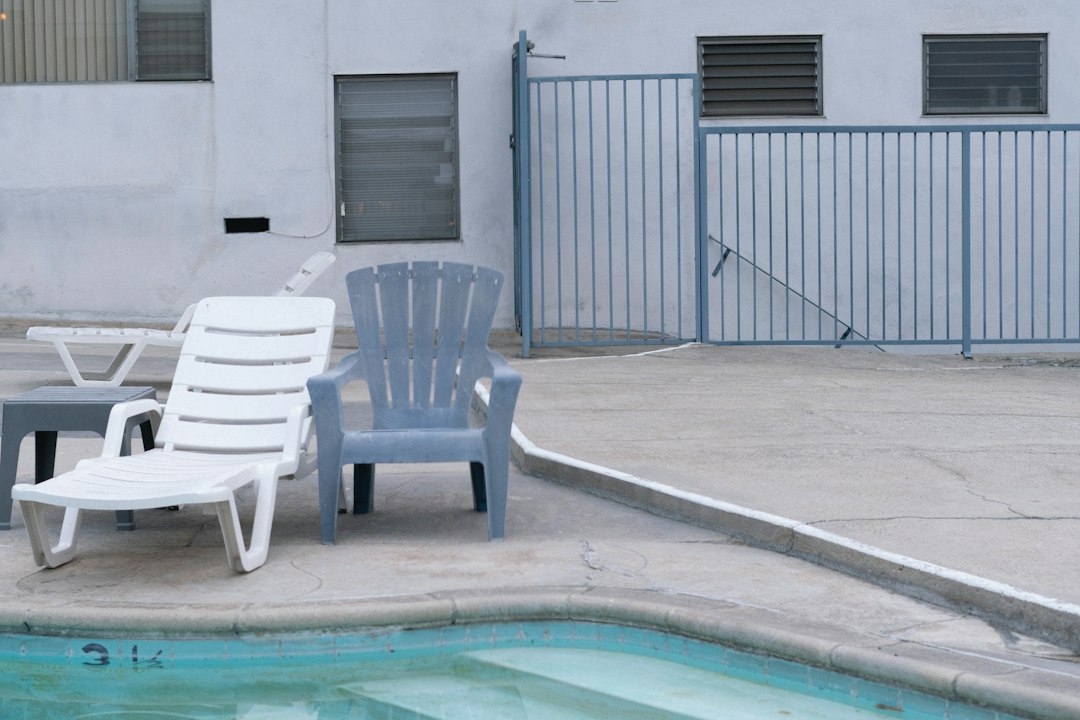
- Inadequate Fencing and Broken Gates: Unsecured pool perimeters are an invitation to disaster. Latching mechanisms that stick open or fences that fall below local safety height standards allow young children to enter pool areas completely unnoticed.
- Chemical Imbalances: Pools require precise chemical management. Excessive chlorine or improper pH balancing can cause severe chemical burns to skin and eyes or trigger acute respiratory distress, while neglected sanitation permits harmful pathogens like E. coli or Giardia to thrive.
- Defective Pool Pumps and Drains: Powerful suction from pool drains and vacuum pumps can trap swimmers underwater. Missing or damaged drain covers create a vacuum seal capable of trapping even strong adult swimmers or causing catastrophic entrapment injuries.
- Lack of Supervision and Improperly Trained Staff: Public pools, summer camps, and hotel facilities owe a duty of care to provide attentive, certified lifeguards. Distracted, absent, or poorly trained personnel significantly delay critical life-saving interventions.
- Slippery Decks and Unclear Depth Markings: Improper pool deck materials without slip-resistant coatings frequently lead to violent falls. Similarly, absent or faded depth indicators lead swimmers to dive into shallow water blindly.
Severe Injuries Impacting Children and Adult Swimmers
The physical consequences of a swimming pool incident range from painful fractures to permanent disabilities. Children are disproportionately affected; victims under 14 account for 1 out of every 5 drownings nationwide, and 76 percent of drowning deaths involve children under the age of 5.
- Traumatic Brain Injury (TBI) and Hypoxia: Nonfatal drownings lead to severe oxygen deprivation (hypoxia). Brain tissue begins to suffer permanent damage after just four minutes without oxygen, resulting in long-term cognitive deficiencies, memory loss, speech impairment, or permanent vegetative states. Emergency room care for pediatric pool accidents averages over $8,000, while subsequent long-term neurological care can easily exceed $250,000 to millions over a lifetime.
- Spinal Cord Damage and Paralysis: Diving into shallow water or striking a defective pool slide can fracture cervical vertebrae. Diving incidents account for over 10 percent of the roughly 10,000 spinal cord injuries suffered in the United States every year, frequently causing partial or total paralysis (quadriplegia or paraplegia).
- Submersion and Internal Organ Injuries: High-suction pump drains without safe covers can trap limbs or exert immense suction pressure, leading to internal organ damage, severe soft tissue tearing, or disembowelment.
- Chemical Burns and Respiratory Trauma: Inhaling toxic chemical fumes or swimming in over-chlorinated water can cause chemical burns to mucus membranes, skin, and lungs.
Understanding what qualifies as a catastrophic injury in Michigan is essential, as these life-changing harms dictate the level of financial compensation needed to cover a victim's lifetime treatment.
Determining Legal Liability and Theories of Fault
When a swimming pool injury occurs in Detroit, Flint, or anywhere in Michigan, establishing who is legally at fault requires examining the legal relationship between the victim and the property owner or operator. Questions regarding who is liable for injuries on someone else's property form the backbone of these complex cases.
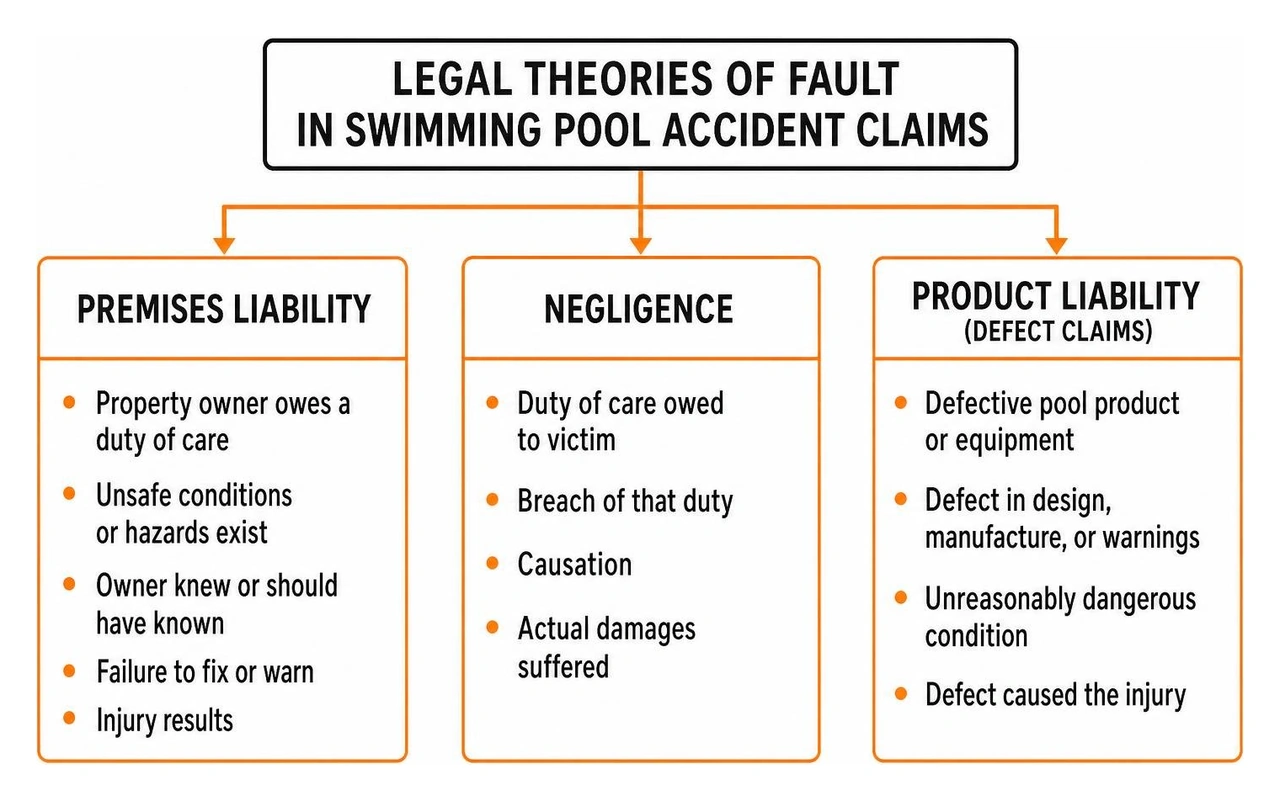
Premises Liability, Negligence, and Product Defect Claims
Understanding what is premises liability in Michigan is crucial to analyzing how pool accident claims are handled:
- Premises Liability: Landlords, private homeowners, hotel operators, and commercial pool facilities must maintain safe premises. For invited guests (licensees) or paying patrons (invitees), property owners must inspect the pool area, fix hazardous conditions (like loose pool ladders or slippery deck surfaces), and post clear warnings about hazards.
- The Attractive Nuisance Doctrine: Children are naturally drawn to water but rarely comprehend its dangers. Under the attractive nuisance doctrine, property owners can be held liable if a child wanders onto their property and is harmed by an unsecured, unfenced, or unlatched pool—even if the child was trespassing. Michigan residential pool owners are expected to fence their pools and secure gates to prevent unattended child entry.
- General Negligence and Negligence Per Se: Negligence occurs when someone fails to act as a reasonably prudent person would under similar circumstances—such as a lifeguard texting instead of watching the pool. Negligence per se arises when a property owner violates a safety law or local ordinance, such as failing to meet statutory fence height requirements or omitting required self-closing latch mechanisms.
- Product Liability: If a pool accident stems from defective equipment—such as a pool drain safety cover that fails under pressure, a defective diving board structure, or a faulty pool heater—the manufacturer, distributor, or installer can be held strictly liable for marketing an unsafe product.
It is also worth noting how courts view obvious hazards. Insurance adjusters often attempt to invoke the Michigan open and obvious doctrine slip and fall rules, arguing that water or depth was an open hazard. However, recent legal updates in Michigan personal injury law limit how property owners can use this defense to escape accountability when unsafe conditions or child trespassers are involved.
Why You Need Experienced Swimming Pool Accident Attorneys After a Drowning Incident
Navigating a swimming pool accident claim against a commercial entity, a municipality, or a private homeowner's insurance policy can quickly become overwhelming. Defense insurers act fast to minimize their financial payout, often trying to shift blame onto the victim or parents.
Experienced swimming pool accident attorneys protect your legal rights from day one by:
- Conducting an independent physical inspection of the pool, gates, filtration pumps, and depth markers before conditions are modified.
- Identifying all potentially liable parties, including property owners, management firms, maintenance contractors, and equipment manufacturers.
- Subpoenaing video surveillance footage, lifeguard shift logs, maintenance records, and municipal inspection reports.
- Retaining safety experts, medical specialists, and accident reconstructionists to establish exactly how the failure occurred and document the full scope of harm.
How Swimming Pool Accident Attorneys Prove Fault and Negligence
To secure full compensation, an attorney must build a rigorous case demonstrating that four key legal elements exist:
- Duty of Care: The property owner, operator, or manufacturer owed a legal obligation to keep the premises or product safe.
- Breach of Duty: The responsible party breached that duty through action or inaction (e.g., leaving a pool gate unlatched, failing to test chemicals, or neglecting broken drain covers).
- Causation: The breach directly caused the drowning, near-drowning, or injury.
- Measurable Damages: The victim or family suffered quantifiable physical, financial, or emotional losses.
Understanding how to prove a property owner was negligent requires systematically gathering objective evidence.
Immediate Action Steps and the Statute of Limitations
The actions you take immediately following a pool accident directly impact your health and your legal rights:
- Seek Immediate Emergency Care: Call 911 instantly. Even if a swimmer appears fine after near-drowning, delayed complications like secondary drowning or fluid in the lungs can develop hours later.
- Report the Incident: Notify the pool manager, resort owner, or property manager immediately and request a copy of the written incident report.
- Document the Scene: Photograph and film the pool area, including fencing, gate latches, water clarity, lack of depth markers, broken ladders, and drain covers.
- Gather Witness Information: Collect names, phone numbers, and email addresses from lifeguards, bystanders, or fellow guests.
- Preserve Physical Evidence: Keep the clothing, life vests, or damaged equipment involved in the incident in an unaltered state.
- Avoid Detailed Statements to Insurance Adjusters: Insurance adjusters represent their company's bottom line. Do not give recorded statements or accept early settlement offers without consulting legal counsel.
Regarding timeline limits, knowing the statute of limitations Michigan personal injury is critical. In Michigan, personal injury and wrongful death lawsuits generally must be filed within three years from the date of the incident. However, if the pool is owned by a city, public school, or municipal entity, notice requirements can be significantly shorter—sometimes requiring formal notice within just a few months. Failing to meet these strict deadlines permanently bars your right to compensation.
How Swimming Pool Accident Attorneys Handle Insurance Negotiations and Settlements
After a catastrophic injury or fatal drowning, families face staggering medical bills, lost household income, and overwhelming grief. Personal injury law allows victims and surviving family members to seek full financial recovery.
Recoverable damages in a pool injury or wrongful death claim include:
- Economic Damages: Past and future medical bills, emergency transport costs, surgeries, long-term rehabilitation, physical therapy, home modifications, and lost wages/earning capacity.
- Non-Economic Damages: Pain and suffering, emotional distress, loss of enjoyment of life, physical impairment, and disfigurement. In wrongful death claims, surviving family members can also recover damages for loss of companionship, financial support, and funeral/burial expenses.
- Contingency Fee Agreements: Most pool accident lawyers work on a contingency fee model—meaning there are no upfront costs or legal fees unless we win your case.
When insurance companies refuse to offer a fair settlement, working with a battle-tested personal injury trial lawyer michigan ensures your case is fully prepared to go to court and fight for maximum financial recovery.
Frequently Asked Questions About Swimming Pool Injury Claims
Who can be held legally responsible for a residential or commercial pool drowning?
Depending on where the accident occurred, several parties can share legal liability:
- Private Homeowners: For failing to maintain pool barriers, gates, or adequate supervision during social gatherings.
- Commercial Operators (Hotels, Gyms, Waterparks): For failing to provide trained lifeguards, clean water conditions, clear depth signage, or safe deck surfaces.
- Property Management Companies & HOAs: For neglecting maintenance on apartment complex or neighborhood community pools.
- Pool Maintenance Companies: For improperly applying chemicals or failing to inspect and repair drain covers and pumps.
- Equipment Manufacturers: For designing or selling defective drain suction covers, ladders, or pool slides.
- Governmental or Municipal Entities: For safety oversights at public municipal pools or public school facilities.
What safety barriers and regulations must pool owners follow?
While specific local ordinances vary across Michigan municipalities, residential and commercial pool operators are generally expected to adhere to standard safety rules:
- Fencing or enclosure barriers enclosing the pool perimeter to prevent accidental entry.
- Self-closing and self-latching gates with latches positioned out of reach of young children.
- Anti-entrapment drain covers compliant with federal safety standards (such as the Virginia Graeme Baker Pool and Spa Safety Act) to prevent suction entrapment.
- Clear depth markings clearly visible along the pool deck and walls separating shallow and deep ends.
- Properly stored and balanced sanitation chemicals to prevent chemical burns or toxic inhalation.
How much does it cost to retain a pool accident lawyer?
At Hamo Law Firm, retaining an attorney costs nothing out-of-pocket. We operate strictly on a contingency fee basis. We pay for all upfront investigation costs, filing fees, and expert witness retainers. You only pay legal fees if we successfully resolve your claim through an insurance settlement or jury verdict. If we do not win compensation for you, you owe us nothing.
Conclusion
A swimming pool accident can instantly reshape a family's future, bringing medical challenges and financial distress. Whether an incident involved an unsecured residential pool, a defective drain cover, or a lack of supervision at a commercial facility, holding negligent parties accountable is essential for getting your family the financial support it deserves.
For over 40 years, Hamo Law Firm has helped Michigan accident victims and grieving families stand up to insurance companies. Based in Flint and serving clients across Wayne County, Genesee County, Detroit, and all of Michigan, our team brings deep trial experience and personal commitment to every claim we handle.
If you or a loved one suffered harm in a water-related incident, contact an experienced premises liability lawyer michigan today. Visit our premises liability practice area page or call us for a free, no-obligation consultation to learn how we can help you fight for justice.