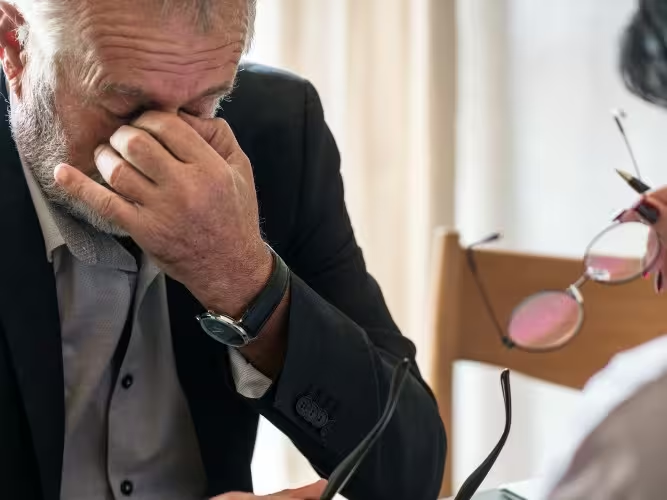
The days after losing someone you love don't come with an instruction manual. There are calls to make, arrangements to sort out, and a strange, heavy silence in between. Somewhere in all of that, someone may mention a phrase you weren't ready to hear: wrongful death claim.
We know that phrase can feel cold and out of place next to something so personal. But Michigan law puts real deadlines on these cases, and those deadlines don't pause for grief. We've sat across the table from Flint families in this exact moment for over 40 years, and we've learned that a little clarity early on can make an impossible time slightly more manageable.
What Actually Counts as a Wrongful Death Claim
The Legal Definition, in Plain English
Under Michigan law, a wrongful death claim exists when someone's negligence, recklessness, or intentional act causes another person's death. That's the technical version. In practice, it means a family lost someone because another party failed to act with reasonable care.
Common Causes We See in Michigan
Wrongful death claims can arise from almost any type of accident. Some of the most common causes we encounter include:
- Car, truck, and motorcycle accidents
- Defective vehicles or consumer products
- Medical negligence during treatment or surgery
- Unsafe conditions on someone else's property
- Workplace accidents involving unsafe equipment or practices
Quick Takeaway
A wrongful death claim isn't about assigning blame for its own sake. It's a legal tool that may allow a family to hold a negligent party accountable and seek support for what that negligence took from them.
Who Can File a Wrongful Death Claim in Michigan
Why the Estate Files, Not Individual Family Members
This surprises a lot of people. In Michigan, a wrongful death claim is technically filed by the personal representative of the deceased person's estate, not by a spouse or child directly. The personal representative is often named in a will, or appointed by the probate court if there isn't one.
This structure exists so that any potential compensation can be distributed fairly among the people entitled to it. It doesn't mean only one person benefits. It means one person carries the legal responsibility of bringing the claim forward on behalf of the whole family.
Who May Be Entitled to Recover
Michigan law allows a range of family members to potentially receive compensation through a wrongful death claim, depending on the circumstances. This may include:
- A surviving spouse
- Children, including adult children
- Parents of the deceased
- Other individuals who depended on the deceased for financial support
Myth vs. Fact
Myth: Only a spouse can file or benefit from a wrongful death claim.
Fact: Michigan law recognizes a broader circle of family members who may be entitled to compensation, even when there isn't a surviving spouse. The specific facts of each family's situation determine who qualifies.
Why Timing Matters More Than Most Families Realize
Michigan's Statute of Limitations
Michigan generally gives families three years from the date of death to file a wrongful death claim. This is known as the statute of limitations, and it's a hard legal deadline. Miss it, and a family may lose the right to pursue compensation altogether, regardless of how strong the case might have been.
Some cases involve exceptions or different starting points, particularly when the cause of death wasn't immediately clear. This is one reason it helps to talk with an attorney early, even if a family isn't ready to move forward yet.
Why Waiting Hurts a Case Before the Deadline Even Arrives
Three years may sound like plenty of time. In practice, evidence starts disappearing much sooner than that. Skid marks fade. Surveillance footage gets overwritten. Witnesses move away or simply forget details.
Insurance companies also move quickly on their end. They may begin building a defense within days of an accident, while a grieving family is still absorbing what happened. Early legal guidance doesn't mean a family has to file anything right away. It simply means someone is protecting the case while the family focuses on each other.
A Common Question We Hear
"We're not ready to think about this yet. Is it too soon to talk to someone?"
It's never too soon to ask questions, and there's no obligation attached to a conversation. Many families simply want to understand their options and their timeline, so they can make decisions when they're ready rather than under pressure.
What Compensation May Be Available
Categories Families Often Don't Expect
Wrongful death compensation in Michigan isn't limited to funeral costs, though those may be included. Depending on the circumstances, a claim may also account for:
- Lost income and financial support the deceased would have provided
- Loss of companionship, guidance, and care
- Medical expenses tied to the final injury or illness
- Pain and suffering experienced before death, in some cases
How Insurance Companies Tend to Approach These Claims
Insurance companies are businesses, and their goal is often to limit what they pay out. They may offer an early settlement that looks reasonable on the surface but doesn't reflect the full, long-term impact of the loss. Understanding this pattern is part of what it means to have someone in your corner who does this every day.
Mistakes We See Grieving Families Make Early On
Speaking With the Insurance Adjuster Too Soon
It's natural to want to cooperate when an adjuster calls. But recorded statements given soon after a death can be used later to minimize a claim, sometimes in ways families never anticipated. It's generally wise to have legal guidance before giving a detailed statement.
Assuming a Criminal Case Covers Everything
If the death involved a crime, such as drunk driving, a criminal case may result in charges or a conviction. That process is separate from a civil wrongful death claim, and it doesn't automatically provide compensation to the family. Both paths may need to be pursued independently.
Waiting Too Long to Preserve Evidence
We understand why families need time. But important evidence, like vehicle data, medical records, or witness accounts, can be harder to secure with each passing week. Reaching out early, even just to ask questions, may help protect that evidence before it's gone.
How Hamo Law Walks Families Through This Process
The Bridge, in Practice
We talk about being a bridge from calamity to resolution, but here's what that actually looks like day to day. It means returning your calls yourself. It means explaining where your case stands in plain language, not legal shorthand. It means being present for the parts of this process that feel unbearable, not just the parts that involve paperwork.
A Father-and-Son Team, Not a Rotating Cast
George and Alex Hamo built this firm on a simple idea: clients should know exactly who's handling their case, and that person should be reachable. Our staff has stayed with us for decades, which means the people who answer your calls today may still be here years from now.
No Upfront Cost to Start the Conversation
We work on a contingency basis for these cases, which means there's no upfront fee to have us evaluate your situation. Our goal in that first conversation is simply to help you understand where things stand and what your options may look like.
Finding Solid Ground When You're Ready
Grief doesn't move in a straight line, and there's no correct pace for processing a loss like this. Some families want answers within days. Others need months before they can think about a legal claim at all, and that's okay too.
What matters is knowing that the option to ask questions exists, without pressure and without a clock ticking the moment you pick up the phone. Whenever you're ready, whether that's tomorrow or next year within the legal deadline, we'll still be here, and so will the answers you need.
Talk to Someone Who Will Actually Pick Up the Phone
If you've lost a loved one and you're trying to understand what comes next, we'd like to help you find some clarity. Reach out for a free, no-pressure case evaluation. You'll speak with someone who has walked other Michigan families through this same process, not a call center.
Hamo Law Firm
614 S. Grand Traverse Street Flint, Michigan 48502
Phone: 810-234-3667
Email: ahamo@hamolaw.com
Website: hamolaw.com
Follow us for more educational content and updates:
Facebook: facebook.com/HamoLawFirm
Instagram: instagram.com/hamolawfirm
LinkedIn: linkedin.com/company/hamo-law
YouTube: youtube.com/@HamoLawFirm
TikTok: tiktok.com/@hamolawfirm
The information provided here is for educational purposes and is not intended as legal advice. Every case is unique, and past success does not guarantee future results.