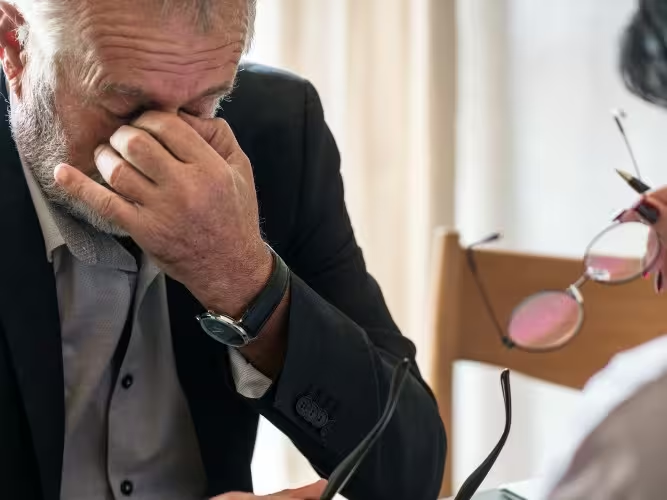
A traumatic brain injury doesn't come with an instruction manual. One day your family is focused on hospital rooms, test results, and whether a loved one will remember your name. The next, letters from insurance companies start arriving, full of deadlines nobody explained.
We've watched this happen to Michigan families for over 40 years, long before anyone called it "TBI." Back then, doctors used the term "closed head injury." The medicine has advanced. The confusion families feel in those first weeks hasn't changed at all.
Why Traumatic Brain Injuries Are Different From Other Car Accident Claims
The Injury Is Invisible, But Often Permanent
Someone with a TBI can look completely fine standing in a driveway. Underneath, they may struggle with memory, mood swings, or basic problem-solving they never had trouble with before. Families often notice the changes before any doctor puts a name to them.
Symptoms Can Take Days or Weeks to Surface
Concussions and closed head injuries don't always announce themselves at the accident scene. Headaches, confusion, and personality shifts sometimes build gradually. This is one reason it's a mistake to sign anything or accept an early settlement before symptoms have had time to fully appear.
Myth vs. Fact
Myth: No visible injury means no real injury. Fact: Many of the most life-altering brain injuries never show up on the outside. Insurance companies know this. It's part of why these claims often face more resistance than a straightforward broken-bone case.
The First 30 Days: What's Happening Legally While You're Focused on the Hospital
Michigan No-Fault PIP Benefits
Michigan requires No-Fault insurance to cover certain accident-related medical expenses, regardless of who caused the crash. These Personal Injury Protection (PIP) benefits may help pay for emergency treatment, rehabilitation, and some lost wages. Filing correctly and on time matters more than most people realize.
Deadlines That Start Whether You're Ready or Not
Insurance claims come with reporting windows and documentation requirements. These timelines don't pause for grief, exhaustion, or a loved one still in intensive care. Missing one of these early deadlines can limit what benefits remain available later.
Common Early Mistakes
Families in crisis mode often make decisions that feel harmless but aren't:
- Giving a recorded statement to an insurance adjuster without guidance
- Signing a medical release broader than what the claim actually requires
- Accepting a quick settlement offer before the full extent of the injury is known
- Assuming No-Fault benefits alone will cover long-term brain injury care
Quick takeaway: In the first month, document everything, involve an attorney before signing anything, and never assume an early offer reflects the injury's true impact.
Understanding Michigan's Legal Framework for Brain Injury Cases
How Michigan Defines "Catastrophic Injury"
Michigan law recognizes certain injuries, including many traumatic brain injuries, as catastrophic. This classification can affect available benefits and how a claim is evaluated. A catastrophic designation often signals that ongoing, long-term care will be part of the picture.
PIP Benefits Versus a Third-Party Liability Claim
No-Fault PIP benefits and a liability claim against the at-fault driver serve different purposes. PIP may cover certain medical costs and wage loss regardless of fault. A separate liability claim may address pain, suffering, and losses that PIP benefits don't reach.
Mini FAQ
Does No-Fault cover all my medical bills? Not necessarily. PIP benefits may cover many costs, but coverage limits and specific circumstances vary by policy and case.
Can I still pursue a claim against the other driver? In many cases, yes. Michigan law may allow a separate claim against an at-fault driver when injuries meet certain thresholds, particularly with catastrophic injuries like TBI.
What Compensation May Be Available
Medical Care, Current and Future
This may include emergency treatment, hospitalization, neurological care, and ongoing rehabilitation. Brain injuries often require care that continues for years, sometimes for life. A thorough claim accounts for costs that haven't happened yet, not just the bills already sitting on the kitchen table.
Future medical needs are easy to underestimate in the early months. A person recovering from a moderate TBI may need speech therapy, occupational therapy, or repeat imaging long after the initial hospital stay ends. Planning for those costs now can prevent a painful gap later.
Lost Wages and Diminished Earning Capacity
A TBI can affect someone's ability to return to their previous job, or to work at all. Compensation may address both time missed so far and reduced future earning potential. This is especially relevant when cognitive changes affect job performance long after physical wounds have healed.
Attendant Care and Family Caregiving
Many families become caregivers overnight. Michigan No-Fault benefits may provide compensation for attendant care, including care provided by family members. This is a piece families frequently don't know to ask about.
Pain, Suffering, and Daily Life Impact
Beyond medical bills, a brain injury can change relationships, independence, and quality of life. A liability claim may account for these losses. No dollar figure can undo the injury, but it may provide the resources a family needs to move forward.
Common Mistakes Families Make After a TBI Diagnosis
We've seen the same patterns repeat across four decades of these cases. Recognizing them early may protect a family's claim.
- Waiting too long to involve an attorney. Evidence and medical documentation are strongest when gathered early. Waiting months can mean losing details that mattered.
- Accepting an early settlement offer. Brain injury costs often grow over time. An offer that looks reasonable in month one may fall far short by year three.
- Not documenting cognitive and behavioral changes. Memory issues, mood changes, and personality shifts matter to a claim. They carry just as much weight as physical symptoms do.
- Talking to adjusters without guidance. Recorded statements can be used to minimize a claim. This happens even when a family believes they're simply being cooperative.
- Assuming one doctor's opinion tells the whole story. Brain injuries often require multiple specialists to fully diagnose. A single early evaluation rarely captures the complete picture.
How Hamo Law Handles a TBI Case, Specifically
Building a Medical Record That Reflects the Real Injury
We work alongside neurologists, neuropsychologists, and rehabilitation specialists. This helps build a record that reflects the injury's true severity, not just what an ER discharge summary captured in the first few hours.
Accounting for Costs Families Haven't Thought to Ask About Yet
Cognitive rehabilitation, in-home care, and vocational retraining are easy to overlook early on. We identify these categories and project future medical needs years down the road, so a settlement doesn't leave a family short later.
Pushing Back on Undervalued Diagnoses
Insurers sometimes label a brain injury "mild" or "moderate" based on early scans alone. Those labels don't always match the real-world impact on memory, mood, or someone's ability to work. We push back when a valuation doesn't reflect what a family is actually living through.
Direct Access to George or Alex, Not a Rotating Cast
Clients work directly with George or Alex Hamo throughout the case, not a revolving set of case managers. That matters most when a loved one's condition changes and questions can't wait for a callback.
What a Free Case Evaluation Covers for a TBI Claim
A free evaluation includes a review of medical records gathered so far, a check on any PIP or No-Fault deadlines already in motion, and guidance on what documentation will strengthen the claim moving forward.
The Roadmap You Weren't Given, Now You Have One
No family expects to learn Michigan's No-Fault system in the middle of a medical crisis. Nobody hands you a checklist when a brain injury changes everything overnight. That gap between medical urgency and legal deadlines is exactly where families lose ground they didn't have to lose.
You don't have to map this out by yourself. Whether you're weeks into a diagnosis or still waiting to understand what recovery will look like, there's a path forward, and it starts with someone who has walked it before.
Talk to Hamo Law About Your Family's Next Step
If a car accident has left someone you love with a traumatic brain injury, we're ready to listen and help you understand your options.
Address: 614 S. Grand Traverse Street, Flint, Michigan 48502
Phone: 810-234-3667
Email: ahamo@hamolaw.com
Website: hamolaw.com
Follow us for more updates and resources:
Facebook: facebook.com/HamoLawFirm
Instagram: instagram.com/hamolawfirm
LinkedIn: linkedin.com/company/hamo-law
YouTube: youtube.com/@HamoLawFirm
TikTok: tiktok.com/@hamolawfirm
The information provided here is for educational purposes and is not intended as legal advice. Every case is unique, and past success does not guarantee future results.