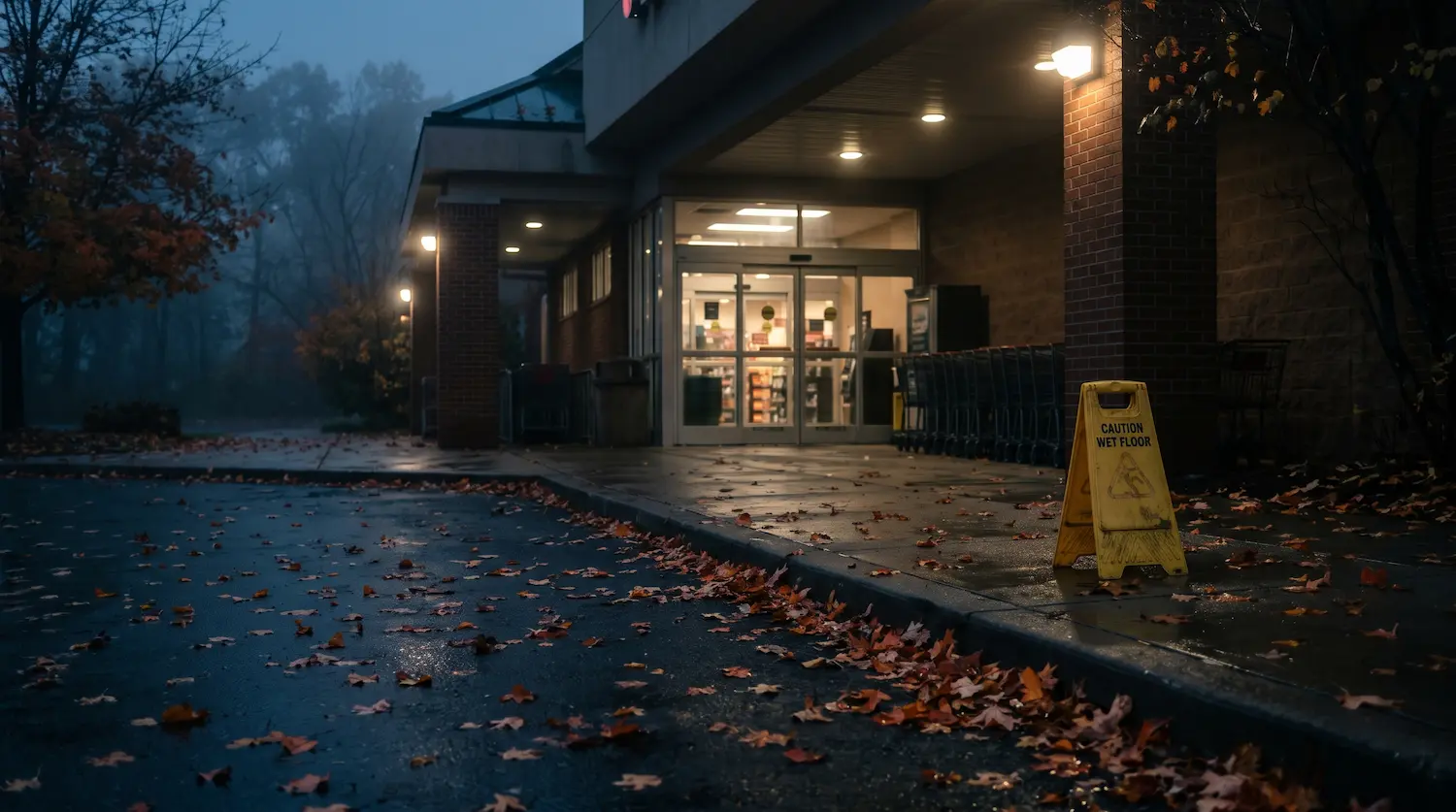
It's 7:30 on a Tuesday morning in late October. The sky over Flint is still black. The light above the grocery store entrance has been out for a week, and last night's rain glued a layer of maple leaves to the ramp. You've walked in here hundreds of times, so you aren't watching your feet.
Then you're on the ground. Maybe it's a wrist that won't bend, a hip that won't hold your weight, or a headache that lingers past lunch. Falls like this change lives every autumn in Michigan. Most of them happen on property that someone else was responsible for keeping safe.
What Autumn Does to Michigan Walkways
Wet Leaves Can Be as Slick as Ice
Dry leaves crunch underfoot. Once rain soaks them and foot traffic presses them flat, they break down into a slimy film on concrete, wood, and tile.
The worst spots tend to be:
- Wooden decks and porch steps
- Sloped ramps and store entrances
- Parking lot curbs and painted lines
- Building lobbies where leaves get tracked inside
Sunrise Comes Late Before the Clocks Fall Back
In late October, the sun doesn't rise in mid-Michigan until around 8 a.m. Clocks won't fall back until November 1, 2026. That leaves weeks of commutes, school drop-offs, and early shifts in the dark.
Rain, First Frost, and the Freeze-Thaw Cycle
Puddles left from an afternoon rain may refreeze overnight. By morning, a ramp that looked wet may actually be coated in thin, nearly invisible ice.
Where Fall Injuries Tend to Happen
Stores, Grocery Entrances, and Parking Lots
Businesses invite the public in, and Michigan law expects them to keep their premises reasonably safe. In fall, that may mean:
- Placing absorbent mats at entrances on rainy days
- Clearing leaves from walkways and ramps
- Posting warning signs near wet floors
- Repairing parking lot lights promptly
Apartment Complexes and Rental Homes
Michigan landlords carry a specific duty under state law. Under MCL 554.139, they must keep the premises and common areas fit for their intended use. Common areas often include shared stairways, sidewalks, and parking lots. If a landlord ignores leaves, broken lighting, or crumbling steps, a tenant who gets hurt may have a claim.
Workplaces, Churches, and Schools
Falls also happen at offices, places of worship, and school events. If you were hurt while working, your claim may run through workers' compensation instead. A fall at a church fundraiser or a Friday night game may fall under ordinary premises liability rules.
Public Sidewalks and City Property
Claims against a city, county, or the state follow the Governmental Tort Liability Act. For many sidewalk and road defects, you may need to give written notice within 120 days of the injury. Some public sidewalk conditions may not qualify for a claim at all, so it's wise to speak with an attorney early.
What Michigan Law Expects From Property Owners
Customer, Guest, or Trespasser: Why Your Status Matters
Michigan courts look at why you were there.
- Invitees are there for a business purpose, like shopping or dining. Owners owe them the highest duty, including inspecting for hazards.
- Licensees are social guests, like a friend at a backyard bonfire. Owners must warn them about hidden dangers they know about.
- Trespassers have no permission to be there. Owners generally only have to avoid harming them on purpose or recklessly.
The 2023 Change to the "Open and Obvious" Rule
For years, property owners leaned on one defense above all others. They argued that a hazard was "open and obvious," so they owed you nothing. Many cases ended right there.
In 2023, the Michigan Supreme Court changed that in Kandil-Elsayed v. F & E Oil, Inc. The Court held that an obvious hazard no longer automatically wipes out the owner's duty. Instead, a jury may weigh how obvious it was when deciding whether the owner acted reasonably and how fault should be shared.
Did They Know, or Should They Have Known?
Owners generally aren't responsible for hazards they couldn't have discovered. They may be responsible when:
- They created the hazard themselves
- Employees saw it and did nothing
- It sat there long enough that a reasonable inspection would have caught it
Sharing Fault Under Michigan Law
Michigan uses comparative fault. If you were partly responsible, your recovery may be reduced by your share of the blame. Under MCL 600.2959, a person found more than 50 percent at fault generally cannot recover non-economic damages, like pain and suffering.
Myth vs. Fact
- Myth: If I could see the leaves, I don't have a case.
- Fact: Since 2023, an obvious hazard doesn't automatically end a Michigan claim.
- Myth: Falling means I was clumsy.
- Fact: Careful people fall on hazards that owners should have fixed.
- Myth: My car insurance will cover my fall in the parking lot.
- Fact: Michigan No-Fault PIP generally covers injuries involving a motor vehicle, not ordinary falls.
One Fall, Many Consequences
A fall on a hard, slick surface is rarely minor. It can cause:
- Traumatic brain injuries (TBI), even without losing consciousness
- Hip, wrist, and ankle fractures
- Spinal cord and back injuries
- Torn ligaments and shoulder damage
A claim may include medical bills, lost wages, future care, and the pain of a life that suddenly got smaller. Because No-Fault usually doesn't apply to these falls, the property owner's liability insurance often becomes the main path to compensation.
What to Do in the First Days After a Fall
Early steps protect your health and your claim. Do what you safely can:
- Get medical care. Head injuries and fractures don't always hurt right away.
- Photograph the scene. Capture the leaves, the lighting, and the surface before anyone cleans up.
- Report the fall. Ask the manager or landlord to write an incident report, and request a copy.
- Collect witness information. Names and phone numbers matter more than you'd think.
- Keep your shoes and clothing. Store them in a bag and don't wear them again.
- Avoid recorded statements. You can politely decline until you've spoken with an attorney.
- Talk with a lawyer soon. Evidence like video footage and leaf piles vanishes fast.
Mini FAQ: Fall Injury Questions We Hear Every October
Can I file a claim if I slipped on leaves at my apartment complex?
Possibly. Michigan landlords must keep common areas fit for their intended use. If leaves were left to pile up on a shared walkway, you may have a claim worth reviewing.
How long do I have to bring a premises liability claim in Michigan?
Most personal injury claims in Michigan must be filed within three years under MCL 600.5805. Claims against government entities have much shorter notice deadlines.
What if the store says the leaves blew in seconds before I fell?
That's a common defense. Inspection logs, video, and witness accounts can show how long a hazard really sat there. Those details often decide whether the owner should have known.
Leaves Fall Every Year. Responsibility Doesn't Take the Season Off.
Autumn in Michigan is beautiful, and none of us would trade it. But the hazards it brings are no surprise to anyone who owns a store, manages an apartment complex, or runs a public building. Raking a walkway, replacing a bulb, and putting down a mat are small chores. When owners skip them, the people who pay the price are neighbors who did nothing wrong.
If you're hurting after a fall, try not to blame yourself. Falling on a hazard someone ignored isn't a character flaw. You deserve answers, fair treatment, and someone willing to hold the responsible party accountable.
Talk to George or Alex Before the Evidence Gets Raked Away
When you call Hamo Law, you won't be passed down a line of case managers. You'll talk with George or Alex Hamo directly. We work on a contingency fee, so you pay no attorney fees unless we recover compensation for you. Contact Hamo Law today for your free case evaluation.
Hamo Law Firm
614 S. Grand Traverse Street,
Flint, Michigan 48502
Phone: 810-234-3667
Email: ahamo@hamolaw.com
Website: hamolaw.com
Follow Hamo Law
Facebook: facebook.com/HamoLawFirm
Instagram: instagram.com/hamolawfirm
LinkedIn: linkedin.com/company/hamo-law
YouTube: youtube.com/@HamoLawFirm
TikTok: tiktok.com/@hamolawfirm
Disclaimer: The information provided here is for educational purposes and is not intended as legal advice. Every case is unique, and past success does not guarantee future results.