Automobile Accidents: The First Medical and Legal Priorities
After automobile accidents, protect people first, document what happened second, and avoid making statements about fault before the facts are known. A crash can cause visible injuries, delayed pain, expensive vehicle damage, and an insurance dispute - often all at once.
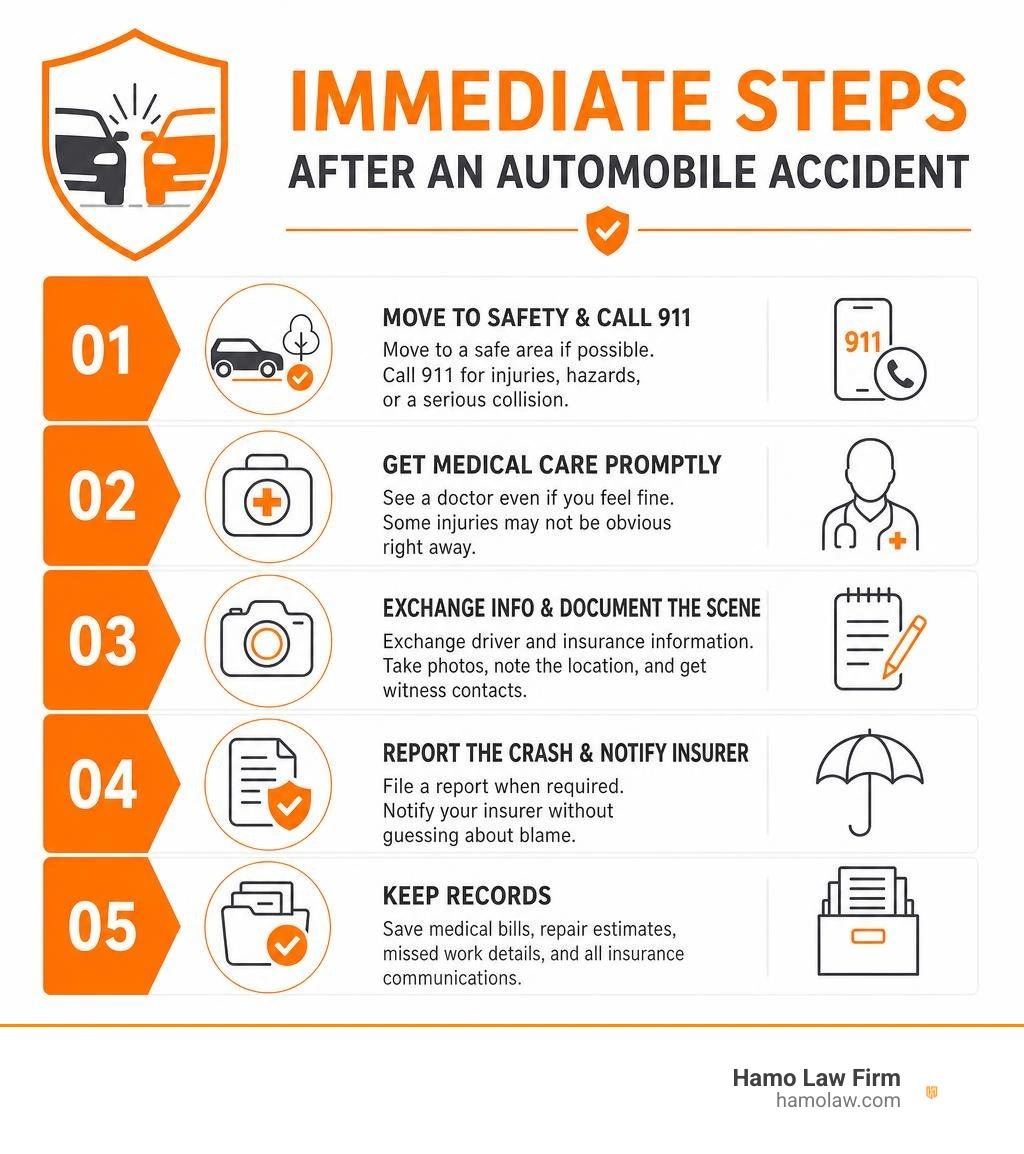
For a quick guide, focus on these immediate priorities:
- Move to safety if you can and call 911 for injuries, hazards, or a serious collision.
- Get medical care promptly, even if symptoms seem minor. Some injuries may not be obvious at the scene.
- Exchange information and document the scene with photos, witness contacts, and basic facts.
- Report the crash when required and notify your insurer without guessing about blame.
- Keep records of medical visits, bills, missed work, repair estimates, and insurance communications.
Road crashes are not rare events. Globally, they kill about 1.16 million people each year, and road traffic injuries remain a leading cause of death for people ages 5 through 29. In the United States, 39,254 people died in motor vehicle crashes in 2024. Behind those numbers are individuals and families facing medical decisions, lost income, and pressure from insurance companies.
I am George Hamo, and the sections that follow explain the medical and legal issues Michigan residents should understand after a crash.
Understanding the Causes and Dynamics of Automobile Accidents
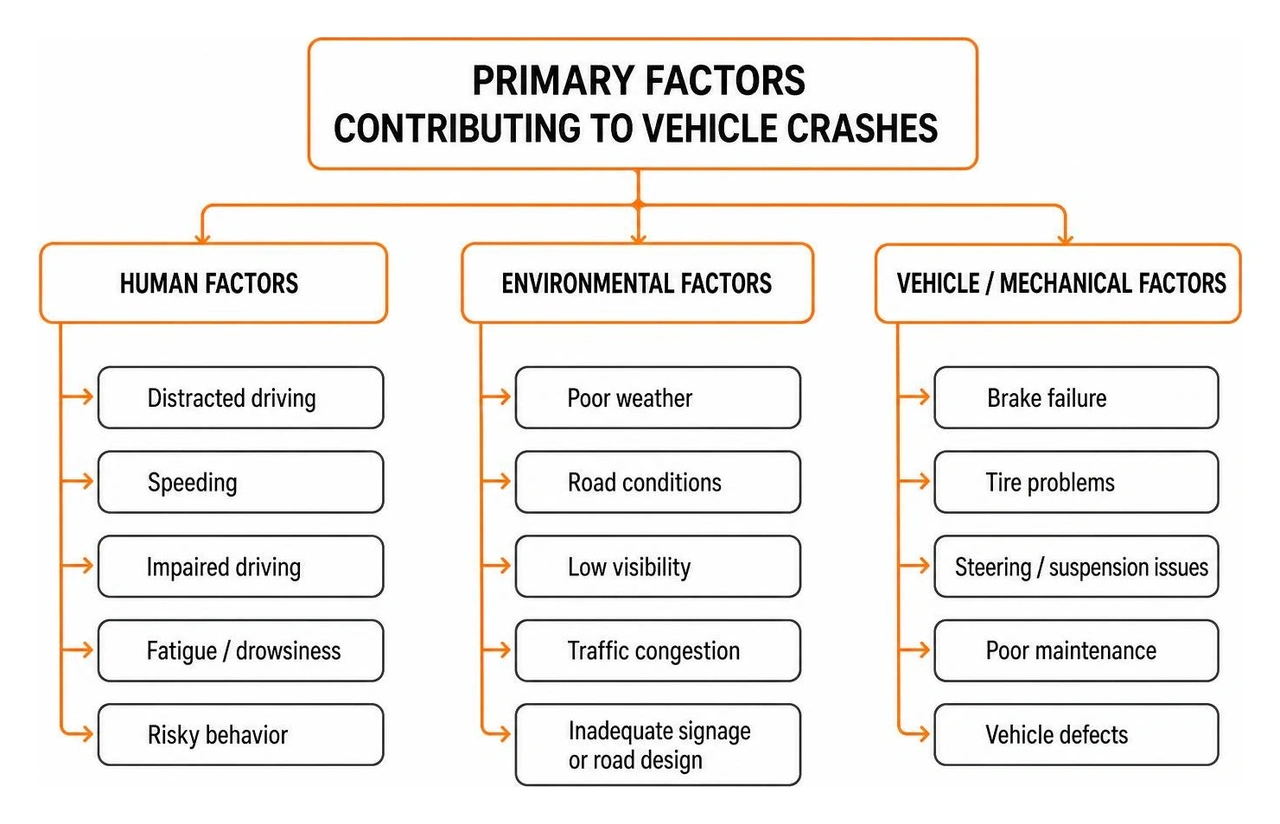
To understand why collisions happen, we have to look past the idea that they are just random bad luck. Decades of traffic research demonstrate that automobile accidents are almost always preventable events caused by a combination of human factors, environmental conditions, and mechanical issues. In fact, safety studies reveal that human decisions contribute wholly or in part to approximately 93% of all motor vehicle crashes.
Historically, safety measures have drastically reduced mortality per mile driven. Between 1923 and 2024, the United States mileage death rate plummeted by 93%, moving from 18.65 deaths per 100 million miles traveled down to 1.30. This monumental shift was driven by modern advancements such as seat belts, crumple zones, anti-lock brakes, and airbags. However, recent years have shown a concerning uptick. Between 2019 and 2024, the mileage death rate in the U.S. increased by 8.3%, proving that technological advances alone cannot outweigh dangerous driving habits.
Even with automated systems entering our daily commutes, human oversight remains vital. Recent research, such as a Crash Severity Research study analyzing automated vehicle collisions in Texas, highlights that partial automation (Level 2) and lower driver-assist features (Level 1) still rely heavily on attentive drivers. In that dataset, Level 1 assisted driving accounted for 81% of severe or fatal injuries, often because drivers developed a false sense of security and failed to intervene during high-speed highway emergencies.
Vehicle maintenance also plays an essential role in vehicle dynamics. Worn tire treads double stopping distances on wet pavement, while failing brake lines or neglected steering systems transform minor misjudgments into severe multi-vehicle pileups.
Driver Impairments and Human Error in Automobile Accidents
When we analyze human error behind the wheel, three major categories dominate: cognitive distraction, physical impairment, and behavioral risks like speeding.
- Distracted Driving & Mobile Phones: Engaging with a mobile device behind the wheel severely impairs situational awareness. Dialing a phone makes a driver 12 times more likely to crash, while reading or writing a text message increases crash risk by an astonishing 23 times. Many drivers assume that using hands-free voice controls or Bluetooth headsets solves this problem. However, cognitive research shows that hands-free setups offer little safety improvement because the mental distraction of conversation still diverts vital processing power away from detecting road hazards.
- Alcohol and Drug Impairment: Substance impairment slows reaction times and degrades motor control. Nationwide, roughly 31% of fatally injured passenger vehicle drivers have a blood alcohol concentration (BAC) at or above the legal limit of 0.08%. Psychoactive substances and illicit drugs are similarly devastating; for instance, amphetamine use increases fatal crash risk by approximately 5 times.
- Fatigue Management: Drowsy driving triggers micro-sleeps that mirror the effects of severe alcohol intoxication. Depriving yourself of just two hours of sleep can double your risk of causing a collision.
- Excessive Speeding: Speeding reduces the time a driver has to react to unexpected obstacles and drastically increases the physical energy transferred during an impact. In 2024, speeding was a contributing factor in 29% of all motor vehicle crash fatalities across the United States.
Environmental Factors, Road Infrastructure, and Vulnerable Users
Beyond driver behavior, the physical environment heavily dictates collision outcomes. Rain, snow, black ice, and blinding sun glare alter friction and visibility. Road design also directly influences traffic safety. Roads lacking designated turning lanes, poorly timed traffic signals, or dark, unlit curves disproportionately produce severe collisions.
Vulnerable road users—including pedestrians, cyclists, and motorcyclists—suffer the most when hitting metal and asphalt. Global statistics indicate that over 50% of all road traffic deaths involve vulnerable users. The physical mechanics of speed are unforgiving: a pedestrian struck by a vehicle traveling at 50 km/h (about 31 mph) has a far higher survival rate, but increasing that impact speed to 65 km/h (about 40 mph) increases the pedestrian's risk of death by 4.5 times. In car-to-car side-impact crashes at 65 km/h, passenger fatality rates jump to 85%.
According to official Michigan Traffic Crash Statistics, local communities across Detroit, Flint, Wayne County, and Genesee County experience thousands of severe collisions every year due to winter weather conditions combined with heavy arterial traffic. Implementing a "Safe System" approach—where infrastructure is designed to forgive human error through traffic calming, protected bike lanes, and safe pedestrian crossings—is vital to protecting human life.
Immediate Post-Collision Actions: Legal and Medical Protocol
The minutes and hours directly following a motor vehicle collision are overwhelming. However, taking systematic actions protects your health and guards your legal rights under state law.
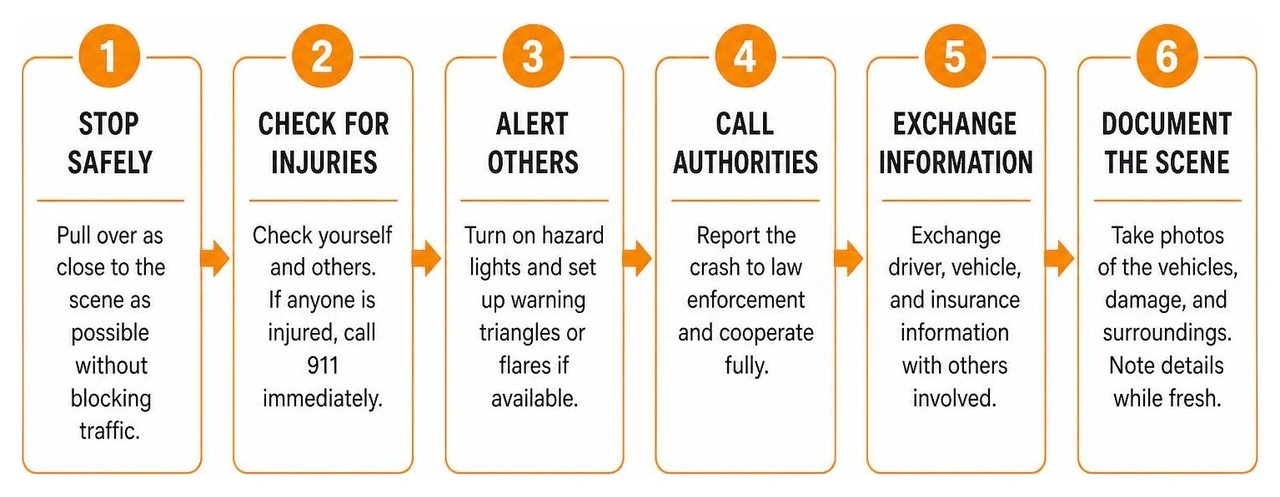
First and foremost, bring your vehicle to a complete stop as close to the scene as possible without blocking active traffic corridors. Turn on your hazard lights, and if available, deploy warning triangles or flares to signal approaching traffic. Check yourself and your passengers for severe injuries. If anyone requires urgent medical attention, dial 911 immediately.
Under state motor vehicle codes, drivers have explicit legal obligations. Leaving the scene of an accident involving personal injury is a serious misdemeanor that carries penalties including driver's license suspension, thousands of dollars in fines, and up to one year in jail. When law enforcement arrives, provide clear, factual answers. Avoid speculating about speed, distances, or mechanical glitches, and never apologize or admit fault—the adrenaline of a crash clouds perception, and true liability is a legal determination based on physical evidence.
Emergency Medical Assessment and Injury Documentation
Even if you walk away from a crash feeling relatively unharmed, you must undergo a thorough professional medical evaluation as soon as possible. Adrenaline and shock frequently mask severe internal trauma.
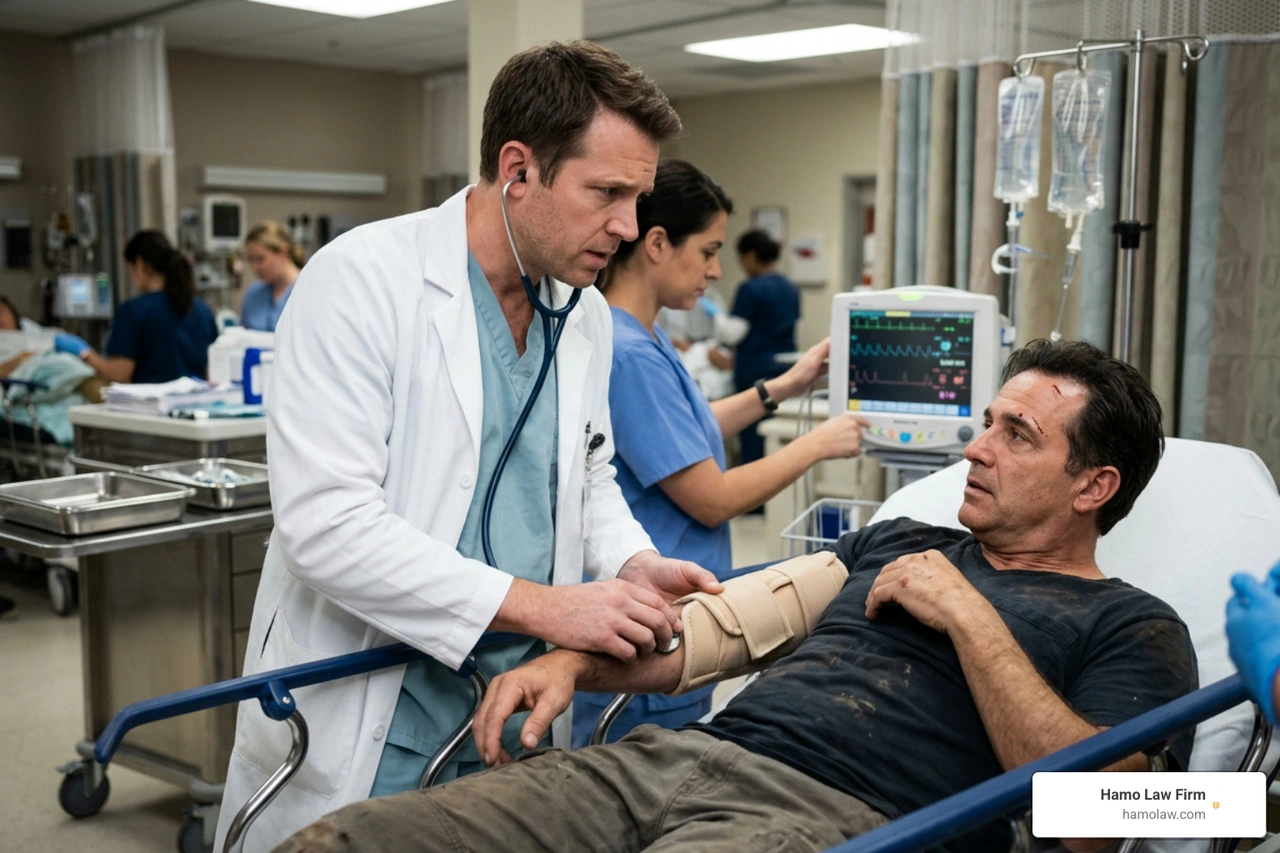
Many serious collision injuries feature delayed symptoms that do not become apparent for hours or even days, including:
- Traumatic Brain Injuries (TBIs) and Concussions: Symptoms like fogging, severe headaches, dizziness, or nausea may develop gradually.
- Whiplash and Cervical Spine Damage: Soft-tissue tears and disc herniations cause increasing stiffness, numbness, and severe chronic neck pain over time.
- Internal Bleeding and Organ Trauma: Abdominal blunt force from seat belts or steering columns can cause quiet, life-threatening internal hemorrhaging.
Seeking prompt medical care at an emergency room or urgent care center creates an official medical paper trail linking your injuries directly to the incident. If you delay medical evaluation for weeks, insurance adjusters will inevitably argue that your physical injuries were caused by an unrelated event or were not as severe as claimed.
Evidence Preservation and Official Reporting Standards
Preserving evidence while the scene is fresh is crucial to building a strong case. If you are physically capable and it is safe to do so:
- Take Comprehensive Photos: Capture wide shots of the intersection or roadway, vehicle positions, road skid marks, shattered glass, traffic control signs, weather conditions, and visible bodily injuries.
- Collect Information: Exchange names, addresses, phone numbers, driver's license numbers, vehicle registration, and auto insurance details with all involved drivers. Obtain contact information from independent eyewitnesses before they leave.
- Document Law Enforcement Details: Note the names, badge numbers, and law enforcement agencies of the responding officers, and request the incident report number.
Accurate documentation forms the backbone of official records. For instance, standardized police guidelines like the Missouri Uniform Crash Report Manual mandate strict data collection standards, requiring detailed physical diagrams and comprehensive driver entries for collisions exceeding property damage thresholds. To ensure you don't miss key details, review our detailed guide on What to do after a crash.
Health Consequences, Socioeconomic Impacts, and Terminology Shifts
The impact of a major collision extends far beyond crumpled sheet metal. A severe crash alters physical health, emotional stability, family finances, and broader societal productivity.
Long-Term Physical, Psychological, and Social Effects
Physical injuries often demand months or years of painful physical therapy, surgical interventions, and ongoing prescription management. Traumatic spinal injuries or compound fractures can cause permanent loss of mobility, chronic pain, and long-term disability.
Equally devastating—yet frequently overlooked—is the psychological toll. Victims often suffer from Post-Traumatic Stress Disorder (PTSD), severe driving anxiety, sleep disturbances, and clinical depression. The sudden inability to work, play with children, or complete daily household tasks strain family dynamics and create immense emotional friction.
Socioeconomic factors heavily influence both crash risk and recovery outcomes. According to World Health Organization (WHO) benchmarks, 92% of the world's traffic fatalities occur in low- and middle-income countries (LMICs), even though those nations possess only about 60% of global motor vehicles. On a local level, lower-income families face devastating financial disruptions when hit by medical debt and lost wages, making fair legal compensation vital for long-term recovery.
Linguistic Evolution: Replacing "Accident" with "Crash"
For decades, the standard phrase was "automobile accident." However, major road safety organizations, law enforcement agencies, and news organizations have intentionally shifted away from the word "accident," adopting "crash" or "collision" instead.
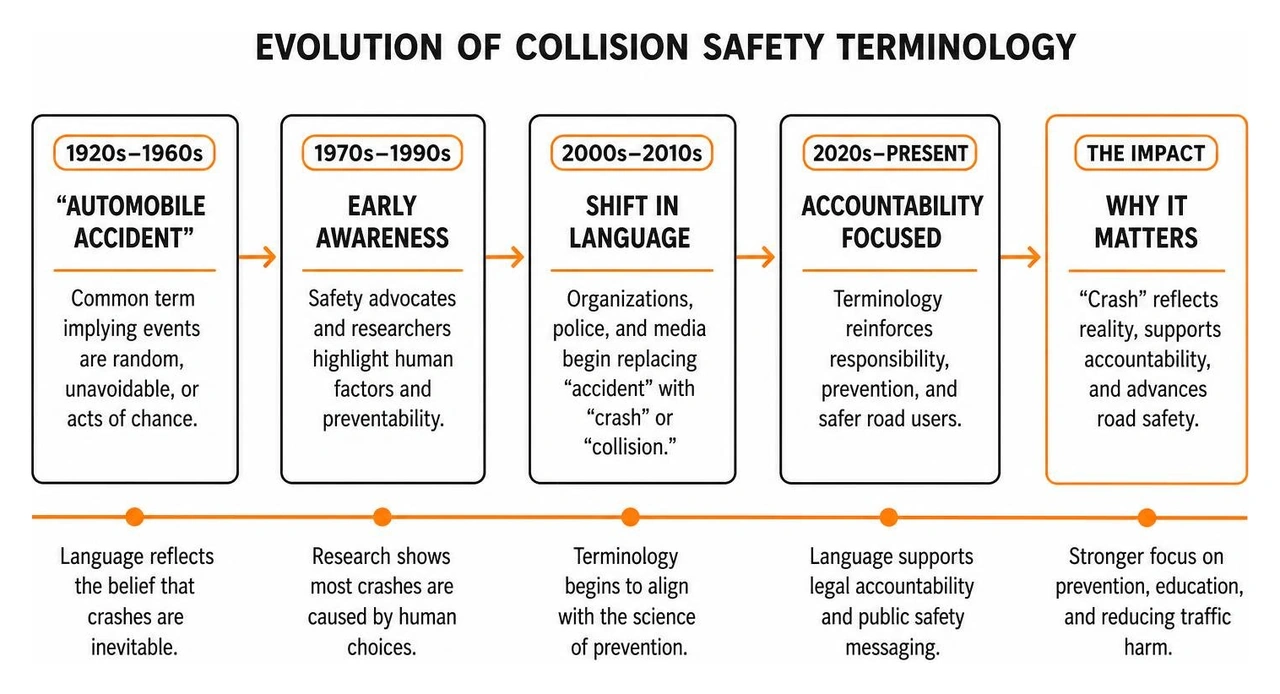
Why the change? The word "accident" implies an unpredictable event caused by chance or an unavoidable "act of God." In reality, human factors—such as distracted driving, intoxication, speeding, and mechanical neglect—cause the vast majority of collisions. Replacing "accident" with "crash" establishes legal accountability, reminds drivers that their choices behind the wheel have direct consequences, and reflects a modern public safety focus on preventable traffic violence. A broader look at this linguistic shift can be explored through the Traffic Collision History records.
Determining Fault, Insurance Claims, and Legal Remedies
Recovering fair compensation after a crash requires a thorough understanding of state liability rules, insurance systems, and legal deadlines.
Legal Consequences and Liability in Automobile Accidents
Determining fault after a collision involves analyzing police reports, vehicle black box (EDR) data, physical damage patterns, eyewitness testimonies, and traffic law violations.
Michigan operates under a unique No-Fault auto insurance system. Under this system, regardless of who caused the collision, your own insurance carrier provides Personal Injury Protection (PIP) benefits. PIP covers reasonable and necessary medical expenses, a percentage of lost wages, and daily replacement services.
However, PIP benefits do not cover pain and suffering or full emotional distress. To recover pain and suffering damages from the fault driver through a third-party personal injury lawsuit, your injuries must meet a legal threshold—specifically resulting in death, permanent serious disfigurement, or a serious impairment of an important body function.
In third-party liability claims, Michigan follows a modified comparative negligence rule:
- If you are found partially at fault for the crash, your compensation for pain and suffering is reduced by your percentage of fault.
- If you are determined to be more than 50% at fault, you are legally barred from recovering non-economic damages from the other driver.
To protect your legal rights, learn more about Determining Fault in Michigan and explore our dedicated services for Car Accident Representation.
Navigating Insurance Negotiations and Legal Representation
Dealing with insurance adjusters can be tricky. Adjusters are trained to minimize payouts and will gladly use recorded statements to reduce or deny your claim.
Never sign broad medical releases or accept quick cash settlements before consulting a qualified attorney. Early settlement offers rarely account for future surgical costs, lifelong rehabilitation, or long-term lost earning capacity.
Working with an experienced personal injury attorney ensures that your claim is properly evaluated and forcefully pursued. To protect your financial future, consider speaking with an expert via Michigan Car Accident Lawyer Services.
Frequently Asked Questions
Why are safety organizations replacing the term "accident" with "crash"?
Safety agencies like the NHTSA and WHO use "crash" or "collision" because "accident" suggests an event was unavoidable or a matter of bad luck. Since nearly 93% of vehicle collisions stem from human error, speeding, intoxication, or distraction, using "crash" emphasizes driver responsibility and preventable causes.
How does mobile phone use impact driver crash risk?
Texting while driving increases your crash risk by 23 times, while dialing a phone increases risk by 12 times. Hands-free devices are not significantly safer than handheld setups because the mental conversation still creates cognitive distraction, delaying reaction times and situational awareness.
What determines legal fault after a motor vehicle collision?
Fault is determined by examining evidence including police reports, physical vehicle damage, skid mark analysis, eyewitness statements, traffic camera footage, and electronic control module (black box) data to establish negligence and statutory traffic violations.
Conclusion
A motor vehicle collision can overturn your life in a matter of seconds, leaving you to deal with physical pain, medical bills, and complex insurance rules. During such challenging times, having steady, experienced guidance makes all the difference.
At Hamo Law Firm, we have spent over 40 years standing up for crash victims and families across Flint, Detroit, Wayne County, and Genesee County. We take on aggressive insurance adjusters so you can focus on recovering your health. Best of all, we work on a contingency-fee basis—which means you pay zero legal fees unless we win your case.
If you or a loved one was injured in a collision, contact us today to schedule a free, confidential consultation. Learn more about how we can help by visiting our Automobile, Truck & Motorcycle Accidents Practice Area.