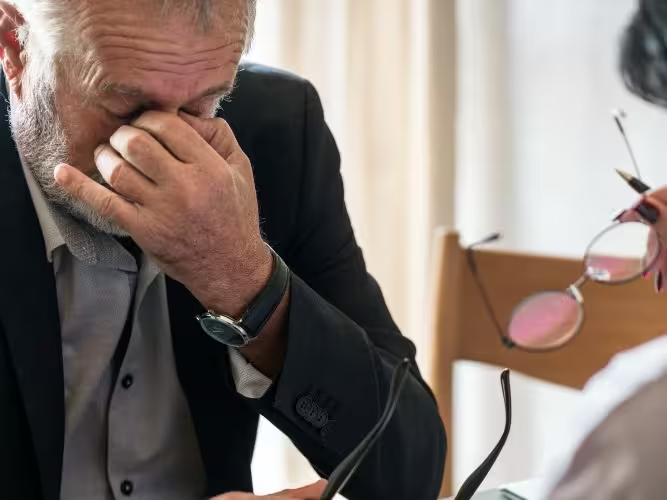
You walked away from the accident. Maybe your car has some damage, maybe it does not. Maybe you felt shaken at the scene but told the paramedics you were fine. You went home, slept it off, and tried to get back to your routine. But something feels different. You cannot quite explain it. You are more forgetful than usual. Your head hurts in a way that is hard to describe. Your mood has shifted and the people closest to you have noticed.
What you may be experiencing are the signs of a traumatic brain injury, and they are easier to miss than most people realize.
Insurance companies are counting on you to dismiss these symptoms, to chalk them up to stress or a bad night's sleep and move on without ever connecting them to the crash. At Hamo Law, we have been handling brain injury cases for over 40 years, back when they were called closed head injuries before the medical community had even settled on a name. We know how serious these injuries are, and we know how hard the other side will fight to minimize them. This blog is here to give you the knowledge to protect yourself before it is too late.
The TBI Symptoms People Frequently Miss
Physical Symptoms That Get Blamed on Something Else
After a car accident, it is natural to attribute physical discomfort to the general stress and soreness of the experience. That tendency, while understandable, causes far too many brain injuries to go undiagnosed. The following physical symptoms can all be signs of a TBI after a crash:
- Persistent or recurring headaches, especially those that begin in the days following the accident
- Sleep disturbances, including difficulty falling asleep, staying asleep, or sleeping far more than usual
- Nausea and dizziness that appear without an obvious cause
- Sensitivity to light or sound in situations that would not have bothered you before
- Blurred or doubled vision and changes in how your eyes track or focus
- Ringing in the ears, known as tinnitus, that was not present before the crash
Cognitive and Emotional Symptoms
Some of the most commonly missed TBI symptoms after an accident are not physical at all. They show up in how you think, feel, and interact with the world around you. These include:
- Memory problems, such as forgetting recent conversations, appointments, or tasks you would not normally forget
- Difficulty concentrating or following conversations, sometimes described as mental fog or feeling like your thoughts are moving through water
- Uncharacteristic mood swings or irritability that seems disproportionate to the situation
- Feelings of depression or anxiety that were not present before the accident
- A general sense that something is off, even when you cannot point to a specific symptom
Why Delayed Symptoms Are Especially Dangerous
The Gap Between the Crash and the Diagnosis
The neurological processes involved in a TBI do not always produce immediate symptoms. In the hours and days following an accident, the brain can undergo a cascade of cellular and chemical changes, including inflammation, disrupted neurotransmitter function, and reduced blood flow, that gradually intensify before they become apparent on the surface.
This is why someone can pass a basic neurological screening at the scene of an accident and still develop significant TBI symptoms in the days that follow. The brain is not fully transparent, and standard emergency room evaluations are not always designed to detect subtle or evolving injuries.
What Insurance Companies Do With Delayed Diagnosis
Here is where a traumatic brain injury car accident claim becomes especially vulnerable. Insurance companies have a well-worn argument they use against delayed diagnoses, and it goes like this: if your injury was truly serious, you would have sought treatment immediately. If your symptoms did not appear until days later, how do we know the accident caused them?
This argument is medically false. The delayed onset of TBI symptoms is a well-documented neurological reality, not a sign that the injury is fabricated or exaggerated. But without the right documentation, without medical records that connect the dots between the crash and the diagnosis, the argument becomes legally damaging.
Insurers also exploit the gap by pointing to activities you engaged in during the delay. If you drove to work, attended an event, or posted on social media in the days between the crash and your diagnosis, those actions can be used to suggest your injuries were not severe. This is another reason why early medical evaluation and thorough medical documentation of your injury are not just good health practices. They are essential legal protections.
Common Mistakes After a Head Injury
The decisions made in the days and weeks following a car accident can have a lasting impact on both your health and your ability to recover fair compensation. These are the most common mistakes we see:
- Refusing medical evaluation at the scene. Declining treatment from first responders creates a record that you felt fine at the time of the accident. Even if you genuinely did feel fine, that record will be used against you.
- Assuming the ER cleared you because no fracture was found. A normal CT scan does not rule out a TBI. Standard imaging does not detect many forms of brain injury, particularly mild to moderate concussions and diffuse axonal injuries.
- Failing to follow up with a specialist. An emergency room visit addresses immediate triage, not comprehensive neurological evaluation. If you have any symptoms following a crash, a follow-up with a neurologist or specialist is essential.
- Not reporting cognitive or emotional symptoms to your doctor. Many patients report physical symptoms but downplay or omit the mental fog, mood changes, or memory issues they are experiencing. These are clinically significant and need to be part of your medical record.
- Failing to keep a symptom journal. A written, dated record of your symptoms, even informal notes on your phone, can be powerful evidence. Patterns, progression, and the impact on your daily life are all relevant to your claim.
- Gaps in treatment. Missing appointments or stopping treatment prematurely gives insurers ammunition to argue your injuries were not serious or that you failed to take reasonable steps toward recovery.
When to Call a Brain Injury Lawyer in Michigan
The Stakes Are Higher With a TBI
A traumatic brain injury is not like a broken bone that heals on a predictable timeline. The effects of a TBI can ripple through every area of a person's life, affecting their ability to work, concentrate, manage emotions, maintain relationships, and simply function the way they did before the crash. The long-term costs, including ongoing medical treatment, lost earning capacity, and diminished quality of life, can far exceed what a standard insurance settlement is designed to cover.
If you or someone you love is experiencing TBI symptoms after an accident in Michigan, the value of your claim is almost certainly higher than what any insurance company will voluntarily offer. These cases require a lawyer who understands the medical complexity involved, who knows how to work with neurological experts, and who has the experience to counter the tactics insurers use to minimize brain injury claims.
What Hamo Law Brings to a TBI Case
When you bring your case to Hamo Law, you are not a file number in a queue. You are a person, and we treat you that way from the first conversation. Our team handles all communication with the insurance company so you are not pressured into statements that damage your claim. We work with medical experts who can document and explain the full extent of your injuries. And we negotiate with the kind of knowledge and tenacity that only comes from having done this work for a very long time.
Insurance companies have enormous legal resources. They count on the fact that most accident victims do not. We are here to change that equation. At Hamo Law, our job is to be the advocate in your corner that the other side never wants to face.
Your Symptoms Are Real. Your Case Matters.
If something has felt different since your accident, trust that instinct. A persistent headache, a foggy mind, an irritability you cannot explain, these are not signs of weakness or overreaction. They may be your brain telling you that something is genuinely wrong, and they deserve to be taken seriously by a medical professional and by an attorney who understands what is at stake.
You should not have to fight a billion-dollar insurance company while you are trying to heal. That is what we are here for. At Hamo Law, we will walk with you from the confusion and uncertainty of those early days after a crash to the resolution and accountability you deserve. We begin as your attorneys. We often end as something closer to family.
If you or a loved one has suffered a head injury after a crash anywhere in Michigan, reach out to Hamo Law today for a free consultation. No pressure, no obligation, just real people who genuinely care about your outcome.
Contact Hamo Law: hamolaw.com
Legal Disclaimer: The information provided here is for educational purposes and is not intended as legal advice. Every case is unique, and past success does not guarantee future results.
.jpg)